Academic Editors
The following people constitute the Editorial Board of Academic Editors for PeerJ. These active academics are the Editors who seek peer reviewers, evaluate their responses, and make editorial decisions on each submission to the journal. Learn more about becoming an Editor.



Julien GA Martin
I am generally interested in understanding the causes of variation in life history traits in wild populations, with particular on the causes and consequences of within-individual variation in life history. The focus of my research is the evolutionary ecology of reproductive strategies and understanding the impact of environmental variation on adaptation and evolution of traits.
Lecturer, University of Aberdeen, Aberdeen, UK
2013-2015 Marie-Curie Fellow, University of Aberdeen, Aberdeen, UK
2010-2012 Postdoctoral fellow, UCLA, Los Angeles, USA
2006-2010 PhD University of Sherbrooke, Sherbrooke, Canada

Mukesh Jain
Dr. Mukesh Jain is presently associated with Jawaharlal Nehru University, New Delhi, as Professor. Before this, he served at the National Institute of Plant Genome Research, New Delhi as Staff Scientist. Dr. Jain’s research interests include understanding the transcriptional and epigenetic regulation of abiotic stress responses and seed development using advanced state-of-art multi-omics technologies.

Degui Zhi
Associate professor (with tenure) of Biostatistics, University of Alabama at Birmingham; Ph.D. in Bioinformatics, University of California, San Diego; M.Sc. in Computer Science, National University of Singapore. Current research interests include bioinformatics and statistical genetics problems relating to next-generation sequencing and the integration of multiple types of Omics scale data.

Oluwaseun Adebayo Bamodu
Dr. Oluwaseun Adebayo Bamodu is a Medical Research Fellow in the Department of Urology at Tapein Medical University - Shuang Ho Hospital. His research interests include: Precision Medicine, Breast Cancer, Cancer Research, Cancer Stem Cells, Immuno-oncology, Cancer Diagnostics, Therapeutics and Prognosis, Computational Biology and Bioinformatics, Functional Urology, and Genitourinary Malignancies.

Alex Kentsis
Assistant Professor of Pediatrics at the Memorial Sloan Kettering Cancer Center and Weill Cornell Medical College of Cornell University.
He leads research in the functional proteomics and genomic plasticity of refractory childhood cancers.

Jamie D Walls
Jamie D. Walls obtained his PhD in chemistry in 2003 from UC Berkeley under the supervision of Alex Pines. He subsequently performed postdoctoral research at UCLA (with Prof. Yung-Ya Lin) and at Harvard University (with Prof. Eric J. Heller) before joining the faculty at the University of Miami in 2008, where he is currently an Associate Professor in the Department of Chemistry.
The research in the Walls group mainly focuses on nuclear magnetic resonance (NMR) methodological development and applications and studying spin physics. In particular, there is a focus on research into improving resolution in NMR and expanding the ways we can control spin dynamics.

Mykola Kut
Dr. Mykola Kut is an Associate Professor at the Department of Organic Chemistry at the Uzhhorod National University, where he been employed since 2018, first as a researcher, then as an Assistant, before moving onto his current role.
Dr. Kut received his M.Sc in Organic Chemistry with honors from the Uzhhorod National University (formerly Uzhhorod State University) in 2014, followed by a PhD in Organic Chemistry from the same University in 2017.
His general research interests include, Organic & Organometalic Chemistry, Ecology and Analytical Chemistry, Pharmaceutical Chemistry, Chemical Education.
More specifically, Dr. Kut's current research interests centre around the synthesis and reactivity of fused quinoline and pyrimidines, applied metalorganic chemistry, the development of new synthetic methods to application of halogens, inorganic chalcogenhalogenides and organochalcogenhalogenides substrates in the electrophilic cyclization reactions, and evolution of received compound as biological active compounds.
His research interests in the educational sphere includes generalization of the main aspects of Chemical education in different universities and countries; including the problem of implementation of scientometric principles in the university educational system.

Hans G Dam
I am a biological oceanographer currently interested in plankton ecology and evolution. Currently, I use evolutionary ecology approaches to study the response of planktonic populations of copepods and some phytoplankton to global change drivers. I am also interested in harmful algal blooms, particularly in the evolution of toxic prey defense mechanisms and predator tolerance or resistance to these prey.

Elisabetta Ada Cavalcanti-Adam
E. Ada Cavalcanti-Adam is a research group leader at the Institute of Physical Chemistry, University of Heidelberg and head of Central Scientific Facility “Biomaterials and Molecular Biology” at the Max Planck Institute for Intelligent Systems in Stuttgart. Her main research interest is on extracellular stimuli which guide cell structure and functions with a special focus on the role of growth factors on cell adhesion and migration.
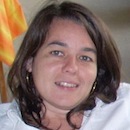
Maria Miragaia
Auxiliary Researcher at Laboratory of Bacterial Evolution and Molecular Epidemiology, Instituto de Tecnologia Quimica e Biologica, Universidade Nova de Lisboa, Portugal. Recipient of the 2010 European Society of Clinical Microbiology and Infectious Diseases (ESCMID) Grant and of the Interscience Conference on Antimicrobial Agents and Chemotherapy (ICAAC) Infectious Diseases fellows Award.
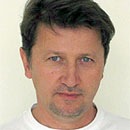
Jiri Vondrasek
Head of Bioinformatics Department at Institute of Organic Chemistry and Biochemistry, Academy of Sciences of the Czech republic, lecturer at faculty of natural sciences, Charles University - Prague, vice president of the Czech Bioinformatics Association and national coordinator of the European infrastructure for biological data - ELIXIR.

Lydia Jimenez-Diaz
Principal investigator of several projects at international, national and regional level, and has participated in over 20 research projects as a partner. Currently co-director of two doctoral courses on the brain regions associated with memory storage and Alzheimer's disease. Research is focused on the molecular and cellular basis of synaptic plasticity processes in the Central Nervous System.