Academic Editors
The following people constitute the Editorial Board of Academic Editors for PeerJ. These active academics are the Editors who seek peer reviewers, evaluate their responses, and make editorial decisions on each submission to the journal. Learn more about becoming an Editor.



Matthieu J Verstraete
Professor of Physics, head of the nanomat group, quantum materials center (Q-MAT) of the CESAM research unit.
Chair of Steering Committee, European Theoretical Spectroscopy Facility. Elected Fellow APS, Young Academy of Europe.

Dilip K Maiti
Dilip K. Maiti was born September 09, 1970, in West Bengal, India. He received his BSc. in chemistry in 1991 and MSc. (organic chemistry major) in 1993, from the University of Calcutta, India. He achieved his Ph.D. on stereoselective synthesis, from Indian Institute of Chemical Biology in 1998. He carried out his postdoctoral research in the School of Medicine, Wayne State University, USA. In 2005, he joined as a Reader faculty at the University of Calcutta and became full Professor in 2011. His major research activity is focused on organic synthesis and fabrication of smart organic nanomaterials, sensors and devices.

Jiang Cui
Dr. Cui is currently a postdoctoral researcher at Hong Kong University of Science and Technology. His research is focused on the development of electrode materials for energy storage applications. He is also interested in applying first-principles calculations and in-situ TEM to study the thermodynamics and kinetics of battery materials.

Patrick S Barber
My professional goals center around the intertwined areas of research and education within science. I am passionate about discovering new science that addresses global needs and sharing these discoveries with a broad audience. I'm committed to technical excellence and exploration in the laboratory and enjoy learning new techniques that increase the breadth of my interdisciplinary background. As a scientist and educator, I want to promote the power of the scientific method through discussion of scientific literacy across disciplines and increase the general awareness of the importance of critical thinking. I seek to develop a balance between my professional life and my personal life in order to maintain a well-rounded view which will result in increased communication, productivity, and organizational skills, as well as to being open to new ideas and cultures, and, ultimately, to contribute to my community and society.

Mahmoud Mabrok
Dr. Mahmooud Mabrok is an Assistant Professor of Fish Diseases and Management at the Suez Canal University, Egypt. He is also a senior postdoctoral researcher in the Department of Microbiology, Fish and Infectious Diseases at Chulalongkorn University, Thailand.
Dr. Mabrok's work broadly concentrates on the development of novel diagnostic tools (PCR-Q PCR, RPA-LFD isothermal amplification for rapid and precise detection of most threatening pathogens, particularly in aquatic species. He also researches multidrug-resistant (MDR) bacterial strains that may affect animal hosts, with the aim of addressing this newly emerging phenomenon and the related public health concerns. In addition to this, Dr. Mabrok carries out research with the aim of finding an alternative remedy for diseases control and/or treatment of infectious diseases using eco-friendly active ingredients, including herbal extracts, prebiotics, probiotics, and synbiotics. Recently, he focused on host pathogen interaction, specifically with the intention of investigating host innate and/or adaptive immunity to cope with bacterial infection.
Dr. Mabrok has many international publications in the field of Fish Diseases, Microbiology and Immunology, and currently works as an Academic Editor for PLOS ONE, USA, BMC Research Note Springer Nature, Journal Of Marine Science Hindawi Group. He has also been appointed as a Guest Editorial Board Member in Frontiers in Bioscience, International Journal of Fisheries and Aquatic Research. He is a scientific reviewer at BMC Research Note, PLOS ONE, Aquaculture, Journal of Fish Diseases, Fish Shellfish Immunology, Environmental Science and Pollution Research, and AMP Express journals.

Noushin Ghaffari
Dr. Noushin Ghaffari is a senior member of the bioinformatics team at Texas A&M AgriLife Genomics and Bioinformatics (TxGen), where she is involved in various projects from planning experiments to data analysis. She is also focused on method development and application projects that will impact scientific community. Her research activities have encompassed various areas of computational biology and have enabled her to study and learn more about the characteristics of multiple species. Furthermore, she intensely pursues her theoretical interests focusing on applications of mathematics in solving biological problems. Dr. Ghaffari has led numerous genome and transcriptome assembly projects for novel species such as cattle tick, gene discovery research though RNA-Seq studies, studying microbiome communities via metagenomics research and etc. Dr. Ghaffari has vast teaching experiences and continues to educate Texas A&M faculty/students/researcher on high performance computing, data analysis and bioinformatics.

Daniel J Moore
Dr. Moore completed his undergraduate training at Harvard University where he also studied at the MGH Transplantation Biology Research Center (TBRC). He continued his focus in transplantation immunology and autoimmune disease during studies in the MSTP program at the University of Pennsylvania. He subsequently completed his training in pediatrics and pediatric endocrinology at Vanderbilt University Medical Center. His laboratory focus is on the restoration of immune regulation in individuals with autoimmune disease. He pursues this effort through studies on the cellular and molecular biology of effector and regulatory lymphocytes and their responses to tolerance-inducing immune therapies.

Scott F Heron
My research experience has spanned over 20 years and has focused on understanding coastal and near-shore environmental physical processes. Each of these research areas has involved the synthesis of physical information with the biological and/or chemical characteristics of the environment through the development of environmental and ecological models. In each of these areas I have published the work in international journals. For several years of this period, I taught physics at universities in Australia and the USA and created courses in environmental physics.

Weijun Luo
Faculty member at the Department of Bioinformatics and Genomics, College of Computing and Informatics, UNC Charlotte.
Research areas include: High throughput genomic data analysis Computational method development and implementation Systems biology on complex diseases and processes Biomedical informatics and computing Personal genome and personalized medicine
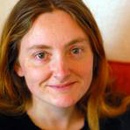
Anna K. Croft
Professor at Loughborough University, specialising in biological chemistry, reaction mechanisms, and ionic liquids.

Jordi Cirera
Jordi Cirera (Barcelona, 1979) graduated in Chemistry from the University of Barcelona (2002) and received his doctorate with honors from the same university in 2006. His first postdoctoral stage was at Stanford University (2007-2010) working on spectroscopic studies and theoretical modeling of copper metalloproteins, under the supervision of Prof. Edward I Solomon. Later, he moved to the University of California, San Diego (UCSD), for a second postdoctoral stage at Prof. Francesco Paesani ́s group, working in the development and implementation of novel methodologies for the computational modeling of spin-crossover processes in Metal-Organic Frameworks (MOFs). He has been visiting researcher at the Max-Planck Institute für Festkörperforschung (MPG-FKF) in Stuttgart and the Institut de Physique et Chimie des Matériaux (ICPMS) in Strasbourg, under the supervision of Prof. Jens Kortus, developing new methods for the calculation of the zero-field splitting parameters in transition metal compounds. Dr. Cirera has been awarded with several grants, including a PhD grant from the Spanish government, a grant from Generalitat de Catalunya for his first postdoctoral stage, and a Beatriu de Pinos/Marie Curie COFUND fellowship grant. He has been speaker at 32 conferences and invited speaker at 5 seminars in international research centers, and is co-author of 36 publications in peer review journals (h-index 21, total citations 2371, 7 as a corresponding author) and two book chapters.

Glen M Borchert
Dr. Glen Borchert holds joint appointments as an Assistant Professor in Biology and Pharmacology at the University of South Alabama. He originally received a B.S. in Biology from the University of Tennessee then completed a Ph.D. in Genetics from the University of Iowa. Dr. Borchert’s research focuses largely on identifying novel genetic regulators and defining their roles in oncogenesis, microbiology and speciation. Since starting his laboratory at South Alabama in August 2012, Dr. Borchert has published dozens of papers in peer reviewed journals and had numerous grant applications funded including a highly prestigious NSF CAREER award (2014-2019).