Academic Editors
The following people constitute the Editorial Board of Academic Editors for PeerJ. These active academics are the Editors who seek peer reviewers, evaluate their responses, and make editorial decisions on each submission to the journal. Learn more about becoming an Editor.



Hans Martin Senn
Hans Martin Senn obtained his undergraduate and PhD degrees in Chemistry from ETH Zürich. For his undergraduate thesis project in 1996/97, he went to Imperial College, London, where he was supervised by Mike Mingos, who got him into (EHT and DFT) calculations. Back in Switzerland, he did his PhD with Antonio Togni at ETH and Peter Blöchl at the IBM Zürich Research Centre. After a first postdoc with Tom Ziegler in Calgary, he worked in Walter Thiel's group at the Max Planck Institute for Coal Research in Mülheim an der Ruhr (Germany). Since 2007, he has been a lecturer in Theoretical and Computational Chemistry at the University of Glasgow (UK).

Nikos Koutsias
Nikos Koutsias is an Associate Professor at the Department of Environmental and Natural Resources Management, University of Patras, Greece, where he gives courses about remote sensing, GIS and spatial analysis. He obtained his diploma degree in Environmental Studies from the University of Aegean, his M.Sc. degree in Environmental and Renewable Resources, Mediterranean Agronomic Institute of Chania, and his Ph.D. from the Department of Forestry and Natural Environment, Aristotle University of Thessaloniki. He held a post doctorate position at Geographic Information Systems division (GIS) in the Department of Geography, University of Zurich.
He has been working in the field of remote sensing, GIS and spatial analysis with special emphasis on wildland fires, forestry, ecology and other natural hazards for the last 25 years. He has participated in national and European projects and is the recent recipient of a Marie Curie Individual Scholarship.

Simone Riehl
Lecturer for Environmental Archaeology at the University of Tübingen. Interdisciplinary Research Fellowship, Center for Climatic Research at the University of Wisconsin-Madison. Heisenberg awardee at the University of Freiburg. Member of the Tübingen-Senckenberg Center for Human Evolution and Paleoecology. Archaeobotanist in several archaeological excavations in the Near East, including Turkey, Syria, Lebanon, Israel, Jordan and Iran.

Yashonath Subramanian
Obtained Ph.D. from Indian Institute of Science, Bangalore and then spent time at Department of Chemistry, University of Cambridge, Cambridge and Royal Institution of Great Britain, London and University of Pennsylvania, Philadelphia.
Interests include molecular simulation, computational methods, physical chemistry, intermolecular interaction, phase transitions and diffusion. Visiting Professor at several institutions in Europe and Japan such as University of Sassari in Sardinia, Italy as well as IMR, Sendai University.

Alexandra Lusser
Associate Professor at the Medical University of Innsbruck, Austria. Our work includes the study of chromatin modulating factors in Drosophila and mouse and the analysis of posttranscriptional modifications on RNA.

Carsten Baldauf
I have studied Biochemistry at Universität Leipzig. In my Diploma thesis I started to use computer simulations (quantum chemistry) to study structure formation in non-natural peptides. I continued along these lines in my PhD studies, also in Leipzig. During a PostDoc stay at BIOTEC of TU Dresden, I started using empirical models (a.k.a. force fields) and dedicated myself to the development of structure search techniques with a focus on molecular docking. My next stop then was in Shanghai. With a Lynen Postdoc fellowship by Humboldt Foundation, I had the chance to investigate regulatory mechanisms and function of the blood protein von Willebrand factor, a key molecule in primary hemostasis. Since 2010, I am a scientist at Fritz Haber Institute (FHI) of the Max Planck Society, since 2013 I am a a group leader. Our work here deals with biomolecules in thin air (i.e. theoretical gas-phase spectroscopy of peptides and carbohydrates), large-scale overview studies on amino acid-cation structures, and organic reactions. Recently, I got interested in data science, data infrastructures and ontologies. I am teaching at Freie Universtität Berlin and was a visiting professor at Universität Leipzig replacing the Chair for Theoretical Chemistry. Since January 2020 I am Representative of the Board at Fritz Haber Institute of the Max Planck Society.

Kai-Uwe Hinrichs
A biogeochemist studying the interactions between microbial life and the carbon cycle on a range of spatial, temporal and molecular scales. Interested in which and how microbes shape element cycles and what the related environmental consequences are.
Current research foci encompass the marine deep biosphere, methane biogeochemistry, life in extreme environments, development of new analytical protocols for the analysis of organic trace constituents in geological sample matrices, prokaryotic membrane lipid taxonomy, and the study of paleoenvironments.

David S. Milstone
Assistant Professor of Pathology, Brigham and Women's Hospital and Harvard Medical School.

Haibo Yu
Dr Haibo Yu completed his undergraduate study at the University of Science and Technology of China and his Ph.D. at the ETH Zürich, Switzerland. He then conducted postdoctoral training at the University of Wisconsin-Madison and the University of Chicago in the United States. He joined the School of Chemistry and Molecular Bioscience at the University of Wollongong in July 2010.
Research in his group is focused on developing and applying theoretical and computational tools to understand the structure-dynamics-function relationship in complex (bio)molecular and nanoscale systems.

Shoba Ranganathan
Shoba Ranganathan holds a Chair in Bioinformatics at Macquarie University since 2004. She has held research and academic positions in India, USA, Singapore and Australia as well as a consultancy in industry. She hosted the Macquarie Node of the ARC Centre of Excellence in Bioinformatics (2008-2013). She was elected the first Australian Board Director of the International Society for Computational Biology (ISCB; 2003-5); President, Asia-Pacific Bioinformatics Network (2005-2016) and Steering Committee Member (2007-12) of Bioinformatics Australia. She currently serves as Co-Chair of the Computational Mass Spectrometry (CompMS) initiative of the Human Proteome Organization (HuPO), ISCB and Metabolomics Society and as Board Director, APBioNet Ltd. Shoba’s research addresses several key areas of bioinformatics to understand biological systems using computational approaches. Her group has achieved both experience and expertise in different aspects of computational biology, ranging from metabolites and small molecules to biochemical networks, pathway analysis and computational systems biology. She has authored as well as edited several books in Immunoinformatics as well as contributed several articles to the Encyclopedia of Systems Biology, published by Springer in 2013. She is currently Editor of Elsevier's Reference Module in Life Sciences and Editor-in-Chief of Elsevier's Encyclopedia of Bioinformatics and Computational Biology.

Ali Torkamani
Dr. Torkamani obtained his undergraduate degree in chemistry at Stanford University, where he received a Bing Foundation Chemistry Research Fellowship, and his doctorate in biomedical sciences at the University of California, San Diego under the mentorship of Dr. Nicholas Schork as an NIH Genetics Predoctoral Training awardee. In 2008, he joined the Scripps Translational Science Institute as a Research Scientist and Donald C. and Elizabeth M. Dickinson Fellow, and shortly thereafter as an Assistant Professor of Molecular and Experimental Medicine and Mario R. Alvarez Fellow. As an Assistant Professor Dr. Torkamani received a Blasker Science and Technology and PhRMA Foundation Award. In 2012, Dr. Torkamani advanced to Director of Genome Informatics at STSI where he leads various human genome sequencing and other genomics initiatives. Dr. Torkamani is also co-founder and Chief Scientific Officer of Cypher Genomics, Inc.
Dr. Torkamani’s research covers a broad range of areas centered on the use of genomic technologies to identify the genetic etiology and underlying mechanisms of human disease in order to define precision therapies for diseased individuals. Major focus areas include human genome interpretation and genetic dissection of novel rare diseases, predictive genomic signatures of response to therapy – especially cancer therapy, and novel sequencing-based assays as biomarkers of disease.
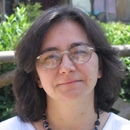
Roberta Pierattelli
Roberta Pierattelli graduated in Chemistry at the University of Florence and received a Ph.D. in Chemistry in 1995. After a postdoctoral year at the University of Southampton, she was appointed at the University of Florence. Since 2017 she is Full Professor of Chemistry. Her research interests are mainly related to applications of NMR spectroscopy to the study of the structure and function of proteins and their interactions.