Academic Editors
The following people constitute the Editorial Board of Academic Editors for PeerJ. These active academics are the Editors who seek peer reviewers, evaluate their responses, and make editorial decisions on each submission to the journal. Learn more about becoming an Editor.



Gizachew Tessema
Dr. Gizachew Tessema is a perinatal and reproductive epidemiologist and health care services researcher with research interest that employed advanced statistical analyses, mixed methods research (MMR), and qualitative study. He is currently based at the Curtin School of Population Health, Curtin University.

Haikun Zhao
I am a full Professor in the College of Atmospheric Science at Nanjing University of Information Science & Technology (NUIST), China. I received my Ph.D. in Atmospheric Science from NUIST in 2012. I have been working on tropical cyclones and climate change, seasonal and intra-seasonal tropical cyclone forecasts since 2007. I have published over 50 articles in peer-reviewed journals such as the Nature Communications, Journal of Climate, and Geophysical Research Letters.
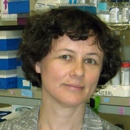
Irina U Agoulnik
Associate Professor at FIU College of Medicine. Director of Histopathology Core. Academic Editor of PLoS ONE.

Claudia Colesie
I obtained my Diploma in 2009 in the group of Prof. Burkhard Büdel, at the University of Kaiserslautern. For my doctoral work, I joined an international collaboration within a New Zealand research project under the leadership of Prof. T.G. Allan Green and Prof. Craig Cary; NZTabs; both at University of Waikato. After finishing my PhD thesis I continued working in the group of Burkhard Büdel as a lecturer with the opportunity to additionally join a trans-European BioDiversa project.
As a direct consequence from these experiences I learned that tundra ecosystems, where low temperatures and short growing seasons limit tree growth but water availability is high, are highly productive soil crusts habitats. I, therefore, collaborated in the POLARCRUST project that focused on biological soil crusts from the Antarctic Peninsula and Arctic Svalbard coordinated by Ulf Karsten, University of Rostock, Germany. In addition, I started my project as an Alexander-von Humboldt research fellow within the group of Prof. Vaughan Hurry at the Swedish University of Agricultural Sciences in Umeå. Additionally, I am currently involved in a research Project (CRYPTOCOVER), with Prof. Leopoldo Sancho (Universidad Complutense Madrid, Spain.I will start working as a lecturer for plant physiological ecology at the University of Edinburgh with the School of Geosciences in the Climate change Institute from January 2019.

Ruben J. Cauchi
Ruben J. Cauchi is an Associate Professor of Neurogenetics at the University of Malta School of Medicine. He obtained his D.Phil. from the University of Oxford (UK) and did his postdoctoral research at the MRC Laboratory of Molecular Biology, University of Cambridge (UK). Prof. Cauchi heads the ALS/MND Lab at the University of Malta and leads Malta’s National ALS/MND Registry & BioBank, aiming at understanding the cause of motor neuron disease (MND) including amyotrophic lateral sclerosis (ALS) and identify innovative treatments.

Marco Painho
Marco Painho is a Professor of Geographic Information Systems and Science at the Nova School of Information Management (NOVA IMS) of the Universidade Nova de Lisboa, Portugal. He holds a degree in Environmental Engineering by the Universidade Nova de Lisboa, a Master in Regional Planning by the University of Massachusetts, Amherst and a PhD in Geography by the University of California, Santa Barbara. He is the coordinator of the Master in Geographic Information Systems and Science (UNIGIS PT) and the Master od Science in Geospatial Technologies (Erasmus Mundus). He has over 30 years of experience in the GIS domain and coordinated over 100 projects in the application areas of the environment, natural resources management transportation, teaching among others. He is the author and editor of over 200 academic and professional publications.

Fernando Lidon
Prof. Fernando Lidon is Full Professor within the Department of Earth Sciences in the Faculty of Science and Technology of the New University of Lisbon.
His research interests include, Phytotechnology, Food Technology, Biochemistry, Plant Physiology and Agro Industry.
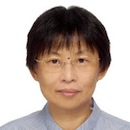
KoonGee Neoh
Professor of Chemical Engineering at the National University of Singapore. Recipient of the 1996 National Science Award of Singapore.

Tim P Levine
Tim Levine trained first as a medic then moved into membrane cell biology, and then into intracellular lipid traffic. He showed that inter-organellar contacts are important sites for non-vesicular traffic inside cells. This was part of a revolution in our understanding of intracellular organelles. For over 40 years previously membrane contact sites had been largely ignored or dismissed as artefacts. Tim initially found a lipid transfer protein that localised to a contact site, and showed that it bound to the endoplasmic reticulum (ER) protein VAP via a motif he named the FFAT motif. FFAT motifs are present in several other lipid transfer proteins leading Tim to propose that FFAT-motif proteins would act at contact sites by binding simultaneously to both the ER and another membrane. By improving the definition of FFAT-like motifs, Tim showed they are present in numerous other proteins, facilitating molecular research of many contact site components. Tim organised the first two conferences on contact sites in 2005 and 2011, linking advances in lipid traffic to those in calcium traffic to bring together these overlapping sub-disciplines.
Tim has also used remote homology tools to identify a new family of lipid transfer proteins anchored at contact sites, and highlighted the power of these tools through specific examples and a ‘How-To’ guide.

Andreas Brodehl
Dr. Andreas Brodehl is a Principal Investigator at the Heart and Diabetes Center NRW, University Hospital of the Ruhr-University Bochum, Erich and Hanna Klessmann Institute.
His research interests include genetic cardiomyopathies, using different models such as cardiomyocytes derived from induced pluripotent stem cells, and mouse and zebrafish for functional and structural analysis. In addition, he uses explanted myocardial tissue for histology, gene expression and structural investigations.

Mingxu You
Dr. Mingxu You received his B.S. degree in Chemistry from Peking University in 2008, and his Ph.D. degree in Chemistry from the University of Florida in 2012. Dr. You joined the University of Massachusetts at Amherst as an Assistant Professor of Chemistry in September 2016. He is now also a faculty member of Institute for Applied Life Sciences, Chemistry-Biology Interface Program, Molecular & Cellular Biology Graduate Program, Center for Biological Physics, Center for Clinical and Translational Sciences, and Center for Autonomous Materials at UMass. Dr. You has co-authored over 55 journal articles and 2 book chapters. Most of his work has been published in top journals including Nature Nanotechnology, Nature Chemistry, PNAS, JACS, Angewandte Chemie, Nano Lett, ACS Nano, Anal Chem, and Chem Sci. His work has been highly recognized with over 3000 citations.

Ping Wang
Associate professor of Pediatrics, Microbiology, Immunology, and Parasitology with the research emphasis on molecular mechanisms of fungal pathogenesis.