Academic Editors
The following people constitute the Editorial Board of Academic Editors for PeerJ. These active academics are the Editors who seek peer reviewers, evaluate their responses, and make editorial decisions on each submission to the journal. Learn more about becoming an Editor.



Jennifer L Whitwell
Associate Consultant and Associate Professor of Radiology, Mayo Clinic.
Research focuses on the investigation of neuroimaging biomarkers in different neurodegenerative disorders, particularly frontotemporal dementia, primary progressive aphasia, atypical Alzheimer's disease and progressive supranuclear palsy.
Editorial board member, Scientific Reports journal, Nature Publishing Group, 2014-present
Academic Editor, PeerJ journal, 2012-present
Junior Investigator Award for Excellence in Imaging and Aging Research, American Federation for Aging Research-GE Healthcare, 2010
Best Paper in Alzheimer's Disease Neuroimaging: New Investigator Award, Alzheimer's Association, 2009

Dilip K Maiti
Dilip K. Maiti was born September 09, 1970, in West Bengal, India. He received his BSc. in chemistry in 1991 and MSc. (organic chemistry major) in 1993, from the University of Calcutta, India. He achieved his Ph.D. on stereoselective synthesis, from Indian Institute of Chemical Biology in 1998. He carried out his postdoctoral research in the School of Medicine, Wayne State University, USA. In 2005, he joined as a Reader faculty at the University of Calcutta and became full Professor in 2011. His major research activity is focused on organic synthesis and fabrication of smart organic nanomaterials, sensors and devices.

Jane M. Waterman
Professor of Biology at the University of Manitoba and Research Fellow of the Mammal Research Institute, Department of Zoology and Entomology at the University of Pretoria. Academic editor of PLOS ONE and former Associate Editor of the Journal of Mammalogy.

Marco Painho
Marco Painho is a Professor of Geographic Information Systems and Science at the Nova School of Information Management (NOVA IMS) of the Universidade Nova de Lisboa, Portugal. He holds a degree in Environmental Engineering by the Universidade Nova de Lisboa, a Master in Regional Planning by the University of Massachusetts, Amherst and a PhD in Geography by the University of California, Santa Barbara. He is the coordinator of the Master in Geographic Information Systems and Science (UNIGIS PT) and the Master od Science in Geospatial Technologies (Erasmus Mundus). He has over 30 years of experience in the GIS domain and coordinated over 100 projects in the application areas of the environment, natural resources management transportation, teaching among others. He is the author and editor of over 200 academic and professional publications.

Ignacio Arganda-Carreras
Ignacio Arganda-Carreras (Madrid, 1980) is a European PhD in Computer Engineering and Telecommunications by the Autonomous University of Madrid and holds a BSc in Computer Engineering from the same university. He took postdoctoral studies at the department of Brain and Cognitive Sciences of the Massachusetts Institute of Technology from 2009 to 2013 and at the Jean-Pierre Bourgin Institute of the Institut National de la Recherche Agronomique, Versailles, from 2013 to 2015.
During his doctorate studies he carried out research stays at the Lawrence Berkeley National Laboratory in Berkeley (California, 2002-2004), at the Centre for Machine Perception of the Technical University of Prague (2005) and at the Applied Medical Research Centre of the University of Navarra in Pamplona (2006). He has worked as a consultant for the Max Planck Institute of Cellular Biology and Genetics in Dresden (2009) and for the Institute of Neuroinformatics in Zurich (2009).
Since September 2015 he is an Ikerbasque Research Fellow at the Department of Computer Science and Artificial Intelligence of the University of the Basque Country.

Tim P Levine
Tim Levine trained first as a medic then moved into membrane cell biology, and then into intracellular lipid traffic. He showed that inter-organellar contacts are important sites for non-vesicular traffic inside cells. This was part of a revolution in our understanding of intracellular organelles. For over 40 years previously membrane contact sites had been largely ignored or dismissed as artefacts. Tim initially found a lipid transfer protein that localised to a contact site, and showed that it bound to the endoplasmic reticulum (ER) protein VAP via a motif he named the FFAT motif. FFAT motifs are present in several other lipid transfer proteins leading Tim to propose that FFAT-motif proteins would act at contact sites by binding simultaneously to both the ER and another membrane. By improving the definition of FFAT-like motifs, Tim showed they are present in numerous other proteins, facilitating molecular research of many contact site components. Tim organised the first two conferences on contact sites in 2005 and 2011, linking advances in lipid traffic to those in calcium traffic to bring together these overlapping sub-disciplines.
Tim has also used remote homology tools to identify a new family of lipid transfer proteins anchored at contact sites, and highlighted the power of these tools through specific examples and a ‘How-To’ guide.

Stefan D Baral
Stefan Baral is a physician epidemiologist and an Associate Professor in the Department of Epidemiology at the Johns Hopkins School of Public Health (JHSPH). Stefan has led epidemiological studies among key populations including men who have sex with men and sex workers in Southern, Eastern, and Western African countries as well as in Central and Southeastern Asia. Stefan acts as the Director of the Key Populations Program for the Center for Public Health and Human Rights at the JHSPH.

Mahmoud Mabrok
Dr. Mahmooud Mabrok is an Assistant Professor of Fish Diseases and Management at the Suez Canal University, Egypt. He is also a senior postdoctoral researcher in the Department of Microbiology, Fish and Infectious Diseases at Chulalongkorn University, Thailand.
Dr. Mabrok's work broadly concentrates on the development of novel diagnostic tools (PCR-Q PCR, RPA-LFD isothermal amplification for rapid and precise detection of most threatening pathogens, particularly in aquatic species. He also researches multidrug-resistant (MDR) bacterial strains that may affect animal hosts, with the aim of addressing this newly emerging phenomenon and the related public health concerns. In addition to this, Dr. Mabrok carries out research with the aim of finding an alternative remedy for diseases control and/or treatment of infectious diseases using eco-friendly active ingredients, including herbal extracts, prebiotics, probiotics, and synbiotics. Recently, he focused on host pathogen interaction, specifically with the intention of investigating host innate and/or adaptive immunity to cope with bacterial infection.
Dr. Mabrok has many international publications in the field of Fish Diseases, Microbiology and Immunology, and currently works as an Academic Editor for PLOS ONE, USA, BMC Research Note Springer Nature, Journal Of Marine Science Hindawi Group. He has also been appointed as a Guest Editorial Board Member in Frontiers in Bioscience, International Journal of Fisheries and Aquatic Research. He is a scientific reviewer at BMC Research Note, PLOS ONE, Aquaculture, Journal of Fish Diseases, Fish Shellfish Immunology, Environmental Science and Pollution Research, and AMP Express journals.

Andrew J Hoy
Dr. Hoy is Head of the Lipid Metabolism Laboratory in the School of Medical Sciences. His lab is a member of the Charles Perkins Centre. He is a Visiting Scientist in the Cancer Division of the Garvan Institute of Medical Research.
Dr. Hoy completed his BSc (Biomed Sc) and MSc (Research) at the University of Wollongong and PhD studies at the Garvan Institute of Medical Research. He performed postdoctoral training at Monash University where he was a recipient of an NHMRC Biomedical Australian Research Fellow (2010-2013).
Dr. Hoy's laboratory is focused on the regulation of lipid metabolism, predominantly fatty acid storage and utilisation, and how this may be perturbed in chronic disease states such as cancer, obesity and insulin resistance.
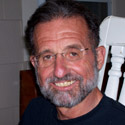
William A. Knaus
Director of Applied Genomics in Informatics at Center for Clinical Research in Informatics, NorthShore Research Institute Evanston, Illinois and Professor of Medicine University of Chicago. Former Evelyn Troup Hobson Professor & Founding Chair Department of Public Health Sciences, M.D., University of Virginia School of Medicine (1995-2012). Director ICU Research George Washington University School of Medicine & founder, former board member and CEO of Apache Medical Systems (Inc.) 1988-2000.

Marc-Antoine Sani
Marco obtained his PhD from the University of Umeå (Sweden) and the European institute of chemistry and biology (France) in 2008. His field of expertise is biophysics with special interest in solid-state and DNP NMR spectroscopy. In particular, his focus is to develop in situ techniques to study living cells and to elucidate the role of membrane lipids in the molecular mechanism of diseases. He is an editor for ANZMAGazine, Bio-protocol and Protein and Peptide Letters.
Tatyana Polenova
Professor of Chemistry at University of Delaware. Editor of the Encyclopedia of Magnetic Resonance. Member of the American Chemical Society Joint Board Council Committee on Publications. Recipient of the Erasmus Mundus scholarship (2011-2012). Chair-Elect of the 55th Experimental Nuclear Magnetic Resonance (ENC) Conference.