Academic Editors
The following people constitute the Editorial Board of Academic Editors for PeerJ. These active academics are the Editors who seek peer reviewers, evaluate their responses, and make editorial decisions on each submission to the journal. Learn more about becoming an Editor.



Diego Romero
Associate Professor of Microbiology in University of Málaga (Spain). Head of Department of Microbiology and Crop Protection in IHSM-UMA-CSIC. Past Ramon y Cajal Investigator. Postdoctoral training in Harvard Medical School.

Martina Schroeder
Dr Martina Schroeder is a Lecturer and Head of the Host-Pathogen Interaction Lab at Maynooth University. Her research addresses viral recognition, innate immune signaling pathways, and the roles of DEAD-box proteins in immunity. Previously Dr Schroeder conducted postdoctoral research with Prof. Andrew Bowie at Trinity College Dublin. In 2007, she was awarded a postdoctoral career development fellowship by the Irish HRB. She completed her PhD at the Charité University Hospital in Berlin in 2003.

Alberto Carbonell
CSIC Group Leader working at Institute for Plant Molecular and Cell Biology.
Research has focused on the study of different areas of RNA biology in plants and viruses: from the basic understanding on how RNAs regulate gene expression and control or induce diseases to a more applied and biotechnological research aiming to engineer artificial RNAs for the efficient and selective control of plant gene expression or to repress pathogenic RNAs and generate disease resistance.
Current research seeks to develop GMO-free biotechnological tools for crop improvement based on artificial small RNAs.

Mykola Kut
Dr. Mykola Kut is an Associate Professor at the Department of Organic Chemistry at the Uzhhorod National University, where he been employed since 2018, first as a researcher, then as an Assistant, before moving onto his current role.
Dr. Kut received his M.Sc in Organic Chemistry with honors from the Uzhhorod National University (formerly Uzhhorod State University) in 2014, followed by a PhD in Organic Chemistry from the same University in 2017.
His general research interests include, Organic & Organometalic Chemistry, Ecology and Analytical Chemistry, Pharmaceutical Chemistry, Chemical Education.
More specifically, Dr. Kut's current research interests centre around the synthesis and reactivity of fused quinoline and pyrimidines, applied metalorganic chemistry, the development of new synthetic methods to application of halogens, inorganic chalcogenhalogenides and organochalcogenhalogenides substrates in the electrophilic cyclization reactions, and evolution of received compound as biological active compounds.
His research interests in the educational sphere includes generalization of the main aspects of Chemical education in different universities and countries; including the problem of implementation of scientometric principles in the university educational system.

Hans G Dam
I am a biological oceanographer currently interested in plankton ecology and evolution. Currently, I use evolutionary ecology approaches to study the response of planktonic populations of copepods and some phytoplankton to global change drivers. I am also interested in harmful algal blooms, particularly in the evolution of toxic prey defense mechanisms and predator tolerance or resistance to these prey.
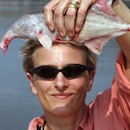
Melanie L.J. Stiassny
Axelrod Research Curator of Fishes, Division of Vertebrate Zoology, and Professor, Richard Gilder Graduate School at the American Museum of Natural History.
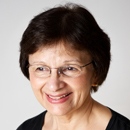
Silvia N. J. Moreno
Professor of Cellular Biology and member of the Center for Tropical and Emerging Global Diseases of the University of Georgia. Former recipient of a Burroughs Welcome New Investigator Award. Undergraduate Coordinator of the Department of Cellular Biology.
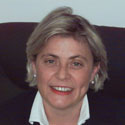
Barbara Ensoli
Director of the National AIDS Center, Istituto Superiore di Sanità, Rome, Italy. Co-Vice President and Member of the Presidential Committee of the AIDS National Commission, Ministry of Health. Member of the European Molecular Biology Organisation (EMBO).

Kate N Bishop
Group Leader at The Francis Crick Institute from April 2015. Programme Leader and Wellcome Trust Career Development Fellow at National Institute for Medical Research in London, UK from end of 2008. Previously, Royal Society Dorothy Hodgkin Fellow at King’s College London.
Kate Bishop received a first class (hon) BSc in Biochemistry from the University of Bath following two research placements; one at the Karolinska Institute in Stockholm, Sweden and the other at Chiron Corporation in San Francisco, USA.
After completing her PhD studies with Jonathan Stoye working on the retroviral restriction factor, Fv1, she undertook postdoctoral training with Michael Malim at King's College London, investigating the APOBEC family of retroviral restriction factors.
Kate was awarded a prestigious Royal Society Dorothy Hodgkin Fellowship in 2004 to continue her APOBEC research.

Lakshminarayan M Iyer
I received my PhD in plant virology and pursue problems in evolutionary biology. My primary research contributions and interests are in the fields of protein evolution and classification, genome evolution, protein biochemistry and functional predictions, and organismal biology.
Main areas of research:
* Protein evolution and classification.
Identifying trends in genome evolution.
* Prediction of novel biochemical activities and biological functions of proteins.
* Using comparative sequence and genome analysis to make inferences on organismal biology
* Understanding the forces of evolution that shape protein domain diversity.

Henning Hermjakob
As co-founder of the HUPO Proteomics Standards Initiative (PSI), Henning Hermjakob contributed to the development of a broad range of community data representation standards for proteomics and interactomics. Based on the trust and collaborative spirit built up in the development of data representation standards, he coordinated the next step, the intensive collaboration of proteomics and interactomics data resources globally in the IMEx [3] and ProteomeXchange [4] consortia, providing infrastructure support for the move towards an open data culture in proteomics. Building on his experience in interactomics, he is now co-PI of the Reactome Pathways database [1] and the BioModels resource of systems biology models [2]. Current research interests comprise distributed data resources (http://omicsdi.org) and complex data visualisation.
1. Fabregat A, et al. The Reactome pathway Knowledgebase. Nucleic Acids Res. 2016 Jan 4;44(D1):D481-7.
2. Chelliah V, et al. BioModels: ten-year anniversary. Nucleic Acids Res. 2015 Jan;43 (Database issue):D542-8.
3. Orchard S, et al. Protein interaction data curation: the International Molecular Exchange (IMEx) consortium. Nat Methods. 2012 Mar 27;9(4):345-350.
4. Vizcaíno JA, et al. ProteomeXchange provides globally coordinated proteomics data submission and dissemination. Nat Biotechnol. 2014 Mar 10;32(3):223-6.
5. Lander ES, et al. Initial sequencing and analysis of the human genome.
Nature. 2001 Feb 15;409(6822):860-921.

Hideaki Shirota
Associate Professor of Chemistry, Chiba University, Japan. I study the fs-ps dynamics in condensed phases including molecular liquids, ionic liquids, and hydrogen-bonding systems. In particular, we focus on the intermolecular vibrational dynamics