Academic Editors
The following people constitute the Editorial Board of Academic Editors for PeerJ. These active academics are the Editors who seek peer reviewers, evaluate their responses, and make editorial decisions on each submission to the journal. Learn more about becoming an Editor.



Joshua C Carr
Dr. Joshua Carr is an Assistant Professor in the Kinesiology Department at Texas Christian University and the Department of Medical Education at the Burnett School of Medicine. He is the Director of the Neuromuscular Physiology Laboratory on TCU’s main campus and was recently awarded the BIGXII Faculty Fellowship Award. His primary research focus relates to exercise training with a specific interest in the adaptations that occur with single-limb exercise and interventions that restore and enhance neuromuscular function. He uses surface electromyography, mechanomyography, and neuromuscular stimulation techniques to assess the human neuromuscular system with fatigue, training, injury, and disease.
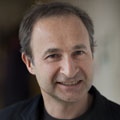
Jim van Os
Professor of Psychiatry and Chairman of the Department of Psychiatry and Psychology at Maastricht University Medical Centre, The Netherlands, and Visiting Professor of Psychiatric Epidemiology at the Institute of Psychiatry, London, UK. Academic Editor at PLoS ONE. Member of the Royal Netherlands Academy of Arts and Sciences (2011).

Ryan Christopher Sullivan
Associate Professor of Chemistry, and Mechanical Engineering at Carnegie Mellon University, with a courtesy appointment in Civil and Environmental Engineering. He is also a faculty member in the Center for Atmospheric Particle Studies. Hon.B.Sc. in Chemistry from the University of Toronto, Ph.D. in Chemistry from the University of California, San Diego. Before moving to Carnegie Mellon University in 2012 he completed his postdoctoral research in Atmospheric Science at Colorado State University. Recipient of a Faculty Early Career Development (CAREER) award from the National Science Foundation, and the National Academy of Science’s Cozzarelli Prize.
Developing laser-based analytical techniques for real-time analysis of individual aerosol particle composition. These include laser ablation single-particle mass spectrometry, aerosol optical tweezers, and microfluidic devices for ice nucleation research. The multi-phase chemical evolution of biomass burning aerosol from wood smoke is a major current focus. Experimental studies include the alteration of the ice nucleation properties of smoke particles induced by chemical aging; and the activation of photo-labile chlorinated gases from heterogeneous reactions of nitrogen oxides with smoke aerosol. Recently active in evaluating the kinetics and biosafety of catalysts for sustainable ultra-dilute oxidation catalysis.

Łukasz Szeleszczuk
Dr. Łukasz Szeleszczuk is a Professor at the Medical University of Warsaw. His main areas of interest are DFT calculations, especially for the solid state systems, and solid state NMR spectroscopy.

Carlo Petrongolo
RECENT RESEARCH ACTIVITY
Quantum theories and calculations of molecular excitations and dynamics
Nonadiabatic effects in triatomics
About 110 papers in international referred journals and books
POSITIONS & DEGREES
1987-present Professor of Physical Chemistry, Universita' di Sassari, Universita' di Siena, IPCF-CNR, Pisa, Italy
1980-86 Associated professor of Physical Chemistry, Universita' di Pisa
1980 von Humboldt Fellow, University of Bonn, Germany
VISITING POSITIONS
2016 Istituto di Struttura della Materia, CNR, Roma, Italy.
2012, 2005 University of Barcelona, Spain.
2008 University of Besançon, France.
2000 Argonne National Laboratory, Argonne, IL, USA
1999 Northwestern University, Evanston, IL, USA.
1979-95 Universities of Bonn and Wuppertal, Germany
1975 J. Hopkins University, Baltimore, MA, USA
DIRECTOR of SCIENTIFIC PROJECTS
2008-11 ESA-ESTEC, Noordwijk, The Netherlands
2005-06 Integrated actions Italy-Spain
1987-2011 Ministero dell'Istruzione, dell'Universita', e della Ricerca, Sassari and Siena
1984-99 CNR, Pisa, Sassari, and Siena
1982-1983 NATO, Bonn
SCIENTIFIC SOCIETIES
Societa' Chimica Italiana, European Photochemical Association, Royal Chemical Society, American Chemical Society.
SCOPUS AUTHOR
6602079531
WoS RESEARCHER
J-8745-2016
ORCID
0000-0002-9655-7641
RESEARCH GATE
Carlo Petrongolo
GOOGLE SCHOLAR
https://scholar.google.it/scholar?hl=it&as_sdt=0%2C5&q=carlo+petrongolo&oq=pe

Marc Tebruegge
Marc trained in Paediatrics and Paediatric Infectious Diseases in the UK (Great Ormond Street Hospital, St Mary's Hospital London), Germany, South Africa (University of Cape Town) and Australia (University of New South Wales). After 4 years of research into improved immunodiagnostics for childhood tuberculosis at the University of Melbourne and the Royal Children's Hospital Melbourne, he returned to the UK in 2011 as NIHR Academic Clinical Lecturer in Paediatric Infectious Diseases & Immunology.

Zhijin Wu
I develop statistical methodology and software for the analysis of -omics data. I am particularly interested in the regulation of transcription: the molecular mechanism as well as its association with disease.

Steven J Bograd
Dr. Steven Bograd is an oceanographer at NOAA’s Environmental Research Division in Monterey, California, and an Adjunct Faculty at the Department of Ocean Sciences, University of California-Santa Cruz. His research is focused on physical-biological interactions, eastern boundary current systems, climate variability, marine biologging, fisheries oceanography, and ecosystem-based management. He is currently involved in a number of research projects studying climate variability and its impacts on the marine ecosystems of the North Pacific Ocean. Steven was co-Principal Investigator of the Census of Marine Life’s Tagging of Pacific Predators (TOPP) program, and is currently an Editor-in-Chief at Fisheries Oceanography and co-chair of the PICES FUTURE Scientific Steering Committee. Steven received his PhD in Oceanography from the University of British Columbia in 1998, and held a post-doctoral fellowship at Scripps Institution of Oceanography before coming to NOAA Southwest Fisheries Science Center in 2001.

Joshua Wolf
Dr. Joshua Wolf, PhD, MBBS is an associate faculty member and clinical investigator at St. Jude Children's Research Hospital within the Department of Infectious Diseases.
His research interests include; Prediction, Prevention and Treatment of Infections in Immunocompromised Children, and the Management of Device-Associated Infections.

Hope A Michelsen
Distinguished Member of the Technical Staff in the Combustion Research Facility at Sandia National Laboratories. A.B. in Chemistry from Dartmouth College, Ph.D. in Chemistry with a minor in Physics from Stanford University. Elected Fellow of the Optical Society (OSA).
My current research interests include developing and using optical and X-ray techniques for studying the chemistry of combustion-generated particles inside the combustor and their evolution after release into the atmosphere. My research experience includes gas-surface scattering experiments, atmospheric modeling, soot-formation studies, combustion-diagnostics development, atmospheric black-carbon measurements, and greenhouse-gas source attribution.

Xiaodong Zhang
Xiaodong Zhang graduated from Peking University in 1988, majoring in Nuclear Physics. She then went to Stony Brook University to pursue her PhD in Physics in the group of Professor Janos Kirz . After her PhD in 1995, she went to Harvard University for her postdoctoral training in X-ray crystallography under the guidance of Professor Don Wiley. She took up a lecturership at Imperial College London in 2001. She was promoted to Professor of Macromolecular Structure and Function in 2008. Her current research focuses on elucidating the structures and molecular mechanisms of macromolecular machines, especially those involved in DNA processing including the transcription apparatus and its regulators, components in DNA damage signaling and repair.

Diane P Hanger
Professor of Neuroscience at King's College London, Institute of Psychiatry, Psychology & Neuroscience.