Academic Editors
The following people constitute the Editorial Board of Academic Editors for PeerJ. These active academics are the Editors who seek peer reviewers, evaluate their responses, and make editorial decisions on each submission to the journal. Learn more about becoming an Editor.


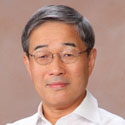
Tadashi Yamamoto
Professor of Cell Signal Unit, Okinawa Institute of Science and Technology Graduate University. Editorial Board: Genes to Cells, Molecular Biology of the Cell, Protein and Cell, Experimental & Molecular Medicine. Awarded 1987, Princess Takamatsu Cancer Research Fund Prize, 1990 Asahi Prize, 2003 NIH Fogarty Scholar-in-Residence. Former director of the Institute of Medical Science, University of Tokyo.

Mitchell S Stark
For the past 20 years I have been actively working in the field of melanoma and naevi genomics. I have worked and performed my PhD candidature based at the QIMR Berghofer Medical Research Institute (1999-2015) and in 2015 I relocated as a Research Fellow in the Dermatology Research Centre, The University of Queensland Diamantina Institute. Over this time I have been working towards understanding the aetiology of melanoma, studying gene dysregulation during tumour progression along with predisposition to melanoma in families with high risk for melanoma development. My research group (genomics and miRNA biomarker discovery) based within the Dermatology Research Centre (UQDI) is currently engaged in miRNA biomarker and genomics research for early detection in melanoma, skin cancer (SCC), as well as non-small cell lung cancer.

Peng He
Dr. He is Associated Professor of Entomology of Center for Research and Development of Fine Chemicals of Guizhou University. His lab focuses on Insect Molecular Biology and Pest management, especially on insect olfactory mechanism and insect development. He received his PhD in 2012 from Nanjing Agricultural University.

Timothy P Driscoll
Associate Professor at West Virginia University Department of Biology. PhD in Genomics, Bioinformatics, and Computational Biology from Virginia Tech. Our research centers on the distribution, evolution, and design of interventions for zoonotic and vector-borne infectious diseases. I focus on Rickettsiales and other intracellular pathogens, using phylogenomics and related approaches to understand virulence and pathogenicity.

Adegboyega K Oyelere
Educational Background: B.Sc. Chemistry (Industrial Option), 1st Class Honors, 1992, University of Ibadan, Nigeria. Ph.D. Organic Chemistry, 1998, Brown University, Providence Rhode Island
Employment History:
July 1998 – Nov. 2001: Postdoctoral Associate and Jane Coffin Childs Postdoctoral Fellow, Dept. of Molecular Biophysics and Biochemistry, Yale University, New Haven, Connecticut.
Nov. 2001 – Jan. 2004: Research Scientist II, Rib-X Pharmaceuticals, Inc.
Jan. 2004 – Aug. 2005: Senior Research Scientist, Rib-X Pharmaceuticals, Inc.
Aug. 2005 – April 2011: Assistant Professor, Chemistry and Biochemistry Georgia Institute of Technology, Atlanta.
Dec. 2007 – Nov. 2009: Blanchard Assistant Professor, Chemistry and Biochemistry Georgia Institute of Technology, Atlanta.
April 2011 – March 2022: Associate Professor, Chemistry and Biochemistry Georgia Institute of Technology, Atlanta.
March 2022 – Present: Professor, Chemistry and Biochemistry Georgia Institute of Technology, Atlanta.

Stefan Steiniger
Stefan Steiniger is a Professor at the School of Construction and Transport Engineering at Pontificia Universidad Catolica de Valparaiso, Chile, and in charge of the spatial data infrastructure/observatory of the Chilean Centre for Urban Sustainable Development (CEDEUS). With a background in automated geo-visualization, spatial data analysis, geodesy and geo-information technologies in general he has a wide interest in developing free & open source GIS tools and their applications in diverse fields including cartography, wildlife ecology, landscape ecology, urban planning, and transportation. His latest research focuses on (i) developing web platforms for urban accessibility analysis - such as CiudadCaminable.com and Walkability.App, (ii) processes and tools for the calculation (Python and R), visualisation (Dashboards) and management of sustainable city indicators and their data, as well as (iii) the development of scenario modelling tools for urban planning.

Francesca Peressotti
FP is Full Professor at the Dipartimento di Psicologia dello Sviluppo e della Socializzazione (DPSS), University of Padova, Italy. She was Director of the PhD Course in Psychological Sciences, at the University of Padova from 2013 to 2017. From 2010 to 2013 she was Coordinator of the PhD program in Cognitive Sciences of the PhD Course in Psychological Sciences. From 2018 to 2020 she has been elected as member of the Executive Committee of the Associazione Italiana di Psicologia (AIP). She was elected member of the Scientific Committee of the European Society of Cognitive Psychology (2013-2016), and elected member of the Executive Committee of the Experimental Psychology Section of AIP (2008-2013). She acted as a PI in several research projects funded by the University of Padua, the Italian Ministry for the Scientific Research and the National Science Fundation (US).
FP’s research is aimed at investigating the functional architecture of the language system and it is primarily based on data coming from behavioral and electrophysiological measures, comparing the performance of different individuals, such as, e.g., adults, children, bilinguals, deaf people, signers. In a general sense, the approach used is to look at the language system taking into account experimental data coming from different domains focusing on the interactions between the language system and other cognitive functions, such as spatial attention, visual short memory, executive functions, emotions.

Hugo G Hidalgo
Professor and researcher in surface water hydrology, with a special interest in hydroclimatology. Dr. Hidalgo obtained a BS in Civil Engineering at the University of Costa Rica (1992) and an MS (1998) and a PhD (2001) in Civil and Environmental Engineering with a specialization in Water Resources at the University of California, Los Angeles. Dr. Hidalgo is currently a professor of the School of Physics at the University of Costa Rica. He is the coordinator of the Master’s Degree Program in Hydrology, the Focal Point for the Inter-American Network of Academies of Sciences Water Program and Director of the Geophysical Research Center at the University of Costa Rica. He has authored over 30 publications and participated in more than 100 conferences, seminars and workshops.
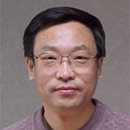
Xiaolin Sun
Senior scientist, Host-Microbe Interactions, The New Zealand Institute for Plant and Food Research.

Claudio Andaloro
Dr. Claudio Andaloro is MD at Department of Surgery, Otolaryngology Unit, Latisana-Palmanova Hospital, Azienda Sanitaria Universitaria Friuli Centrale (ASUFC), Udine, Italy. His research interests focus on rhinology, laryngology, pediatric otolaryngology and sleep medicine.

Jonathan D Tonkin
My research is focused around what promotes and maintains biodiversity at a range of spatial scales. Much of my work focuses on stream ecosystems, but my interests are question focused, not system specific. While my central interest lies in disentangling the mechanisms that structure metacommunities, I also tackle questions ranging from local to global, and from community ecology through to macroecology. I focus on a variety of basic ecological concepts and processes, including linkages between disturbance, productivity and diversity, biodiversity loss, ecosystem function, dispersal, and community assembly. I also aim to tackle applied ecological issues such as global change, land-use change, river regulation, and restoration, with the goal of applying ecological theory to effectively manage threatened ecosystems. My current research ties these issues together into the following three main themes: 1) Metacommunity ecology; 2) Global change ecology and macroecology; and 3) Restoration ecology. In light of these three themes, I am particularly focusing on the unique hierarchical and dendritic structure of river networks, and how this structure influences the biodiversity patterns of river communities.

Rommel T J Ramos
The Rommel Ramos Professor of Bioinformatics of Federal University of Para (Brazil) affiliated member of Brazilian Science Academy and CNPq Researcher (level 1-D). Since 2008 works with genome assembly and RNA-Seq analysis, he is the leader of the bioinformatic development group of the Biologic Engineering Laboratory in Park of Science and Technology (Pará/Brazil).