Academic Editors
The following people constitute the Editorial Board of Academic Editors for PeerJ. These active academics are the Editors who seek peer reviewers, evaluate their responses, and make editorial decisions on each submission to the journal. Learn more about becoming an Editor.



Stefan Steiniger
Stefan Steiniger is a Professor at the School of Construction and Transport Engineering at Pontificia Universidad Catolica de Valparaiso, Chile, and in charge of the spatial data infrastructure/observatory of the Chilean Centre for Urban Sustainable Development (CEDEUS). With a background in automated geo-visualization, spatial data analysis, geodesy and geo-information technologies in general he has a wide interest in developing free & open source GIS tools and their applications in diverse fields including cartography, wildlife ecology, landscape ecology, urban planning, and transportation. His latest research focuses on (i) developing web platforms for urban accessibility analysis - such as CiudadCaminable.com and Walkability.App, (ii) processes and tools for the calculation (Python and R), visualisation (Dashboards) and management of sustainable city indicators and their data, as well as (iii) the development of scenario modelling tools for urban planning.

Jonathan D Tonkin
My research is focused around what promotes and maintains biodiversity at a range of spatial scales. Much of my work focuses on stream ecosystems, but my interests are question focused, not system specific. While my central interest lies in disentangling the mechanisms that structure metacommunities, I also tackle questions ranging from local to global, and from community ecology through to macroecology. I focus on a variety of basic ecological concepts and processes, including linkages between disturbance, productivity and diversity, biodiversity loss, ecosystem function, dispersal, and community assembly. I also aim to tackle applied ecological issues such as global change, land-use change, river regulation, and restoration, with the goal of applying ecological theory to effectively manage threatened ecosystems. My current research ties these issues together into the following three main themes: 1) Metacommunity ecology; 2) Global change ecology and macroecology; and 3) Restoration ecology. In light of these three themes, I am particularly focusing on the unique hierarchical and dendritic structure of river networks, and how this structure influences the biodiversity patterns of river communities.

Giuseppe Marcolin
Giuseppe Marcolin is an Associate Professor in Sports Science at the Department of Biomedical Sciences of the University of Padova, Italy. He obtained a BSc in Physical Education (ISEF) at the University of Bologna. Then, he obtained his MSc in Human Movement Sciences and his PhD in Neuroscience at the University of Padova. His scientific activity is devoted to biomechanical and electromyographical analysis applied to functional assessment in sports training and rehabilitation. He mainly focuses on understanding the influence static and dynamic balance control has on sports performance among athletes and fall risk among older adults. He is a member of the Italian Society of Motor and Sport Sciences (SISMES). He collaborated with the International Sports Engineering Association (ISEA) as a member of the organizing committee of the ISEA Winter School editions.
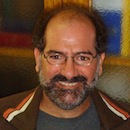
Luis M Chiappe
Vice President for Research and Collections, and Director of the Dinosaur Institute, at the Natural History Museum of Los Angeles County. Adjunct Professor of the University of Southern California. Research Fellow of the Chinese Academy of Geological Sciences. J. S. Guggenheim Fellow and recipient of the Friedrich Wilhelm Bessel Research Award of the Humboldt Foundation.

Rommel T J Ramos
The Rommel Ramos Professor of Bioinformatics of Federal University of Para (Brazil) affiliated member of Brazilian Science Academy and CNPq Researcher (level 1-D). Since 2008 works with genome assembly and RNA-Seq analysis, he is the leader of the bioinformatic development group of the Biologic Engineering Laboratory in Park of Science and Technology (Pará/Brazil).
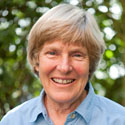
P Dee Boersma
Wadsworth Endowed Chair in Conservation Science and Prof. of Biology, University of Washington, Director for Center for Ecosystem Sentinels and the Wildlife Conservation Society Magellanic Penguin Project, and Adjunct Curator of Ornithology, Burke Museum. Recipient of 2024 Godman-Salvin Prize, 2012 Ocean Conservation Award Aquarium of the Pacific, 2010 Nature Conservancy of Washington Environmental Hero, 2009 Annual Heinz Award for the Environment. Former President of the Society of Conservation Biology. For selected publications go to ecosystemsentinels.org.

Amaresh Chandra Panda
Dr. Panda obtained his Ph.D. in Biotechnology from National Centre for Cell Science, University of Pune, India. He worked as a Postdoctoral Fellow for five years at the National Institute on Aging, National Institutes of Health (NIH), Baltimore, USA. He also worked as an Assistant Scientist at the University of Miami, Miami, USA, and as a Postdoctoral Fellow at the University of Colorado, Denver, USA. His studies have uncovered new mechanistic details of the post-transcriptional regulation by RNA-binding proteins, microRNAs, and circular RNAs in physiological processes, including insulin production, myogenesis, and cellular senescence. In 2019, he was awarded the prestigious Intermediate Fellowship by Wellcome Trust/DBT India Alliance. Currently, he is working as a Scientist-D at ILS Bhubaneswar under the Department of Biotechnology, Government of India. His research group at ILS is working to understand the role of poorly characterized circRNAs in muscle regeneration and insulin biosynthesis.

Adam Husein
Adam Husein is Professor of Prosthodontics at the College of Dental Medicine, University of Sharjah. He is a Fellow with the International College of Dentist and member of the International College of Prosthodontist. Prof. Husein's specialized interest is in maxillofacial prosthodontics, laser, biomaterials, implantology and stem cells.

Julia A. Clarke
Julia Clarke is a paleontologist and evolutionary biologist at The University of Texas at Austin. She is also a John A. Wilson Centennial Fellow in Vertebrate Paleontology and a member of the Graduate Faculty in Ecology, Evolution, and Behavior at UT.
She has a Ph.D. from the Department of Geology and Geophysics at Yale University and a B.A. (comparative literature and geobiology) from Brown University. She currently serves as co-editor-in-chief of the Journal of Anatomy and is an associate editor of Paleobiology. She has published numerous technical papers, including 9 in Nature or Science, and has been recognized for excellence in research, undergraduate teaching, and outreach.

Sau Pinn Woo
Dr Woo received his PhD in Natural History Sciences from Hokkaido University. His interest of study includes systematics, taxonomy, and diversity study of marine invertebrates, focusing on the group Echinoderms. Since 2009, he has been actively uncovering the marine biodiversity and systematics of sea cucumbers across the region.
He is currently serving as a senior lecturer in the Centre for Marine and Coastal Studies (CEMACS), Universiti Sains Malaysia where he is also actively leading several marine biodiversity research in the Southeast Asian region that includes several taxa of marine invertebrate. At the global front, he is a serving in several UN Decade of Ocean Science Program ECOP co-chairs and also an active contributor to the IOC Sub-Commission for the Western Pacific (WESTPAC) programmes. At the same time, he is passionate in creating awareness and education of marine sciences to the society through various educational programmes done in CEMACS with the concept of experiential learning for marine sciences

Tomoki Nakamura
I am a lecturer of Orthopaedic Surgery at Mie University Graduate School of Medicine. I graduated from Mie University Faculty of Medicine in 2002 and received my PhD in 2009. I am a member of the Japanese Orthopaedic Association and a specialist in Orthopaedic Oncology. I typically treat patients presenting with bone sarcoma, soft tissue sarcoma, and metastatic bone tumors. I am also the academic editor of several journals, including PLOS One, BMC Cancer, Oncology Reports, Oncology Letters.

Ioannis Ganopoulos
Dr. Ganopoulos received his BSc degree in Agriculture from the University of Thessaly (2000-2005) and his MS and PhD in Plant Breeding from AUTH (2005-2007/2008–2013). He has been awarded a Heracleitus PhD scholarship by the European Social Fund and the Hellenic National Fund. His recent scientific interests focus on epigenetics, DNA methylation, whole genome sequencing and trascriptomic analysis for molecular breeding purposes. He has participated in four research projects, one of them competitive European project. He has published 93 reviewed articles in SCI journals and h-index=27 (citations 2051 in Scholar google). He was a co-worker in national/international projects and he is Editor in Biochemical Genetics and PeerJ journals.