Academic Editors
The following people constitute the Editorial Board of Academic Editors for PeerJ. These active academics are the Editors who seek peer reviewers, evaluate their responses, and make editorial decisions on each submission to the journal. Learn more about becoming an Editor.



Michael Clague
Post-doctoral work at NIH (virus fusion mechanisms) and EMBL to study cell biology (membrane trafficking). Moved to a faculty position at University of Liverpool. Early work focused on the role of phosphoinositide metabolism along the endocytic pathway then later the role of reversible ubiquitylation in endosomal sorting. This has lead to a broader interest in ubiquitin biology and the deubiquitylase family as potential drug targets.

Barry W Brook
Barry Brook, a conservation biologist and modeller, is an ARC Australian Laureate Professor and Chair of Environmental Sustainability at the University of Tasmania. Leader of the Dynamics of Eco-evolutionary Patterns (DEEP) research group and the UTAS node of CABAH, Barry is a highly cited scientist, having published three books, over 350 refereed papers, and many popular articles. His awards include the 2006 Australian Academy of Science Fenner Medal, the 2010 Community Science Educator of the Year and 2013 Scopus Researcher of the Year. He focuses on global change biology, ecological dynamics, paleoenvironments, energy systems, and statistical-simulation models.
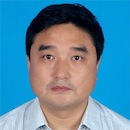
Qing-Yuan Sun
Professor of Reproductive and Developmental Biology, vice-president of Chinese Society of Zoology, president of Chinese Society for Cellular and Molecular Microscopy, Secretary General of Chinese Society of Reproductive Biology, and former director of the State Key Laboratory of Reproductive Biology, Institute of Zoology, Chinese Academy of Sciences.
Awards and Honors:
- Distinguished Young Scientist of The Chinese Academy of Sciences (1999);
- Grants for Outstanding Young Scientists from National Natural Science Foundation of China (2002);
- National Award for Distinguished Scholars Returned From Abroad (2003);
- Distinguished Youth of The Chinese Academy of Sciences (2003);
- National Award for Outstanding Young Scientists (2004);
- National Award for Outstanding Post-Docs (2006);
- National Natural Science Prize (Second) (2006)
- BHP Billiton Supervisor Research Award, Graduate School of Chinese Academy of Sciences (2007)
- The Outstanding Researcher during the National 11th Five-Year Plan, Ministry of Science and Technology (2011)
- The First Prize for Science and Technology Progress, National Population and Family Planning Council (2011)

Kevin Mueller
I'm an assistant professor at Cleveland State University. My primary area of research is the ecology and biogeochemistry of temperate forests and grasslands, with an emphasis on plant-environment interactions. For example, I've studied the impacts of climate change, land management, and diversity loss on ecosystem functions of North American grasslands. I frequently use measures of plant functional traits or stable isotope ratios to better understand a variety of ecological concepts and biogeochemical processes, including how plants respond to the environment and interact with cycles of water, nutrients, and carbon.

Koji Mikami
Prof. Koji Mikami is Professor of Department of Food Resource Development in School of Food Industrial Sciences at Miyagi University, Japan. He is also President of the Japanese Society of Applied Phycology. Prof. Mikami received his PhD in Plant Science from Hokkaido University in 1990. His area of expertise focuses on the physiology and molecular biology of development and environmental stress response in seaweeds, and the biotechnology of seaweeds (gene transfer and genetic transformation, application of seaweed genes for land green plants).

Søren M Bentzen
Professor, Director of the Division of Biostatistics & Medical Informatics, Department of Epidemiology and Public Health, University of Maryland - Baltimore. Adjunct professor University of Copenhagen, Denmark. 20+ awards and honors incl. ESTRO Gold Medal, MD Anderson Distinguished Alumnus Award, Honorary Life member Assoc. of Radiation Oncologists of India & Belgian Soc. for Therapeutic Radiology and Oncology. 370+ publications, H-index 62 Web of Science.

Katrine L Whiteson
Katrine Whiteson uses metagenomics, metabolomics, microbiology and ecological statistics to answer questions about how microbes and viruses affect human health. She studied Biochemistry at UC Berkeley (BA, 2000) and University of Chicago (PhD, 2007). During her PhD, Dr. Whiteson focused on the active site chemistry and DNA binding specificity of a site-specific recombinase from the class of proteins that enable the spread of antibiotic resistance genes. In 2008, she began a new job at the University of Geneva Hospitals with Dr. Jacques Schrenzel and Dr. Patrice Francois. This was an exciting era, just at the start of the Human Microbiome Project, for asking basic unanswered questions about the microbes and viruses inhabiting various niches of the human body. Dr. Whiteson focused on the oral microbial communities of healthy Europeans, and malnourished kids in Niger who develop a devastating facial gangrene known as noma. In 2011 she moved to Forest Rohwer’s lab at San Diego State, where she undertook breath and sputum metabolite analysis to better understand the activity of CF patient microbial communities from Dr. Doug Conrad’s Adult CF clinic at UCSD. Combining information about the genetic potential of a microbial community through DNA sequencing with the activity of the community by metabolite profiling is a powerful approach that Dr. Whiteson hopes to employ in future projects as she begins her own lab at University of California Irvine in Fall 2014.

Imran Farooq
Dr. Imran Farooq’s research interests include dental biomaterials and their application in remineralizing enamel and treating dentin hypersensitivity.

Ksenija Bazdaric
Ksenija Baždarić is associate professor at the Department of Basic Sciencies Rijeka University Faculty of health Studies, Croatia. Her academic background lies both in social sciences and biomedicine. She received her master’s degree in psychology (2002) and PhD in social medicine (2012). She teaches medical informatics, statistics and scientific methodology. Her investigation for the PhD thesis ''The Value of Plagiarism Detection Procedure in a Biomedical Journal'' was focused on the detection of similar texts with web-services CrossCheck and eTBLAST in the Croatian Medical Journal (www.cmj.hr) during 2009-2010, and the development of standard operating procedure for detecting and dealing with plagiarism in biomedical journals. She became Research Integrity Editor at the Croatian Medical Journal (http://www.cmj.hr) in 2012 and Chief Editor of European Science Editing (http://www.ease.org.uk/publications/european-science-editing), the offical journal of the European Association of Science Editors (http://www.ease.org.uk/) in 2015.Her current research activities include open science.

Holly A Bowers
My research interests have focused on molecular detection of harmful algal bloom (HAB) species and diversity in estuarine systems, including Chesapeake and Monterey Bays. HABs have become a recurring nuisance along the world’s coastlines and inland lake systems, affecting local economies through impacts on food/drinking water supplies and recreation. Tools that provide rapid, high-resolution data on species presence and abundance are key to ongoing monitoring programs to protect these areas. Taking it a step further, it is just as important to uncover information on how HAB species fluctuate with respect to population structure in between bloom events. Myriad factors can influence species composition, toxin production, and duration of bloom events - molecular fingerprinting plays a key role in untangling this complicated picture.

Andrew P. Robinson
Managing Director of the Centre of Excellence for Biosecurity Risk Analysis; Professor of Applied Statistics in the Schools of BioSciences and Mathematics & Statistics at the University of Melbourne. My broad interests are in applied statistics, biosecurity risk analysis, and forestry.

Linda W Kelly
I received my doctorate in 2013 from the SDSU/UCSD Joint Doctoral Program in Cell and Molecular Biology. I joined the Dept of Biology at San Diego State University as an Adjunct Research Professor in 2014. My research focuses on understanding changes in coastal marine microbial communities in response to environmental perturbations. Most of my research thus far has focused on coral associated microbes. Specifically, I use metagenomics to identify the taxonomic distribution and functional capacity of microbial communities in marine ecosystems that are subjected to varying nutrient availability, anthropogenic stressors, and comprising different benthic compositions.