Academic Editors
The following people constitute the Editorial Board of Academic Editors for PeerJ. These active academics are the Editors who seek peer reviewers, evaluate their responses, and make editorial decisions on each submission to the journal. Learn more about becoming an Editor.



Thomas Backhaus
Professor for Ecotoxicology and Environmental Sciences at the University of Gothenburg, with a main interest in regulatory (eco)toxicology and risk assessment of complex exposure situations.

Nicholas A Badcock
Nicholas Badcock completed a MPsych/Phd in Applied Developmental Psychology with John Hogben and Jan Fletcher at the University of Western Australia in 2008. After a postdoc at The University of Oxford with Dorothy Bishop focussed on the lateralisation of language processing using functional transcranial Doppler ultrasonography, he returned to Australia, joining the ARC Centre of Excellence in Cognition and its Disorders at Macquarie University working with Genevieve McArthur on attention and reading. He is currently a Senior Lecturer at The University of Western Australia in Perth.

Shaw Badenhorst
I am a zooarchaeologist at the Evolutionary Studies Institute of the University of the Witwatersrand in Johannesburg, South Africa. I analyse animal remains (bones and teeth) from archaeological and fossil sites. I have studied animal remains from South Africa, Lesotho, Swaziland, Mozambique, Zimbabwe, Botswana, Malawi, Namibia, Canada (British Columbia) and the USA (Southwest). My focus of my research is on the origins of hunting, the spread of livestock, and taphonomy.

Jürg Bähler
Jürg Bähler is a Professor of Systems Biology at University College London. His laboratory studies genome regulation during cellular proliferation, quiescence, and ageing using fission yeast (Schizosaccharomyces pombe) as a model system. They apply multiple genetic, computational and genome-wide approaches for systems-level understanding of regulatory processes and complex relationships between genotype, phenotype, and environment, including roles of genome variation and evolution, transcriptome regulation, and non-coding RNAs.
Jürg Bähler is an elected Member of the European Molecular Biology Organisation (EMBO) and a Fellow of the Royal Society of Biology, and he received a Wellcome Trust Senior Investigator Award and a Royal Society Wolfson Research Merit Award.
Sabine Bahn
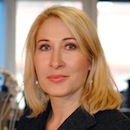
Director of the Cambridge Centre for Neuropsychiatric Research at Cambridge University. Practising clinician (with an Honorary Consultant position in General Adult Psychiatry at Addenbrookes Hospital, Cambridge). Co-founder of Psynova Neurotech Ltd. Professor for Tranlational Neuroscience at Erasmus University Medical Centre, Department of Neuroscience, Rotterdam.

Donald J Baird
Research Scientist in the Water Science & Technology Directorate of Environment and Climate Change Canada, Visiting Research Professor in the Biology Department at the University of New Brunswick and Science Director of the Canadian Rivers Institute.
His primary research interests include the study of watershed patterns in aquatic biodiversity and the influence of landscape stressors on resident biota. Current research concerns freshwater invertebrates, with dragonflies as a particular focus. He has previously worked on a variety of taxa groups from flatworms to fish, and in a variety of habitats from wetlands, lakes and rivers to coastal marine systems.

Burcu Bakir-Gungor
Burcu Bakir-Gungor received her B.Sc. degree in Biological Sciences and Bioengineering from Sabanci University; her M.Sc. degree in Bioinformatics from Georgia Institute of Technology; and her PhD degree from Georgia Institute of Technology/Sabanci University. She worked at the Bioinformatics Research Center, Medical College of Wisconsin, from 2007-2009. From 2009 to 2011, she worked at the Department of Computer Engineering, Bahcesehir University. Then, she worked as an Assistant Professor at the Department of Genetics and Bioinformatics, at the same university. From 2012 to 2013, she was part of the Advanced Genomics and Bioinformatics Research Center, UEKAE, BILGEM, TUBITAK. Now, she works as an Associate Professor at the Department of Computer Engineering at Abdullah Gul University. In 2022, she received a prestigious award called the L‘ORÉAL – UNESCO National Fellowship for Women in Science Programme. She is the recipient of ‘‘Best Paper’’ awards at the UBMK 2020 and 4th EvoBIO Conferences. She acted as a member of the bioinformatics advisory board of the Turkish Genome Project. She is an editorial board member of PeerJ journal; the reviewer of several prestigious international journals including Bioinformatics, Machine Learning, Journal of Computational Biology; and she is the Technical Program Committee member of UBMK and HIBIT conferences. Her research interests include bioinformatics, computational genomics, metagenomics, multi-omics, network and pathway-oriented analyses, next-generation sequencing data analysis; and applications of machine learning, data mining and pattern recognition in bioinformatics.

Francisco Balao
Francisco Balao is associate lecture of Plant Biology at the University of Seville; Past post-doc Marie-Curie fellow in the Department of Plant Systematics at the University of Vienna.
Research interests are mainly focused on how plant genomes interact with its environment across ecological and evolutionary timescale. We try to elucidate the mechanistic bases of the biodiversity through studies of molecular phylogenetics and phylogenomics, phylogeography, cytogenetics, ecophysiology, transcriptomics and reproductive biology.

Carsten Baldauf
I have studied Biochemistry at Universität Leipzig. In my Diploma thesis I started to use computer simulations (quantum chemistry) to study structure formation in non-natural peptides. I continued along these lines in my PhD studies, also in Leipzig. During a PostDoc stay at BIOTEC of TU Dresden, I started using empirical models (a.k.a. force fields) and dedicated myself to the development of structure search techniques with a focus on molecular docking. My next stop then was in Shanghai. With a Lynen Postdoc fellowship by Humboldt Foundation, I had the chance to investigate regulatory mechanisms and function of the blood protein von Willebrand factor, a key molecule in primary hemostasis. Since 2010, I am a scientist at Fritz Haber Institute (FHI) of the Max Planck Society, since 2013 I am a a group leader. Our work here deals with biomolecules in thin air (i.e. theoretical gas-phase spectroscopy of peptides and carbohydrates), large-scale overview studies on amino acid-cation structures, and organic reactions. Recently, I got interested in data science, data infrastructures and ontologies. I am teaching at Freie Universtität Berlin and was a visiting professor at Universität Leipzig replacing the Chair for Theoretical Chemistry. Since January 2020 I am Representative of the Board at Fritz Haber Institute of the Max Planck Society.

Kathryn Ball
Kathryn Ball trained as an enzymologist and protein biochemist. She was awarded a Broodbank Fellowship (University of Cambridge) and was the first CRUK Senior Cancer Research Fellow (University of Dundee). She moved to the University of Edinburgh in 2004 where she is the Professor of Biochemistry and Cell Signalling. Her current research is focused on protein structure function analysis and the mechanisms underlying the regulation of protein function by ubiquitin in human health and disease.

Esteban Balseiro
Dr. Esteban Balseiro is a CONICET Researcher and Professor of Ecology at University of Comahue, Argentina. His area of interest is plankton ecology, food web interaction and ecological stoichiometry. In addition, to this he also researches stream ecology, ecological stoichiometry of aquatic insects and effect of climate change on freshwater food webs.

Teri Balser
Professor Teri Balser is Dean of Teaching and Learning for the Faculty of Science and Engineering at Curtin University, where she came after having been Dean of the College of Agricultural and Life Sciences at the University of Florida. She received a Ph.D. in soil microbiology came from the University of California at Berkeley, and she completed postdoctoral research in ecosystem ecology at Stanford University. She is a Fellow of the Soil Science Society of America, and was recently named to the Australian Research Council College of Experts.
Her research centers on understanding microbial community-level ecophysiological responses to stress, disturbance, and change, and the consequences of these for ecosystem functioning. She has worked in countries worldwide studying restoration, carbon sequestration, invasive species, biodiversity, and land use/land cover.
In addition to international recognition as an accomplished research scholar, Dr. Balser is widely known in higher education as a change agent and leader in Science, Technology Engineering and Math education (STEM). She is a co-founder of the Society for Advancement of Biology Education Research (SABER), a National Vision and Change Fellow with the Partnership for Undergraduate Life Sciences Education (PULSE), and was a Fulbright-Nehru Distinguished Chair to India in 2015 to help build capacity at the national level for pedagogically advanced and responsive STEM education.