Academic Editors
The following people constitute the Editorial Board of Academic Editors for PeerJ. These active academics are the Editors who seek peer reviewers, evaluate their responses, and make editorial decisions on each submission to the journal. Learn more about becoming an Editor.



Ebba Brakenhielm
INSERM Tenured Researcher in the field of Cardiovascular Research, currently focusing on therapeutic angiogenesis with polymer-based targeted growth factor delivery.
PhD in Tumor Biology (Pr Yihai Cao, Karolinska Institutet, Sweden), and expertise in Adipose tissue angiogenesis. Postdoc at UCLA (Pr Lily Wu) in molecular imaging and tumor lymphangiogenesis field.
Member of European Vascular Biology Organisation, French society for Cardiovascular Research, French society for Angiogenesis Research.

Paolo Brambilla
Dr. Paolo Brambilla is MD specialist in Psychiatry and PhD. He is Associate Professor of Psychiatry at the University of Milan, Milan, Italy; Adjunct Associate Professor of Psychiatry, UTHouston, USA; Director, Psychiatric Clinic, Fondazione IRCCS Cà Granda Ospedale Maggiore Policlinico; Chair, EPA Neuroimaging Section; and CoEditor in chief of Journal of Affective Disorders
He is also scientific coordinator of (1) Research Unit on Brain Imaging and Neuropsychology at the Psychiatric Clinic at the University of Verona, and of (2) of developmental psychopathology studies at the IRCCS Scientific and Clinical Institute “E. Medea”, Polo FGV, Udine.
Currently, Dr. Brambilla is leading longitudinal studies in major psychoses, mood disorders and developmental psychopathology.
He is the recipient of several national and International scientific honours and grants, and is author/co-author of more than 250 original papers published in International peer-reviewed Journals (7000 citations).
According to Web of Science, he is amongst the top 100 most cited researchers in the field of bipolar disorder and is the 32th most cited researcher in the field of ‘Neurosciences & Psychology’ of the ‘Top Italian scientists”, based on via-academy.
His current lifetime h-index is 48 as calculated by Scopus, 53 by Google Scholar, 50 by ResearchGate. He also bears the Italian National habilitations for Full Professor of Psychiatry and Full Professor of Child and Adolescent NeuroPsychiatry.

Laura A Brannelly
Laura Brannelly is an Senior Lecturer in One Health and Biostatistics, and and Australia Research Council Discovery Early Career Research Award Research Fellow at the University of Melbourne. Her current research project focuses on the effects of disease of reproduction in frogs, specifically in species of conservation concern. She hopes to be able to directly use the information generated from her research to further conservation efforts to protect Australia’s declining frog species.
Laura received her a Bachelor of Arts in anthropology and Bachelor of Science in ecology and evolutionary biology from Tulane University in New Orleans, Louisiana in 2010. She went on to complete her Masters of Science in environmental biology from Tulane University in 2011 where she participated in a number of amphibian projects including clinical chemotherapy trials for treating Bd.
Laura received her PhD at James Cook University in Townsville, Queensland Australia in 2016. For her PhD research she explored the interactions between frogs, disease, and the management of critically endangered species. She explored pathogenesis of disease on understudied and endangered species, as well as determining mechanisms of population persistence.
She completed a post-doctoral fellowship at the University of Pittsburgh from 2016-2018, where she is investigated the interactions between frogs, chytrid fungal disease, and the environment: specifically, how climate change impacts these relationships.

Edward L Braun
Professor of Biology, University of Florida; member of UF genetics institute and Affiliate Curator Florida Museum of Natural History

Mario Brauns
Researcher at the Helmholtz Centre for Environmental Research - UFZ and head of the food web ecology lab.
Research interests include: Lotic ecosystem processes, freshwater food webs, benthic secondary production, functional assessment, stable isotopes, invasive species.

William J Brazelton
Associate Professor, School of Biological Sciences, University of Utah.

Mya Breitbart
Professor at the University of South Florida College of Marine Science studying viral and microbial ecology

Edy Sousa de Brito
Dr. Edy Brito is currently a researcher at Embrapa Alimentos e Território and permanent professor at the Graduate Program in Chemical Engineering at the Federal University of Ceará (PGEQ-UFC).
His research is directed towards increasing the sustainability of small scale agro-industrial processing by observing the principles of the Sustainable Development Goals. The research actions take place in three lines: a) Define how food processing, mainly non-conventional methods, affect the composition; b) valorization of agro-industry residues, through sequential extractions of bioactive compounds; and c) Definition of chromatographic parameters for the preparative scale isolation of bioactive compounds. The main processes and methodologies employed are: ultrasound, extraction with pressurized liquid, UHT, HTST, plasma, ozone, multivariate statistics, chromatography, spectroscopy (NMR); and spectrometry (MS).
Dr. Brito has been active in collegiate bodies such as: Internal Technical Committee (Embrapa), FUNCAP advisory committees (Innovation; Agricultural and Veterinary Sciences); and Embrapa's Portfolio Management Committee (Valuation of Fruticulture, Bioactives; and Food, Nutrition and Health). He also participated in the setting up and management of Embrapa's Multi-user Laboratory of Chemistry of Natural Products.

Andreas Brodehl
Dr. Andreas Brodehl is a Principal Investigator at the Heart and Diabetes Center NRW, University Hospital of the Ruhr-University Bochum, Erich and Hanna Klessmann Institute.
His research interests include genetic cardiomyopathies, using different models such as cardiomyocytes derived from induced pluripotent stem cells, and mouse and zebrafish for functional and structural analysis. In addition, he uses explanted myocardial tissue for histology, gene expression and structural investigations.
Eoin L Brodie
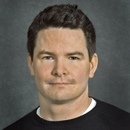
Eoin Brodie is a Senior Scientist in the Ecology Department of Berkeley Lab’s Earth and Environmental Sciences Area (EESA). Dr. Brodie serves as the Deputy Director of the Climate and Ecosystem Sciences Division. At the University of California, Berkeley, Dr. Brodie is an Adjunct Associate Professor in the Department of Environmental Science, Policy and Management. He obtained his Ph.D. from University College Dublin in Ireland and joined LBNL following postdoctoral research at UC Berkeley.
Saverio Brogna
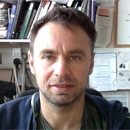
Lecturer and principal investigator at the School of Biosciences of the University of Birmingham, UK. Interested in eukaryotic gene expression and particularly in understanding the links between RNA processing and translation.
At present his group research focuses on understanding nonsense mediated mRNA decay (NMD) and its links with pre-mRNA splicing.

Barry W Brook
Barry Brook, a conservation biologist and modeller, is an ARC Australian Laureate Professor and Chair of Environmental Sustainability at the University of Tasmania. Leader of the Dynamics of Eco-evolutionary Patterns (DEEP) research group and the UTAS node of CABAH, Barry is a highly cited scientist, having published three books, over 350 refereed papers, and many popular articles. His awards include the 2006 Australian Academy of Science Fenner Medal, the 2010 Community Science Educator of the Year and 2013 Scopus Researcher of the Year. He focuses on global change biology, ecological dynamics, paleoenvironments, energy systems, and statistical-simulation models.