Advisory Board and Editors Developmental Biology


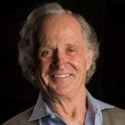
Mario R. Capecchi
Professor of Human Genetics at the University of Utah School of Medicine;
Distinguished Professor of Human Genetics and Biology;
Nobel Prize in Physiology or Medicine 2007;
Member of the National Academy of Sciences & the European Academy of Sciences.
Recipient of many awards including the Kyoto Prize in Basic Sciences; the Albert Lasker Award for Basic Medical Research; the National Medal of Science; the Wolf Prize in Medicine; the March of Dimes Prize in Developmental Biology; and the Nobel Prize in Physiology and Medicine with Smithies and Evans.

Julieta Carril
Dr. Julieta Carril is a researcher at the CONICET (National Scientific and Technical Research Council), Argentina. Working at the Laboratory of Histology and Descriptive, Experimental and Comparative Embryology (LHYEDEC), Faculty of Veterinary Sciences, National University of La Plata, Argentina. Her research focuses on the role of developmental reprogramming processes in the morphological evolution of Neornithes birds. Dr. Carril is also a member of the Avian Biomorphodynamic Research Group (ABRG)

Ruben J. Cauchi
Ruben J. Cauchi is an Associate Professor of Neurogenetics at the University of Malta School of Medicine. He obtained his D.Phil. from the University of Oxford (UK) and did his postdoctoral research at the MRC Laboratory of Molecular Biology, University of Cambridge (UK). Prof. Cauchi heads the ALS/MND Lab at the University of Malta and leads Malta’s National ALS/MND Registry & BioBank, aiming at understanding the cause of motor neuron disease (MND) including amyotrophic lateral sclerosis (ALS) and identify innovative treatments.

Maria Carmen Collado
Maria Carmen Collado (PhD 2005) holds a Research Scientist position at the Spanish National Research Council (CSIC) at the Institute of Agrochemistry and Food Technology (IATA-CSIC) in Valencia (Spain). Her research work is multidisciplinary and includes microbiology, food science, nutrition and human health. Her interests are focused on probiotics, microbiota and health and nutrition during pregnancy and early life period.

George M. Coupland
Director of the Max Planck Institute for Plant Breeding Research, Cologne, Germany. Recipient of several honours, the most recent being election to the National Academy, USA in 2012.

Wei Cui
Wei CUI, Ph.D.
Extension Associate Professor
Principal Investigator (Independent)
Director, Animal Models Core Facility
at University of Massachusetts Amherst
https://www.umass.edu/veterinary-animal-sciences/about/directory/wei-cui
More than 16 years of experience in mammalian oocyte and pre-implantation embryo development. Created live transgenic cloned goats by somatic cell nuclear transfer (SCNT). Generated multiple Knockout and Knock-in rat and mouse lines by ZFN, TALEN, and CRISPR/Cas9.
Academic Editor for PeerJ;
Associate Editor for Journal of Cellular and Molecular Medicine;
Associate Editor for Reproduction and Fertility;
Associate Editor for Animal Reproduction-Theriogenology, Frontiers in Veterinary Science;
Academic Editor for PLOS ONE.
Served as Peer Reviewer for more than 40 journals 180 times, as well as Editors for over 50 times.
https://www.webofscience.com/wos/author/record/169586
https://publons.com/author/1174231/wei-cui#profile
https://www.umass.edu/veterinary-animal-sciences/about/directory/wei-cui
Keywords: Mammalian oogenesis, Preimplantation Embryo, Oocyte maturation, CRISPR/Cas9, Knockout, Knock-in, Oocyte-specific conditional knockout, Somatic Cell Nuclear Transfer (SCNT), Oocyte spontaneous activation, Cell cycle, Oocyte aging, Animal models, Epigenetics, Toxicology, Cell culture, Fertilization, Micromanipulation, RNAi, Knockdown, Animal reproduction, Genome editing, Blastocyst, Cell lineage

Kenneth De Baets
I am a paleobiologist. My main research focuses on reproductive strategies and macroevolution, particularly on the contributions of biotic interactions (e.g., parasitism) and abiotic factors (e.g., climate) in controlling evolutionary and diversity patterns. To this end, I work with a variety of approaches that combine research on fossil molluscs, coprolites and fieldwork with large-scale quantitative analyses. Other interests are quantitative methods to study biostratigraphy, intraspecific variability and paleobiology in general. My main taxonomic expertise is on invertebrates, mainly (extinct) cephalopod mollusks and parasitic helminths. The promotion of diversity and young scientists as well as scientific collaboration and reproducibility in paleontology are particularly close to my heart.

Wendy Dean
Senior Research Scientist, Epigenetics Programme, The Babraham Institute
Babraham Research Campus, Cambridge, UK.

Sule Dogan
Dr. Sule Dogan has BSc in Biology from Ankara University, MSc in Embryology and another Master’s degree in science education, both from Dokuz Eylul University in Turkey. After completing her Andrology and Embryology training, she worked at the IVF Clinic of Dokuz Eylul University Medical School between 2007 and 2009. She completed her PhD in Life Sciences/ Genetics program at Mississippi State University. Dr. Dogan joined IVF Michigan Fertility Centers as an embryologist in 2013, started serving as the quality control and laboratory supervisor in 2015 and then became the laboratory director in 2019. She has opened up new andrology laboratories, trained many andrologists and embryologists. She is currently serving as the director of laboratory operations in many locations of IVF Michigan and IVF Ohio Fertility Centers. Dr. Dogan is a certified by ABB as Technical Supervisor in Andrology and Embryology, and as High Complexity Lab Director (HCLD). She has many publications in international journals, including many book chapters. Dr. Dogan has been serving as a reviewer for scientific journals and conferences since 2010.
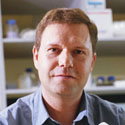
Pascal Dollé
Associate Professor in Biochemistry and Molecular Biology, Group leader (Developmental Biology and Stem Cells Department), IGBMC, France. Member of the Institut Universitaire de France.

Tushar K. Dutta
I am a Senior Scientist at the Indian Agricultural Research Institute, involved in pursuing basic and applied research in the field of Nematology and Entomology.
As an alternative to Bt Cry toxins for insect pest management, a number of novel bacterial protein toxins (Txp40, TcaB) derived from an insect-parasitic bacterium Photorhabdus akhurstii (symbiont of nematode Heterorhabditis indica) were characterized. The mode of action and pathogenesis process of these toxins were investigated in different lepidopteran insects including Galleria mellonella, Helicoverpa armigera, Spodoptera litura and S. exigua. The potential receptor proteins and their binding sites for these toxins were unravelled from the insect midgut epithelial cells.
My other research interests include molecular basis of plant-nematode interaction. Using RNAi, functional analysis of several plant parasitism processes was deciphered including the role of Mi-cpl-1 in metabolic process, FLP and NLP neuropeptides in neuromusculation process, ODR and TAX proteins in chemotaxis process, cell wall degrading enzymes and various MSP effectors in infection process of plant nematodes. I have contributed in understanding the genetic basis of nematode resistance in rice via genome-wide association mapping coupled with omics-driven strategies. I am currently pursuing genome editing research for developing nematode resistance by adopting CRISPR-Cas9 strategy in Arabidopsis, rice and tomato.

Alexander Ereskovsky
I am an invertebrate embryologist, and my main areas of interest are different topics of sponges regeneration, embryonic, postembryonic development and the evolution of sponge’s morphogenesis. I'm also interested in the sponge’s biodiversity, taxonomy and phylogeny. I am currently a Senior Researcher at French National Centre for Scientific Research in Marseille and Professor in St-Petersburg State University in Russia