Academic Editors
The following people constitute the Editorial Board of Academic Editors for PeerJ. These active academics are the Editors who seek peer reviewers, evaluate their responses, and make editorial decisions on each submission to the journal. Learn more about becoming an Editor.



Octavio Barbosa Neto
Associate Professor at the Institute of Physical Education and Sports (IEFES) at the Federal University of Ceará (UFC). He completed a master's degree and doctorate in Sciences (General Pathology) from the Faculty of Medicine of the Federal University of Triângulo Mineiro (UFTM). Advisor of the Postgraduate Program in Physical Education at UFTM. Researcher in the areas of Human Physiology and Exercise with an emphasis on Exercise Cardiology (acute and chronic effects of aerobic and resistance exercises) applied to healthy subjects (young and elderly) and those with Chronic Diseases (hypertension, peripheral arterial disease, diabetes, obesity, cancer, among others), Cardiovascular Physiology in Human Performance and Ergogenic Resources, Autonomic Controls and Reflexes, Neovascularization, Cardiovascular Variability and Cellular Therapy.

Chenxi Li
Chenxi Li is an Associate Professor at School of Public Administration, Xi'an University of Architecture and Technology, Xi’an, China. He has been invited as an article editor for journal of SAGE Open in 2020.He has been invited as an Associate Editor for International Journal of Environmental Science and Technology in 2021. He has authored and co-authored more than 25 papers and book chapters in his fields. His research interests include Natural Resource Management, Environmental Sciences, Land Use and Cover Change, Coupled-natural-and-human-systems, Urban-Rural Integrated Development.

Craig L Moyer
My specialty is the marine microbial ecology and geomicrobiology of hydrothermal vent systems. I also maintain interests in terrestrial and aquatic microbial ecology, microbe-macrobe symbiotic relationships, bioremediation and microbial cycles that impact global climate change. My focus has been the study of microbial mats in and around hydrothermal vents, this includes the biodiversity and biogeography of the Zetaproteobacteria.

Ajinkya M Pawar
Dr. Ajinkya Pawar is a dedicated researcher and enthusiastic adopter of new technologies which improve treatment results both for doctors and patients. He has decided to dedicate his work life to broaden and expand his knowledge for Endodontics. In his young span as Endodontist, he has already published more than 90 scientific studies in both National and International Indexed Journals with high Impact Factors, and a few more in press and under preparation, together with high ranked International Researchers.
He is passionate about learning new developments in Endodontics and he has travelled around the world pursuing this passion. He has attended various numerous National and International Conferences as a Student, Delegate, Keynote/Guest Speaker, Chairperson, and Moderator. He also serves as the Editorial Board member of various journals.
Dr. Ajinkya has been awarded with Fellowship by Pierre Fauchard Academy (India and USA Section) in 2016, Best Endodontist of the Year 2016, 2017, 2019 by FamDent India and India's Young Dental Researcher of the Year 2017.

C Robert Cloninger
Director, Anthropedia Institute for Well-being Research; Professor Emeritus of Psychiatry at Washington University in St. Louis.

Nasim Ahmad Yasin
Dr. Nasim Ahmad Yasin is a Associate Professor at the University of the Punjab carrying out research in the field of Horticulture and Environmental Science.
Educational background:
2021-2022: Post-Doctorate: Vegetable Research Institute, Guangdong Academy of Agricultural Sciences, China.
2015: PhD: Institute of Agricultural Sciences: University of the Punjab Lahore.
1997: MSc. (Hon): University College of Agriculture, Rawalakot: The University of Azad Jammu and Kashmir –Muzaffarabad Azad Kashmir.
1995: BSc. (Hon): Barani Agriculture College, Rawalpindi. University of Agriculture, Faisalabad.

Feng Liu
Feng Liu received his Ph.D. degree from the School of Life Science and Technology, University of Electronic Science and Technology of China and went on to work in the Department of Radiology and Tianjin Key Laboratory of Functional Imaging, Tianjin Medical University General Hospital, China. Now he is a professor and his current research interests include Brain and Cognition, Magnetic Resonance Imaging, Imaging Genetic and Multivariate Pattern Analysis.
Current research focuses on investigating the impact of the environmental factors (e.g., green space, PM2.5, etc) on human brain measured by magnetic resonance imaging.
Homepage: https://fengliu001.github.io/

Mohammad Irfan
Dr. Mohammad Irfan is a plant biologist having research interests in abiotic stress biology of crop plants particularly horticultural crops. During his doctoral and postdoctoral projects, he studied the fruit quality traits affected by abiotic stresses. In his current projects, he investigates the molecular mechanism underlying plant-specialized metabolic pathways and biosynthesis of high-value phytochemicals, such as anthocyanins and carotenoids of horticultural crops under abiotic stresses using transcriptomics, metabolomics, glycomic and functional genomic approaches.

Xavier Le Roux
Senior scientist (DRex) INRAE ; Microbial and ecosystem ecologist . Deputy Director of the Microbial ecology centre of Lyon-Villeurbanne (France) www.ecologiemicrobiennelyon.fr/spip.php?rubrique31
Director of the Research Federation BioEEnViS http://bioenvis.universite-lyon.fr/
Research topics include : response of microbial communities involved in N dynamics (nitrification, denitrification...) to global change factors and disturbances ; and microbial biodiversity-ecosystem functioning/services relationships.
* over 140 articles in peer-reviewed journals; h=54 (WoS) or 64 (GoogleScholar)
* Member of the Academy of Europe www.ae-info.org/ae/User/Le_Roux_Xavier
* See my profile: https://www.researchgate.net/profile/X_Roux/info
* Former Chair & Coordinator of the European network BiodivERsA www.eurobiodiversa.org

Henkjan J. Huisman
Dr. H.J. Huisman received his Ph.D. in quantitative medical ultrasound in 1998 at the Radboud University Medical Center, Nijmegen, The Netherlands. He continued his research in quantitative MR and ultrasound in breast and prostate resulting in several publications, clinical applications and a patent on a Pharmacokinetic DCEMR processing. He started a research group in 2004 on Computer Aided Diagnosis and Intervention of prostate cancer focussing on computerized support systems for interpretation of multiparametric MR and MRL as well as image guided biopsy and intervention. Since June 2017 he is an Associate Professor in Pelvic Imaging Biomarkers. He has published over 100 papers and book chapters and has co-organized several workshops/challenges on prostate MR image analysis.

Alberto Davalos
Group leader of the Epigenetics of Lipid Metabolism Group, IMDEA Food Institute, Dr. Alberto Dávalos holds a degree in Pharmacy and Biochemistry by San Marcos University (Lima) and a PhD in Pharmacy by Universidad Complutense de Madrid (Madrid).
He has conducted postdoctoral research at the Hospital Ramón y Cajal (Madrid), at Yale University School of Medicine, (New Haven), and at New York University School of Medicine (New York). Dr. Dávalos’s research program focuses in identifying and characterizing new noncoding RNAs (miRNAs, lncRNAs and other type of regulatory RNAs) that regulate lipid metabolism and the effects of minor dietary components (micronutrients) on their expression.
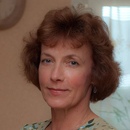
Natalia V. Zhukova
Since 2009 to present time Leading Researcher of the Laboratory of Comparative Biochemistry, National Scientific Center of Marine Biology, Far East Branch of the Russian Academy of Sciences and Far Eastern Federal University.
1992-2009, Senior Researcher
1987-1992, Researcher
1980-1987, Junior Researcher
1978-1980, Probationer Researcher