Academic Editors
The following people constitute the Editorial Board of Academic Editors for PeerJ. These active academics are the Editors who seek peer reviewers, evaluate their responses, and make editorial decisions on each submission to the journal. Learn more about becoming an Editor.



Jaap H van Dieën
Jaap van Dieën worked as a researcher in physical ergonomics at the Institute for Agricultural Engineering in Wageningen, the Netherlands (1986 to 1996). He obtained a PhD from the Faculty of Human Movement Sciences at the VU University Amsterdam the Netherlands in 1993 and has been affiliated to this faculty since 1996. In 2002, he was appointed as full professor and became head of the department in 2016. Jaap van Dieën leads a research group focusing on the neuromechanics of human movement, with applications in ageing, musculoskeletal and movement disorders and sports. His research focuses on four themes:
1) Balance control: what determines good balance control, how we can assess balance control and fall risk, and how can balance control be improved?
2) Control of trunk posture and movement: how does trunk control change with disorders like low-back pain, and how can changes in trunk control be assessed clinically?
3) Spine mechanics and low-back pain: how can low-back loading be assessed, and how effective are ergonomic interventions in reducing low-back loading?
4) Measurement tools for biomechanical and neurophysiological assessment with a focus on applications outside the lab.
Jaap van Dieën has supervised over 50 PhD students and (co-) authored over 500 papers in international scientific journals. He is currently the editor of the Biomechanics and Control of Human Movement section of Frontiers in Sports and Active Living and serves on several editorial boards.

Fernando Mata
Dr. Fernando Mata has an academic background in Agronomy and Animal Production at the Technical University of Lisbon, Portugal, where he also completed his postgraduate studies in Applied Maths. In addition, Dr. Mata completed his postgraduate studies in Pedagogy for Higher Education at The University of the West of England, UK. The skills gained while studying Maths and Animal Science led to him becoming an Animal Welfare Epidemiologist, the topic of his Doctorate in Veterinary Sciences at Anglia Ruskin University, Cambridge.
Professionally, he began his career as a dairy farmer and later moved into academia. He has lecturing experiences both in Portugal (Polytechnic Institute of Portalegre) and in the UK (University of the West of England, Newcastle University, Greenwich University and Wrexham Glyndwr University).
Currently, Dr. Mata is fully focused on research at the Centre for Research and Development in Agrifood Systems and Sustainability in the Polytechnic Institute of Viana do Castelo Portugal. Fernando has Fellowship of the Higher Education Academy, is a Registered animal Scientist with the British Society of Animal Science and is a Certified Biologist with the Royal Society of Biology. Apart from Animal Welfare Epidemiology, Fernando is interested in Animal Production, and Animal Performance in general.
Eva M Mezey
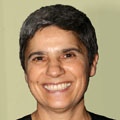
Dr. Mezey earned her M.D. from the Semmelweis University Medical School in Budapest, Hungary. She received her Ph.D. in neuroendocrinology from the Hungarian Academy of Sciences in Budapest. Dr. Mezey subsequently came to the NIH as a postdoctoral fellow in the Laboratory of Cell Biology, NIMH. She later returned to the NIH as a visiting scientist in NINDS. In 2004 she transferred to the NIDCR and heads the Adult Stem Cell Section to study the biology of bone marrow derived stem cells.

Stanislav N Gorb
Stanislav Gorb is professor of zoology at the University of Kiel. His research focuses on morphology, structure, biomechanics, physiology, and evolution of surface-related functional systems in animals, as well as the development of biologically inspired technological surfaces and systems. Gorb has authored four books, more than 200 papers in peer-reviewed journals, and four patents. His awards include Science Award of the Donors’ Association for the Promotion of Science and Humanities in Germany (Stifterverbandpreis für die Deutsche Wissenschaft), International Forum Design Gold Award and Materialica "Best of" Award. He is member of Academy of the Science and Literature Mainz, and of the National Academy of Sciences Leopoldina.

Rudi H. Ettrich
Rudi received his prediploma in chemistry (Vordiplom) from Eberhard-Karls-University, Tuebingen, Germany, in 1993, his Master of sciences (Mgr.) in physical and macromolecular chemistry from Charles University, Prague, in 1998 and his PhD. in physical chemistry from Charles University, Prague, in 2002.
Since 2013 he is a full Professor (Prof.) in biophysics and currently acts as the President/CEO of Larkin University, Miami, FL and holds a faculty appointment at the College of Biomedical Sciences. He also holds community-based adjunct faculty positions at the Wertheim College of Medicine, Florida International University, Miami, FL, and the Department of Mathematics and Physics, Charles University, Czechia.
Prior to joining Larkin University Rudi was affiliated with the Czech Academy of Sciences, where he acted as director, group leader and senior researcher at the Center for Nanobiology and Structural Biology of the Institute of Microbiology in Nové Hrady, Academy of Sciences of the Czech Republic
Rudi's research is focused on the relationship between structure and function of proteins, dynamic changes related to functional processes on the level of proteins and the mutual interaction of cofactors and subunits in protein complexes. The research approach is very complex using various methods of protein research with a synthesis of theoretical and experimental methods.

Liang Gao
Dr. Liang Gao currently works as a senior Research Fellow at the Center of Experimental Orthopaedics, Saarland University, Germany. His clinical interests include sports medicine, arthroplasty, and traumatology. His research focuses on joint preservation and orthobiologics.
Dr. Gao studied Medicine in China and Germany with intensive fellowship training in both Asia and Europe. He completed the Musculoskeletal Surgical Oncology residency training at Peking University Medical Center, China. Moreover, he obtained his master of science degree (Radiation Oncology) from Heidelberg University, Germany and his doctorate (Biological Therapy) summa cum laude from Saarland University, Germany.
Dr. Gao is the Member of the Basic Science Committee of International Cartilage Regeneration & Joint Preservation Society (ICRS), the Member of the Early Career Investigator Committee of Osteoarthritis Research Society International (OARSI), and the Founding Member of the Sino Euro Orthopaedics Society (SEOS).

Harpinder S. Sandhu
Senior Lecturer, School of Natural and Built Environments, University of South Australia; Leading research on ecosystem services in managed landscapes, agro-ecology and natural resource management.

Susanna A Wood
Susie is a freshwater scientist and molecular ecologist based at the Cawthron Institute in Nelson, New Zealand. Her research is multidisciplinary and integrative, with the overarching goal of improving knowledge on freshwater ecosystems. It spans three broad areas: (i) toxic cyanobacteria dynamics in freshwater systems (both planktonic in lakes and benthic in rivers), (ii) the development and application of molecular techniques to monitor and understand aquatic systems, and (iii) integrating cutting edge techniques with more traditional paleolimnological approaches to guide future lake management and restoration. Wood is the co-programme leader of a project funded in 2017 known as ‘Our lakes’ health: past, present, future’ (www.lakes380.com). The team is obtaining a nationwide overview of health for about 10% of New Zealand’s lakes using paleo-environmental reconstructions. The team is using sediment coring, novel proxy analyses (environmental DNA, high-resolution core scanning), geochronology and mātauranga Māori (indigenous knowledge) to reconstruct water quality and lake health over the past 1000 years and provide a richer understanding of the value of New Zealand’s lakes.

Anthony Caravaggi
Dr. Anthony Caravaggi is a Lecturer in Conservation Biology and course leader for BSc (Hons) Wildlife Ecology and Conservation at the The University of South Wales.
His work is broadly focussed on conducting research that increases understanding of species ecologies and informs conservation and management processes.

Mar Sobral
Spanish Evolutionary Ecologist. Formerly at Stanford (US) and CNRS (France). Now at USC (Spain).
My research looks at the evolutionary ecology of plant-animal interactions and the impact of global change on biodiversity, particularly regarding ecosystem functions and services such as carbon storage.

Clint D Kelly
Canada Research Chair in Behavioural Ecology. Our lab uses an empirical approach to examine a broad set of topics in behavioral and evolutionary ecology, with particular emphasis on the evolution and maintenance of mating systems and strategies, the trade-offs between reproduction and immunity, the evolution of sexual dimorphism and sperm competition.
We test hypotheses in the lab and field using North American gryllid field crickets and the weta of New Zealand as model organisms. In addition to our empirical work, we have a strong interest in reviewing and synthesizing the primary literature using meta-analysis, commenting on statistical issues and analyzing scientific practices.

Carlos Eurico Fernandes
Dr. Carlos Eurico Fernandes is Professor within the Experimental Pathology Laboratory at the Institute of Biosciences, Federal University of Mato Grosso do Sul, Brazil.
His research within the Experimental Pathology Laboratory focuses on descriptive and functional histology, with an emphasis on biometric, histological, histopathological and histomorphometric analyses, having fish and anurans as experimental models.