Academic Editors
The following people constitute the Editorial Board of Academic Editors for PeerJ. These active academics are the Editors who seek peer reviewers, evaluate their responses, and make editorial decisions on each submission to the journal. Learn more about becoming an Editor.



Claudio Vasapollo
I am a marine biologist working as a fishery and benthic researcher at the Institute for Marine Resources and Biotechnologies (IRBIM) of the National Researche Council (CNR) in Ancona, Italy. I held my PhD in 2010 at the The Open University (Milton Keynes, UK) working at the Stazione Zoologica A. Dohrn of Naples (Italy) where I conducted a study on the spatial and temporal distribution of macro benthic assemblages associated to Posidonia oceanica seagrass and on several features of the plant itself. I got a Master degree in 2005 at the Polytechnic University of Marche after the Bachelor's degree in Marine Biology at the same university in 2004. I participated in several surveys at sea in the last years as well as to several diving expeditions in the Indian Ocean and Mediterranean Sea.

Easton R White
I am a quantitative marine ecologist who uses mathematical and statistical tools, coupled with experiments and field observations, to answer questions in ecology, conservation science, sustainability, and ecosystem management. Most of my work is focused on marine systems, especially fisheries and spatial planning. I am a new Assistant Professor in the Department of Biological Sciences at the University of New Hampshire. Prior to joining UNH, I was a research associate at the University of Vermont with the QuEST program, a NSF-funded PhD traineeship focused on quantitative skills, interdisciplinary work, as well as diversity and inclusion.
I currently conduct research on assessing the effectiveness of protected area networks, improving species monitoring programs, and modeling socio-ecological systems in the context of fisheries. My work centers on how environmental variability, in particular rare events (e.g., hurricanes, COVID-19 pandemic), affects ecosystems and those that depend on them. My current work is funded through a NSF grant focused on interdisciplinary approaches to study coupled natural-human systems with Madagascar fisheries as a case study.

Nikolajs Sjakste
Experience
1978 -1987; Researcher in the Cancer Cell Chemistry Laboratory, Institute of Experimental and Clinical Medicine, Riga, Latvia.
Professor of Medical Biochemistry and Medical Genetics, University of Latvia, Faculty of Medicine (since 1998). Address: Jelgavas Street 1, Riga LV1004 Latvia. Chief of the Department of Medical Biochemistry (2011).
Leading researcher (since 2011) and Head of the Biochemistry Group, Department of Medicinal Chemistry, Latvian Institute of Organic Synthesis (since 1990).
1995 and 1997 “Red position” of CNRS 1993-1998; Institut Jacques Monod, Université Paris VII, Laboratoire de Biochimie de Différentiation, Paris, France.
Education:
Degree of Doctor of Biological Sciences (Dr. habil.), 1992, Institute of Experimental Medicine, St.-Petersburg, Russia. Degree of Candidate of Biological Sciences (Ph. D.), 1984, Cancer Research Centre, Moscow, Russia. Diploma with Distinction in Medical Biophysics, graduated from the Medico-Biological faculty of the 2nd Moscow Medical Institute, Moscow, Russia, 1978.

Lei Wang
Professor of Geography at Louisiana State University. Research interests include Geocomputation, GeoAI, Remote Sensing of water, Spectroscopic analyses, and mapping flood hazards.

Liudmila P Leppik
Assistant Director, Frankfurt Initiative for Regenerative Medicine, J.W. Goethe-Universität, Friedrichsheim Orthopedic University Hospital.
Dr. Leppik’s research background is in the fields of molecular biology and virology in Russia and Germany. Specifically her research focused on human genome activity and regulation of gene expression during tumor genesis and development and differentiation. Her current research at FIRM focuses on tissue development and regeneration.

Robert O Deaner
I earned my PhD in the Department of Biological Anthropology & Anatomy at Duke University (1995 – 2001), and my advisor was Carel van Schaik. Although I conducted some research on wild primates, my doctoral research consisted of comparative studies of primate life history, social systems, and cognition.
I did postdoctoral research in Duke’s Department of Neurobiology (2001-2006), and my supervisor was Michael Platt. My research focused on mechanisms of social attention in primates. During this time I took up distance running and began investigating sex differences in performance and motivation.
In 2006, I joined the Psychology Department at Grand Valley State University.

Eder João Lenardão
Prof. E.J. Lenardao has pioneered studies on green procedures to prepare organochalcogen compounds (sulfur, selenium and tellurium-containing). He has made major contributions in the synthesis of vinyl chalcogenides and the chemical modification of natural occurring compounds by including selenium and sulfur in their structures. Some results of his studies were published in prestigious journals and contributed to the prospection of many boosted antioxidant semi-synthetic molecules. Since 2007, Prof Lenardao is a researcher of The Brazilian Council for Scientific and Technological Development (CNPq), Fellow of RSC, and a Member of the International Board of the Selenium and Sulfur Redox and Catalysis Network. Currently, studies on new chalcogen-containing reduced risk insecticides and antibiotics are among his research interests.

Servet Ahmet Doğdu
Servet has PhD in fisheries Genetics, marine biotechnology and marine biology. He currently works to Assist Prof. Dr. at Underwater Technologies, Maritime Vocational School of Higher Education at Iskenderun Technical University. Also, he has expertise in population genetics, conservation genetics, marine biodiversity and alien species. Doğdu has published over 80 scientific papers, books and book chapters on these areas. Doğdu has worked on several national and international projects.

Astrid Zech
Prof. Dr. Astrid Zech is head of the Department of Movement Science and Exercise Physiology at the Friedrich Schiller University Jena.
Her primary research interests include; Sensorimotor control over the lifespan; Habitual running patterns, barefoot running; Sports injuries / injury prevention; Rehabilitation and exercise therapy and Sports in old age.

John M Ringo
Professor Emeritus of Biology, University of Maine. Past Associate Editor, Behavior Genetics and past Associate Editor, Evolution.
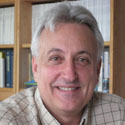
Robert Costanza
Professor of Ecological Economics, University College London, Institute for Global Prosperity, Senior Fellow, Stockholm Resilience Center, Stockholm, Sweden; Affiliate Fellow, Gund Institute for Ecological Economics, University of Vermont; deTao Master of Ecological Economics, deTao Masters Academy, Shanghai China

Izwandy Idris
Dr. Izwandy Idris is Head of the South China Sea Repository and Reference Centre (RRC) within the Institute of Oceanography and Environment at the Universiti Malaysia Terengganu.
His research interests include the systematics (taxonomy), biology, and ecology of marine invertebrates, with in-depth works on the marine worm (Annelida: Polychaeta). Dr. Idris' research group works on several aspects including small-scale biogeography in coastal and estuary, biofouling ecology, biology, and ecology of commercially related species for sustainable application. His group also has started taking an interest in deep-sea polychaetes.
The overarching objectives of Dr. Idris' research group is to systematically catalogue the marine invertebrate diversity in Malaysia and to apply the knowledge on the ecological and biological requirements of the species for the betterment of people through economic empowerment, health, and the environment in a sustainable manner.