Academic Editors
The following people constitute the Editorial Board of Academic Editors for PeerJ. These active academics are the Editors who seek peer reviewers, evaluate their responses, and make editorial decisions on each submission to the journal. Learn more about becoming an Editor.



Edward L Braun
Professor of Biology, University of Florida; member of UF genetics institute and Affiliate Curator Florida Museum of Natural History

Takeshi Kurita
I am a Professor of Biology at the Institute of Science Tokyo. My research interest lies in the molecular and cellular basis of development and reproduction, two fundamental processes for all multicellular organisms. I am particularly interested in the cell and tissue communications that regulate these processes. In embryonic development, interactions between tissues of different cell lineages drive organ formation by activating genetic and epigenetic programs for tissue patterning and cellular differentiation. Tissue interaction also plays a fundamental role in mammalian reproduction as it mediates the actions of sex steroid hormones in reproductive organs. Deregulation of signaling pathways that control tissue communications could lead to conditions such as cancer. Thus, I also investigate the molecular pathogenesis of disorders in reproductive and hormone-target organs. Since mammalian development and reproductive functions are controlled by complex crosstalk among multiple tissues, organs, and systems, we primarily use in vivo mouse models for the investigation.
Understanding the molecular mechanisms underlying the fundamental process of life is a goal of our research. In addition, our research also aims to improve human health through translational research based on the knowledge obtained through basic research.

Marcello Iriti
Dr. Marcello Iriti is an Associate Professor of Plant Biology and Pathology within the Department of Agricultural and Environmental Sciences at the University of Milan.
He has been studying nutraceuticals, functional foods, phytotherapeutics and essential oils relevant for human and animal health, focusing on their preclinical (in vitro/in vivo) and in human pharmacological activities. He has also been investigating the health-promoting effects of traditional Mediterranean diet as well as the ethnopharmacology of herbal remedies of traditional healing systems.
Dr. Iriti is a Member of the World Academy of Sciences, Asian Council of Science Editors and Society of African Journal Editors. Founding Member of the Italian Society of Environmental Medicine. Member of the Working Group ‘Pharmacognosy, Phytotherapy and Nutraceuticals’ of the Italian Pharmacological Society.

Reema Singh
A highly accomplished Computational Biologist and Bioinformatician with over 19 years of research expertise. My professional focus is on One Health bioinformatics, using pathogen transcriptomics and genomic surveillance to investigate and control infectious threats and antimicrobial resistance. My career has been marked by a strong track record of developing impactful tools and pipelines, including the Dlact antimicrobial resistance gene database and the Gen2Epi computational pipeline. Currently, as a Bioinformatician and Data Manager at the Vaccine and Infectious Disease Organization (VIDO), I apply my skills to analyze large-scale transcriptomics data and elucidate host-pathogen interactions in both human and animal populations

Ross H Miller
Dr. Miller is an Associate Professor in the Department of Kinesiology at the University of Maryland (College Park, MD, USA). His research focuses on the mechanics and energetics of human locomotion in health and pathology, with an emphasis on causes and prevention of knee osteoarthritis.

Darren F Ward
I am an entomologist whose research interests are focused on the threats of invasive insects, the diversity of parasitoid communities, and the utilisation of data from natural history collections in ecological research.
Irene L.G. Newton
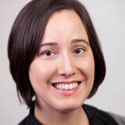
Assistant Professor of Biology in the Microbiology section. Woodrow Wilson Foundation Fellow, Andrew Mellon fellow, and advisor to the Social Science Research Counsel, former Howard Hughes Medical Institute Predoctoral Fellow and former NSF postdoctoral fellow.

David E.K. Ferrier
Reader in Biology and Director of the Scottish Oceans Institute, at the University of St Andrews.
The focus of our research is the connection between the content and organisation of genomes to the evolution of development (evo-devo). We utilize a variety of organisms in our research (including amphioxus, sea squirts, polychaetes and priapulids), chosen from key points in the phylogeny of the animals to enable reconstruction of the ancestral conditions at major nodes in the animal kingdom; the origin of bilaterians, protostomes, deuterostomes, chordates and vertebrates.

Muhammad Aamer Mehmood
Dr. Muhammad Aamer Mehmood is a Professor of Industrial and Environmental Biotechnology at Government College University Faisalabad, a Distinguished Expert, and Visiting Professor of Industrial Biotechnology at Sichuan University of Science & Engineering. He is a recipient of several national/international awards/funding. He is serving as an Editor of several reputed journals.

Ravi Kant
Ravi Kant is an Associate Professor (Docent) of Medical Microbiology, working at Department of Virology & Department of Veterinary Biosciences, University of Helsinki with background in IT, NGS, genomics, bioinformatics and veterinary microbiology.

Jorge Curiel Yuste
Dr. Jorge Curiel Yuste, leads the group of "Terrestrial Ecology" within the BC3. He obtained his doctorate from the University of Antwerp (UA, Belgium) in 2004. Since then, he has been a postdoctoral researcher at the Biometeorology (Biometlab) lab at the University of California, Berkeley (Prof. Dennis D Baldocchi, 2004-2007) a Marie Curie fellow (Intra-European Fellowship (IEF)) in the Global Ecology Unit at the Centre for Ecological Research and Forestry Applications (CREAF) of Barcelona (2007-2009), a postdoctoral researcher at the Autonomous University of Barcelona (UAB; Contractes doctoral D'Intensificatió I3, 2009-2011) and a "Ramón y Cajal" research fellow at the Museum of Natural History (MNCN, CSIC). Since 2017 he holds an Ikerbasque Research Professorship at the Basque Center for Climate Change (BC3). At the moment he is also responsible for the group of "Plant and soil Interactions" (PlanSoil within the Asociaciión Española de Ecología Terrestre (AEET)

Brian Kraatz
Brian received a B.A. in Geology from Gustavus Adolphus College in 1996. He completed an M.S. in Geology & Geophysics from the University of Wyoming in 2001, and a Ph.D in Integrative Biology from the University of California, Berkeley in 2007. He completed a postdoctoral fellowship in Paleontology at the American Museum of Natural History, where he remains affiliated as a Research Associate. Since 2009 he has been an Assistant then Associate Professor of Anatomy at Western University of Health Sciences.
American Museum of Natural History Postdoctoral Fellowship, 2007
George D. Louderback Award in Paleontology, University of California Museum of Paleontology, 2006
Annie Alexander Fellowship, University of California Museum of Paleontology, 2006
NSF Graduate GK-12 Fellowship, University of California, Berkeley Natural History Museums, 2004 – 2006
Outstanding Master’s Thesis, The University of Wyoming, 2001
Outstanding Masters Student, The University of Wyoming, Department of Geology and Geophysics, 2001