Advisory Board and Editors Evolutionary Studies



David WE Hone
I'm a Reader in Zoology at Queen Mary University of London. I've previously worked at University College Dublin and the University of Bristol and had postdoctoral positions at the Institute for Vertebrate Paleontology and Paleoanthropology in Beijing and the Bayerische Staatsammlung für Paläontologie und Geologie in Munich. My work focuses on the (non-avian) dinosaurs as a whole and especially the carnivorous theropods, and also on the flying pterosaurs.

Zunnan Huang
Professor in Chemistry; Director, Key Laboratory of Big Data Mining and Precision Drug Design; Director, Key Laboratory of Computer-Aided Drug Design of Dongguan City; Vice Dean, Graduate School of Guangdong Medical University; PhD in Computational Chemistry and Physical Chemistry obtained from the University of Oklahoma; Guest Editor, Current Pharmaceutical Design, Current Medicinal Chemistry, Frontiers in Chemistry, Molecules; Reviewer for more than 50 SCI journals including Journal of the American Chemical Society, Science Advances, Nature Communications and Briefings in Bioinformatics. Authors of more than 117 SCI papers with an accumulated IF of 600.

Xiaolei Huang
Professor of Entomology at the State Key Laboratory of Ecological Pest Control for Fujian and Taiwan Crops, Fujian Agriculture and Forestry University. Main research interests of Xiaolei Huang's lab include insect diversity, systematics, biogeography, behavior, species interactions. His lab focuses on different taxonomic groups (e.g. insect-symbiont, insect-plant, insect-insect) to understand ecology and evolution of the diversity of species interactions. He also works actively on some general issues including data sharing and open science in ecology and evolution, and trends of biological taxonomy. During the recent years, the lab has been establishing specimen collection and DNA barcode library of subtropical aphids and scale insects in China, as well as research platform for studying species interactions and insect ecology and evolution across different disciplines from field ecology to genomics.
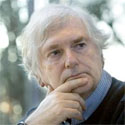
Stephen P Hubbell
Distinguished Professor of Ecology and Evolutionary Biology, UCLA, and Senior Staff Scientist, Smithsonian Tropical Research Institute; Founding Chair, National Council for Science and the Environment, Washington, D.C.; Co-founder, Center for Tropical Forest Science; Fellow, American Academy of Arts and Sciences: Fellow, American Association for the Advancement of Science; 2016 Laureate, International Prize in Biology, Japan Society for the Promotion of Science

Daniel F Hughes
Dr. Daniel Hughes is an Assistant Professor of Biology at Coe College, where he studies how organisms, species, and entire communities respond to change, both in the past and present. His research begins with natural history observations and then leverages comparative approaches from diverse fields to study ecological and evolutionary processes, mostly in reptiles and amphibians. Dr. Hughes' work stems from the interrelated aims of tracking the impacts of global changes and improving the conservation of species.

John R Hutchinson
Professor of Evolutionary Biomechanics at The Royal Veterinary College, University of London. Assoc Editor of Proc Roy Soc B, J Theor Biol. Royal Society Leverhulme Trust Senior Fellow 2012-2013. Fellow of the Linnean Society of London, Anatomical Society, Zoological Society of London and Royal Society of Biology. RCVS Share Jones Lecture in Anatomy (2011) and British Science Festival, Charles Darwin Award Lecture (2012). Honorary Research Associate, University College London. Fellow of the Year, Anatomical Society (2015).

Lakshminarayan M Iyer
I received my PhD in plant virology and pursue problems in evolutionary biology. My primary research contributions and interests are in the fields of protein evolution and classification, genome evolution, protein biochemistry and functional predictions, and organismal biology.
Main areas of research:
* Protein evolution and classification.
Identifying trends in genome evolution.
* Prediction of novel biochemical activities and biological functions of proteins.
* Using comparative sequence and genome analysis to make inferences on organismal biology
* Understanding the forces of evolution that shape protein domain diversity.

Maria del Mar Jimenez-Gasco
Associate Professor in the Department of Plant Pathology and Environmental Microbiology at The Pennsylvania State University. Ph.D. in Crop Protection (2001) from the University of Córdoba, Spain. M. Eng. in Agricultural Sciences and Engineering (1997)
Research interests: population genetics, phylogenetics, population biology of plant-associated microorganisms,ecology of soilborne fungi (Verticillium dahliae and Fusarium oxysporum), emergence and evolution of plant pathogenicity and virulence.

Michela M Johnson
I am a postdoctoral researcher at the State Natural History Museum in Stuttgart. I completed my PhD at the University of Edinburgh in 2019. My work focuses on teleosauroids, a group of semi-marine Jurassic crocodylomorphs, and aspects of their morphology, phylogenetics, taxonomy and ecology. For my postdoc I am studying their ontogeny and body size distribution during the Early Jurassic.

Sheri L Johnson
A behavioural ecologist with broad interests in sexual selection, mating system evolution, sperm biology, behavioural epigenetics, and the effects of environmental challenges (e.g., hypoxia, toxins, and microplastics) on the reproductive and behavioural ecology of animals. Study systems include marine invertebrates, marine and freshwater fishes (including zebrafish) and terrestrial invertebrates (weta and stag beetles). Overall, Dr Johnson's research programme investigates both genetic and environmental effects on behaviour and reproductive fitness.
Christine Josenhans
Christine Josenhans is Professor for Microbiology and Medical Microbiology at Max von Pettenkofer Institute of Ludwig Maximilians University Munich and an infectious disease specialist. Until 2017, she was Associate Professor at Hannover Medical School, Germany, also in the field of infection research and molecular and cellular microbiology. Her research foci are on infectious disease agents in general, with specialization in microbiology, biochemistry, immunology, and host-pathogen interactions. She performed her Post-doctoral studies on Yersinia host-pathogen interactions, more specifically on their type III secretion system pore proteins. Current research foci are in persistent bacterial and viral infections, host-pathogen crosstalk and immune interference, as well as in the causal link between infections and cancer.
She is on the board of several undergraduate and graduate teaching programs.

Bishoy Kamel
I am currently a scientist at the Joint Genome Institute at Lawrence Berkeley National Laboratory. Working on a diversity of topics, including evolution, genomics, metabolic modeling, host-parasite interactions, and biosurveillance.