Advisory Board and Editors Cell Biology



Yoshinori Marunaka
Prof. Marunaka is the President and the Representative Director, Director of Clinical, and Director of Medical Research Institute, Kyoto Industrial Health Association; Professor, Research Organization of Science and Technology, Ritsumeikan University; Professor Emeritus, Kyoto Prefectural University of Medicine; Former President, Physiological Society of Japan. Former President, International Society of Cancer Metabolism. MD (1979), PhD (1985), Kyoto Prefectural University of Medicine; National License of Physician and Surgeon, Japan (1979). He was Professor and Chairperson, Departments of Molecular Cell Physiology and Bio-Ionomics, Kyoto Prefectural University of Medicine, Japan, and Director and Professor, Japan Institute for Food Education and Health, St. Agnes’ University. He was awarded “Vebleo Nanomedicine Scientist Award” (Sweden), “Marco Polo della Scienza Italiana” (Italy), The Premier's Research Excellence Award (Canada), Scholar Award (Medical Research Council of Canada) and Research Award from National Kidney Foundation of USA. He has obtained more than 60 research grants, published more than 270 peer reviewed articles, and provided more than 30 invited plenary lectures at international congresses and research conferences. h-index 47, i10-index 190, Citation 7498

Fabrizio Mattei
Dr. Fabrizio Mattei graduated from University “La Sapienza” in Rome and completed his specialization in biotechnologies and oncology at the same university. In 2000, he became a fellow at the Edward Jenner Institute for Vaccine Research in David Tough's laboratory (Newbury, U.K.), where he acquired experience in the field of dendritic cell immunology. He is currently a Researcher, Group Leader and Principal Investigator at the Istituto Superiore di Sanità (Rome, Italy), where he has focused on the molecular interactions between dendritic cells and type I Interferons signalling.
His current research is aimed at understanding the role of Interferons signalling and IL-33 in the interface between tumor and immune system in both mouse and human models. Furthermore, he is also conducting research aimed at investigating on crosstalk between immune system and cancer by Cell-on-Chip devices. In addition, Dr. Mattei is developing a multidisciplinary laboratory network focused at the realization of Organ-On-Chip platforms, useful to mimic and study human diseases and cancer.

Rachel McMullan
Wellcome Trust Career Development Fellow using C. elegans genetics to understand how animals respond to infection. In particular the cross talk between nervous and immune systems that coordinates behavioural and cellular responses to infection. Member of the Genetics society and British Society for Cell Biology.
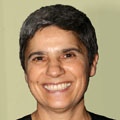
Eva M Mezey
Dr. Mezey earned her M.D. from the Semmelweis University Medical School in Budapest, Hungary. She received her Ph.D. in neuroendocrinology from the Hungarian Academy of Sciences in Budapest. Dr. Mezey subsequently came to the NIH as a postdoctoral fellow in the Laboratory of Cell Biology, NIMH. She later returned to the NIH as a visiting scientist in NINDS. In 2004 she transferred to the NIDCR and heads the Adult Stem Cell Section to study the biology of bone marrow derived stem cells.

Koji Mikami
Prof. Koji Mikami is Professor of Department of Food Resource Development in School of Food Industrial Sciences at Miyagi University, Japan. He is also President of the Japanese Society of Applied Phycology. Prof. Mikami received his PhD in Plant Science from Hokkaido University in 1990. His area of expertise focuses on the physiology and molecular biology of development and environmental stress response in seaweeds, and the biotechnology of seaweeds (gene transfer and genetic transformation, application of seaweed genes for land green plants).

Thimios A Mitsiadis
Professor of Oral Biology in the Medical Faculty at the University of Zurich, Switzerland since 2006. Research in the fields of stem cells, genetics, molecular and experimental biology related to orofacial developmental and regeneration processes.
DDS degree from the Dental Faculty of the Kapodistrion University of Athens (Greece), Master degree for Immunology, Genetics and Differentiation, and PhD in Developmental Biology from the University of Lyon (France). Postdoctoral studies at the University of Helsinki (Finland), Karolinksa Nobel Institute (Stockholm, Sweden) and Yale University (USA). Previously Professor at the Mediterranean University (Marseilles, France), Visiting Professor at the Ecole Normale Superieure of Lyon (France), Clinical Senior Lecturer at King's College London (UK), Visiting Professor at the Polytechnic University of Marche (Ancona, Italy), Visiting Professor at the Second University of Napoli (Napoli, Italy). Chief-Editor of the “Frontiers of Craniofacial Biology and Dental Research”, Associate Editor of “Stem Cell Research”, Scientific Editor of “European Cells & Materials”, and part of the editorial board in additional 8 scientific journals. More than 110 original articles in journals such as “Journal of Cell Biology”, “Development”, “Developmental Biology”, “Nature Genetics”, “Science Signaling”, “Scientific Reports”, “Frontiers in Physiology” and more than 200 keynote and invited lectures.

Edward Mocarski
Professor Emeritus, Stanford University (2006) and Emory University (2021). Formerly, Robert W. Woodruff Professor of Microbiology and Immunology in the Emory Vaccine Center at Emory University (2006-2021) and Professor and Chair of Microbiology & Immunology at Stanford University (1983 - 2006). Previously (2009 and 2010), Distinguished Fellow at MedImmune, LLC, a wholly owned subsidiary of AstraZeneca.

Ipsita Mohanty
Dr. Ipsita Mohanty is a Research Associate II at the Children's Hospital of Philadelphia Research Institute
Her current research focuses on investigating the molecular mechanisms of nitric oxide signaling pathway at the proteome levels using multipronged approach of mouse genetics, ex vivo mechanistic functional study as well as high throughput mass spectroscopy techniques.
Dr. Mohanty has expertise in pharmacology, physiology, and proteomics with emphasis in intracellular signal transduction and GPCR signaling directed towards designing therapeutic strategies for cardiovascular disorders. Technical cognizance encompasses fields of Smooth Muscle pharmacology, Integrative Physiology, Contraction Physiology, Proteomics, Biochemistry, Molecular Biology, Bioinformatic Data Analysis (and related softwares) for Mass Spectrometry data and In-Vivo skills.

Alessandra Montecucco
Alessandra Montecucco heads a laboratory of the Unit of Molecular and Cellular Biology of the Nucleus at the Institute of Molecular Genetics (IGM) of the Italian National Research Council (CNR). Her research activity is focused on the cellular response to DNA damage and genome integrity.

Héctor Manuel Mora-Montes
In 2010, I established the Laboratory of Fungal Glycobiology at Universidad de Guanajuato, Mexico, with the main goal to understand the synthesis mechanisms of the fungal cell wall and the interaction of medically relevant fungal pathogens with the host. This laboratory is characterized by its facilities to perform chemical, immunological, genetic, molecular, and cellular analyses of human fungal pathogens. Therefore, it is among a handful of research facilities within Mexico and Latin America offering a multidisciplinary and integral approach to understand the host-fungus interaction. Our group has a solid international reputation in the molecular and immunological studies of organisms belonging to the genus Candida and Sporothrix.

Joanna Moraczewska
Professor at Kazimierz Wielki University in Bydogszcz, Faculty of Biological Sciences, Poland. Head of the Department of Biochemistry and Cell Biology. Our research concentrates on molecular mechanisms of actin filament regulation in muscle and non-muscle cells.

Paula I. Moreira
Paula I. Moreira is Assistant Professor at the Faculty of Medicine and Principal Investigator at the Center for Neuroscience and Cell Biology, University of Coimbra. Moreira published more than 100 scientific peer-reviewed articles and she is on the editorial board of over 10 journals. Paula Moreira won the Stimulus to Research prize, in 2003, supported by the Calouste Gulbenkian Foundation and, the L’Oreal for Women in Science, in 2008, supported by L'Oreal Portugal/UNESCO/ FCT.