Advisory Board and Editors Cell Biology



Anup Singh Pathania
Dr. Anup Pathania is an Assistant Professor at the University of Nebraska Medical Center (UNMC).
His research interests include non-coding RNAs in cancer, pharmacology, and immunology. He is currently investigating the underlying mechanisms in the stabilization of PD-L1 by exosomal non-coding RNAs in neuroblastoma cells within the tumor microenvironment.

Santosh K Patnaik
After completing my training as a physician, I enrolled in a Ph.D. program to become a biomedical researcher. My doctoral training, in the broad field of biochemistry, and cell and molecular biology, focused on mechanisms of glycosylation, which is altered in diseases such as cancer and neuromuscular dystrophy. My current primary research focus is on RNA editing, and on microRNAs.

Kevin Petrie
I obtained my PhD from the Institute of Cancer Research in London spent a further 10 years there as a postdoctoral fellow and Staff Scientist. I am currently a Lecturer in Molecular Biology at the University of Stirling in Scotland. My principal research interest is translational oncology, with a focus on epigenetics.

Toryn Poolman
Dr. Toryn Poolman is a Lecturer in the Department of Structural & Molecular Biology at University College London.
His primary research interests include applying omics techniques, including RNAseq, phospho-proteomics, and microbiome analysis.

Bartosz J Płachno
Bartosz Jan Płachno (born in 1978), biologist specialized in plant anatomy, cytology and embryology, with particular emphasis on electron microscopy techniques. He mainly studies the structure of carnivorous plants. Scholarship holder of the Foundation for Polish Science and the Minister of Science and Higher Education. Professor of the Faculty of Biology of the Jagiellonian University in Krakow. He's also interested in fossil crinoids and art.

Jiangjiang Qin
Dr. Jiangjiang Qin is currently a Professor of Cancer Pharmacology and Drug Discovery at the Institute of Basic Medicine and Cancer (IBMC), Chinese Academy of Sciences and the Cancer Hospital of the University of Chinese Academy of Sciences (Zhejiang Cancer Hospital).
Dr. Qin received his B.S. degree in Pharmacy (2006) and Ph.D. in Biomedical Engineering with the highest honor (2011) from Shanghai Jiao Tong University, China, under the supervision of Professor Wei-Dong Zhang. After completion of Post-Doctoral training in cancer biology, pharmacology, and molecular therapeutics at Texas Tech University Health Sciences Center (TTUHSC) in 2014, Dr. Qin continued his research work at TTUHSC as a Research Associate and a Senior Research Associate and at the University of Houston as a Senior Research Scientist. Dr. Qin joined Zhejiang Chinese Medicinal University as a Full Professor in 2018 and then moved to IBMC in 2020.
Dr. Qin’s research mainly focuses on the discovery and development of novel, effective, and safe anticancer agents as well as demonstrating the molecular targets and mechanisms of action. He has published more than 150 research papers and reviews. He is also an Associate Editor of Frontiers in Pharmacology and Frontiers in Oncology and an Editorial Board Member of more than 10 scientific journals such as Recent Patents on Anti-Cancer Drug Discovery, Journal of Cancer Research Updates, World Journal of Traditional Chinese Medicine.
Rafael Radi
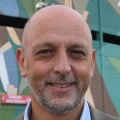
Professor and Chairman of Biochemistry, Facultad de Medicina, Universidad de la República, Uruguay. Discovery Award of the Society for Free Radical Biology and Medicine (SFRBM, 2011), Alexander Von Humboldt Senior Award (2010), National Prize in Science and Technology (2007). Howard Hughes International Research Scholar (2000-2011). Past-President of SFRBM and of the Society for Free Radical Research International. Foreign Associate of the US National Academy of Sciences (2015). Founding Member and current President of the Academia Nacional de Ciencias del Uruguay.

Prashanth Ravishankar
Dr. Prashanth Ravishankar received his PhD in Biomedical Engineering from the University of Arkansas. He is a Research and Development Scientist at Namida Lab Inc.
He has over a decade of experience in areas of Bioengineering, Biomaterials, Mechanobiology, Tissue Engineering, and Bone and Cardiovascular Bioengineering. He has presented at international conferences in the USA, Canada, and Abu Dhabi. He also serves as an editorial member on BMC Research Notes and as a reviewer for journals and conferences.

Anoop Rawat
Dr. Anooop Rawat is a Research Associate at the University of Southern California.
His primary research is focused on understanding biophysical and structural basis of misfolding and aggregation of huntingtin protein which is implicated in Huntington's disease.

Marilyn B Renfree
Laureate Professor and Ian Potter Chair of Zoology, School of BioSciences, University of Melbourne. Elected Fellow of the Australian Academy of Science (AAS); Secretary, Biological Sciences and Vice President of AAS; Officer of the Order of Australia; Past President of the Society for Reproductive Biology; Former NHMRC, Fulbright, Ford Foundation and Royal Society and ARC Federation Fellowships, Director of the ARC Centre of Excellence for Kangaroo Genomics. Gold Conservation Medal San Diego.
Professor Marilyn Renfree’s research has focussed almost entirely on marsupials because of their intrinsic interest and for the opportunities they provide as biomedical models for understanding mammalian reproduction and development. Her laboratory is known internationally for its study of the reproduction and development of marsupials that have resulted in a number of discoveries that challenged the accepted dogma including early mammalian development, control of embryonic diapause, sexual differentiation, virilisation and genomic imprinting. She has also been involved in genome studies of the platypus and the tammar wallaby.

Jeroen Roelofs
Jeroen Roelofs received his Ph.D. (Cum Laude) from the University of Groningen, where he studied cGMP signalling and chemotaxis of Dictyostelium Discoideum. During his postdoctoral work in the Lab of Dan Finley at Harvard Medical School he studied the ubiquitin-proteasome system and discovered a role of several molecular chaperones in the assembly of the proteasome in S.Cerevisiae and human tissue culture cells. Since 2009 he runs his own lab at Kansas State University, where his lab studies proteasome assembly and regulation at the molecular and cellular level in yeast and mammalian tissue culture systems. Recent interests include quality control of assembly and the degradation of proteasomes through autophagy.

Ligia Rusu
Dr. Ligia Rusu is a Professor within the Department of Kinetotherapy and Sport Medicine at the University of Craiova, Romania.
HIs research areas include neurologic rehabilitation, neuromuscular assessment, physiology and biomechanics. More specifically, sports medicine, neurologic rehabilitation, orthopedic rehabilitation, and orthotics and prosthetics.