Advisory Board and Editors Cell Biology


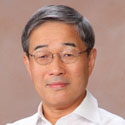
Tadashi Yamamoto
Professor of Cell Signal Unit, Okinawa Institute of Science and Technology Graduate University. Editorial Board: Genes to Cells, Molecular Biology of the Cell, Protein and Cell, Experimental & Molecular Medicine. Awarded 1987, Princess Takamatsu Cancer Research Fund Prize, 1990 Asahi Prize, 2003 NIH Fogarty Scholar-in-Residence. Former director of the Institute of Medical Science, University of Tokyo.

Guangdong Yang
Dr. Yang’s research focuses on a group of gasotransmitters, especially H2S, in the regulation of cellular functions and human diseases. Dr. Yang has received numerous awards and recognitions, including New Investigator award from the Heart and Stroke Foundation of Canada and Maureen Andrew Award from Heart and Stroke Foundation of Ontario. In his career, Dr. Yang has published ~100 peer-reviewed research articles, some of them published in high-impact journals, including as Science, Circulation, PNAS, and EMBO report etc. Their total citations are 7,481 (September 24, 2018).

Judith Yanowitz
Dr. Yanowitz received her B.S. in biology with a minor in literature from MIT in 1991, worked for two years in Titia de Lange’s laboratory at Rockefeller University studying telomere biology. She received her Ph.D. from Princeton University where she worked on Drosophila melanogaster sex determination and dosage compensation in Paul Schedl’s lab. In 1999, she joined Andy Fire’s lab at the Carnegie Institution where she identified genes requiring for mesodermal tissue patterning in the nematode, Caenorhabditis elegans. Dr. Yanowitz started her own lab at Carnegie Institution in 2004 to study the effect of chromatin on meiotic crossover formation. She joined MWRI and the University of Pittsburgh School of Medicine in November 2009 and is now a full Professor.

Xin Zhang
Dr. Xin Zhang is Department Director and Principal Investigator of the Clinical Experimental Center at Jiangmen Central Hospital (China). He received his Ph.D. in Molecular Medicine from Sun Yat-sen University in 2016. Dr. Zhang is an enthusiastic, early career scientist involved in interdisciplinary training and has a strong biological background, including molecular pathology, molecular diagnostics, and molecular pharmacology. His current research interests mainly focus on the molecular mechanism of tumor recurrence and metastasis, clinical application of molecular diagnosis, and molecular pharmacological mechanism of traditional Chinese medicine in potential therapeutic application of cancer.