Academic Editors
The following people constitute the Editorial Board of Academic Editors for PeerJ. These active academics are the Editors who seek peer reviewers, evaluate their responses, and make editorial decisions on each submission to the journal. Learn more about becoming an Editor.



Camillo Rosano
A physicist; in 1996 Camillo Rosano started his studies in Macromolecular Crystallography at the Advanced Biotechnology Center, Genova (I). In 1997 he achieved the Advanced Certificate in Principles of Protein Structures (PPS), Birkbeck College, University of London, UK, and in 1998 he spent a period at the “York Structural Biology Laboratory” York University, York, UK for a Macromolecular crystallography traineeship. He participated to the NASA expeditions STS100/ISS6A and STS110/ISS7A by designing experiment of protein crystallization on-board the International Space Station (ISS). Director of different Courses and Workshops, he is the author/coauthor of more than 100 peer-reviewed scientific publications.
Dr. Rosano is a Full Professor in Biochemistry and Full Professor in Applied Biology. Italian Ministry for University, Education and Research (MIUR), 2012.
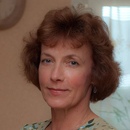
Natalia V. Zhukova
Since 2009 to present time Leading Researcher of the Laboratory of Comparative Biochemistry, National Scientific Center of Marine Biology, Far East Branch of the Russian Academy of Sciences and Far Eastern Federal University.
1992-2009, Senior Researcher
1987-1992, Researcher
1980-1987, Junior Researcher
1978-1980, Probationer Researcher

Rodolfo Jaffé
I`m interested in inter-disciplinary approaches, comprising population and community ecology, genomics and spatial statistics, to understand how the alteration of natural habitats influences biodiversity and the provision of ecosystem services.

John F Bruno
John Bruno is a marine ecologist and Professor at The University of North Carolina at Chapel Hill. His research is focused on marine biodiversity, coral reef ecology and conservation and the impacts of climate change on marine ecosystems. John earned his Ph.D. from Brown University in Ecology and Evolutionary Biology and was a postdoctoral fellow at Cornell University in disease ecology. He is currently working primarily in Belize, the Bahamas, Cuba, and the Galapagos Islands.

Yung-Sheng Chen
I am a full-time academic professor with a specificity in neuromuscular and cardiovascular physiology in the Department of Exercise and Health Sciences at University of Taipei. I completed a M.Sc. degree in Sports Sciences from Brunel University, the UK, in 2007 and a Ph.D. degree in the School of Health and Human Sciences, Southern Cross University, Australia in 2011. My current research interests focus on the effects of training load monitoring, exercise recovery intervention on autonomic nervous function, effects of biofeedback training on cardiovascular adaptation, and effects of ageing on neuromuscular function, physical activity and health, and football/futsal sciences

Praveen Arany
Training: Dentistry, Biomedical Research, Bioengineering, Pathology
Postdoctoral: TGF-beta, wound healing, regeneration, radiation biology, light biology, stem cells, biomaterial, Lasers.
Current: Clinical translational research and molecular mechanism.
Positions: Past-President, NAALT; President-Elect WALT, Co-Chair SPIE, Chair, ASLMS
Interests: Signal Transduction, Lasers, Biological regulation, Photobiomodulation.

Nicholas D Pyenson
Dr. Nicholas D. Pyenson is a research geologist and curator of fossil marine mammals at the Smithsonian Institution's National Museum of Natural History. He received his Ph.D. from the University of California, Berkeley, and completed his postdoctoral fellowship at the University of British Columbia. As a paleontologist, his scientific research focuses on the repeated and convergent evolution of marine life, including iconic lineages such as sea turtles, sea cows, and especially whales.

Christian Wehenkel
Professor of forest genetics, forest ecosystem analysis, forestry, biometrics, forest growth, and biodiversity, Universidad Juarez del Estado de Durango. Author / co-author of more than 170 international and national publications.Technical manager of more than 40 national and international projects. Evaluator of CONHACYT, Mexico and other institutions. Member of the Latin American Forest Genetic Resources Network (LAFORGEN).

Frank JH Lu
Frank J.H. Lu PhD. is Professor of the Graduate Institute of Sport Coaching Science, Chinese Culture University. Professor Lu completed his doctoral degree in 1998 at the University of North Carolina at Greensboro (UNCG). He is the former president of the Society for Sport and Exercise Psychology of Taiwan (SSEPT) from 2005 to 2007, and an active member in the international sport psychology bodies, such as Association of Applied Sport Psychology (AASP), International Society of Sport Psychology (ISSP), North American Society for the Psychology of Sport and Physical Activity (NASPSPA), European Federation of Sport Psychology (FEPSAC) and Asian South Pacific Association of Sport Psychology (ASPASP). Frank enjoys teaching and instructing graduate students in sport and exercise psychology. His major research interest in sport psychology is student athletes’ life stress, PST interventions, and psychological well-being. As to exercise psychology he focuses on physical self and quality of life.

Ulysses Paulino Albuquerque
I am interested in understanding all the dimensions and effects of human relations with nature, this is the reason my approach is interdisciplinar. My research interests involve anthropology, evolutionary psychology, cultural evolution, human behavioral ecology, ethnobiology, human ecology, ecology and evolution. I try to understand how we co-evolve with the environment and other species. This is why I explore how the human mind has been evolutionarily shaped to deal with the complexity of the world we live in, as well as all the processes associated with the transmission and storage (memory) of information and strategies for exploration and management of natural resources. I am also interested in the evolution of science and scientometry, and cognitive and cultural evolution in the human species.

Jan H Jensen
Jan H. Jensen obtained his PhD in theoretical chemistry in 1995 from Iowa State University working with Mark Gordon, where he continued as a postdoc until he joined the faculty at the University of Iowa in 1997. In 2006 he moved to the University of Copenhagen, where he is now professor of bio-computational chemistry.
Prof. Jensen is the Editor-in-Chief of PeerJ Physical Chemistry.

Yegor S Vassetzky
Yegor Vassetzky graduated from the Moscow State University. After a PhD thesis in molecular biology at the Engelhardt Institute of Molecular Biology in Moscow, he worked as a postdoctoral fellow in laboratories of Klaus Scherrer (Paris), Susan Gasser (Lausanne) and Marcel Méchali (Montpellier). Since 2002 he heads the laboratory of Nuclear Organization and Pathologies at Gustave Roussy Institute (Villejuif, France). His main research interests concern epigenetic regulation in cancer and neuromuscular diseases. Yegor Vassetzky is Associate Editor for Biopolymers & Cell, and member of the Editorial Board of PeerJ and Oncotarget.