Advisory Board and Editors Oncology



Yegor S Vassetzky
Yegor Vassetzky graduated from the Moscow State University. After a PhD thesis in molecular biology at the Engelhardt Institute of Molecular Biology in Moscow, he worked as a postdoctoral fellow in laboratories of Klaus Scherrer (Paris), Susan Gasser (Lausanne) and Marcel Méchali (Montpellier). Since 2002 he heads the laboratory of Nuclear Organization and Pathologies at Gustave Roussy Institute (Villejuif, France). His main research interests concern epigenetic regulation in cancer and neuromuscular diseases. Yegor Vassetzky is Associate Editor for Biopolymers & Cell, and member of the Editorial Board of PeerJ and Oncotarget.

Shibiao Wan
Dr. Shibiao Wan is currently an Assistant Professor in the Department of Genetics, Cell Biology and Anatomy, and the Co-Director for the Bioinformatics and Systems Biology (BISB) PhD Program at University of Nebraska Medical Center (UNMC). He is also an Assistant Professor (courtesy) in the Department of Biostatistics at UNMC.
With more than 15 years of experience in machine learning, bioinformatics, and computational biology, Dr. Wan has published >50 articles in top-tiered journals such as Genome Research, Nature Communications, Science Advances, Circulation Research, Briefings in Bioinformatics, and Bioinformatics. Dr. Wan is the Editor-in-Chief for Current Proteomics, and an Associate Editor/Academic Editor/Editorial Board Member for a series of prestigious journals such as Briefings in Functional Genomics, Heliyon, BMC Bioinformatics, International Journal of Microbiology, PeerJ Computer Science, BioMed Research International, and Computational and Mathematical Methods, and a guest associate editor for multiple high-impact journals.
He is a Scientific Program Committee (SPC) member for American Medical Informatics Association (AMIA) Annual Symposium and a Technical Program Committee (TPC) member for >20 machine learning related international conferences including IEEE ICTAI. Dr. Wan is also a reviewer for >70 prestigious journals including Nature Biotechnology, Nature Methods, Nature Communications, Nature Computational Science, Science Advances, Nucleic Acids Research, Advanced Science, Cancer Research, Genome Biology, and Genome Medicine. Dr. Wan has received a number of accolades including the Springer Nature Editor of Distinction Award in 2025 by Springer Nature, the New Investigator Award in 2024 by UNMC, the FIRST Award in 2023 by Nebraska EPSCoR, the Outstanding Young Alumni Award in 2022 by HK PolyU as well as the Global Peer Review Awards (top 1%) in “Cross-Field” and “Biology and Biochemistry” in 2019 by Clarivate. Dr. Wan is a member of AACR, AMIA, ISCB and ACM and an IEEE Senior Member.

Hao Wu
Hao Wu is a patent scientist in an oncology-focused biotechnology company, Exelixis, Inc. She obtained her Ph.D. in molecular biology from Rowan University (previously known as the University of Medicine and Dentistry of New Jersey (UMDNJ) – Stratford Campus). With hands-on knowledge in various aspects of biology, including molecular biology, cell biology, biochemistry, immunology, neuroscience, oncology, Hao has worked on inventions spanning a broad range of technologies, for example, biologics, antibodies, biomarkers, diagnostics, cell therapy, gene therapy, and sequencing.

Wei Xu
Dr. Wei Xu received his Ph.D. in Biostatistics from University of Toronto. He is currently a scientist and principle biostatistician in Princess Margaret Hospital on clinical research of cancer diseases. He is a faculty member at the Dalla Lana School of Public Health, University of Toronto and on the Editorial Board of the Journal of Medical Statistics and Informatics. Dr. Xu's research interests are statistical genetics and clinical trial design and analysis. He is the author or co-author of over 100 publications in peer-review journals.
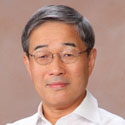
Tadashi Yamamoto
Professor of Cell Signal Unit, Okinawa Institute of Science and Technology Graduate University. Editorial Board: Genes to Cells, Molecular Biology of the Cell, Protein and Cell, Experimental & Molecular Medicine. Awarded 1987, Princess Takamatsu Cancer Research Fund Prize, 1990 Asahi Prize, 2003 NIH Fogarty Scholar-in-Residence. Former director of the Institute of Medical Science, University of Tokyo.

Shun-Fa Yang
Prof. Shun-Fa Yang is a Director of Clinical Cancer Research at Chung Shan Medical University Hospital and Professor at the Institute of Medicine, Chung Shan Medical University, Taiwan.
Dr. Yang received a Ph.D. degree in molecular biology, his research interests include pharmacology, oral cancer metastasis, cancer biology, genetic polymorphism and environment risk factors in oral cancer.

Guangdong Yang
Dr. Yang’s research focuses on a group of gasotransmitters, especially H2S, in the regulation of cellular functions and human diseases. Dr. Yang has received numerous awards and recognitions, including New Investigator award from the Heart and Stroke Foundation of Canada and Maureen Andrew Award from Heart and Stroke Foundation of Ontario. In his career, Dr. Yang has published ~100 peer-reviewed research articles, some of them published in high-impact journals, including as Science, Circulation, PNAS, and EMBO report etc. Their total citations are 7,481 (September 24, 2018).

Venkata Yellapantula
Bioinformatician currently at Memorial Loan Kettering Cancer Center with 10 years of experience in analyzing high-throughput genomic and proteomic data. I have a diverse background in handling raw exome & whole genome sequencing, RNA-Seq and ChIP-Seq data to identify genetic aberrations. Proficient in development and implementing pipelines and algorithms and post analysis of aberrations identified through individual assays to glean novel biological patterns. Led large-scalegenomic efforts such as MMRF CoMMpass trial, ICGC & TCGA.

Jiyang Yu
Dr. Jiyang Yu's research is focused on systems biology, systems immunology, single-cell systems biology, immuno-oncology, translational oncology and functional genomics. He earned his bachelor’s degree in Computer Science from Zhejiang University, China. In 2008-2012, he was trained in Dr. Andrea Califano’s laboratory at Columbia University and earned his PhD degree in Biomedical Informatics.

Jian Zhang
Dr. Jian Zhang currently works at the Division of Gastrointestinal Surgery & Gastric Cancer Center, The First Affiliated Hospital of Sun Yat-sen University. Jian does research in Genetics/Epigenetics and Cancer Research. He is also the editorial board member of Frontiers in Oncology and Frontiers in Bioinformatics.

Xin Zhang
Dr. Xin Zhang is Department Director and Principal Investigator of the Clinical Experimental Center at Jiangmen Central Hospital (China). He received his Ph.D. in Molecular Medicine from Sun Yat-sen University in 2016. Dr. Zhang is an enthusiastic, early career scientist involved in interdisciplinary training and has a strong biological background, including molecular pathology, molecular diagnostics, and molecular pharmacology. His current research interests mainly focus on the molecular mechanism of tumor recurrence and metastasis, clinical application of molecular diagnosis, and molecular pharmacological mechanism of traditional Chinese medicine in potential therapeutic application of cancer.

Min Zhao
I pursued my bioinformatics Ph.D. degree in the center of bioinformatics in Peking University. During my Ph.D. study, I received comprehensive training in molecular biology, biostatistics and bioinformatics including research designs, computational tool development and database implementation. With a solid background and comprehensive knowledge in bioinformatics and biological networks, I filled a postdoctoral research fellow position at the Vanderbilt University. During this period, I received excellent training in the understanding of genetics of complex diseases including cancer and pulmonary disease, and I applied my bioinformatics skills in analysis of large scale next-generation sequencing (NGS) data.
To date, I have worked in four different research areas. The first is data collection from public literature and databases to build bioinformatics tools for public use. The second is the integrative analysis of NGS data to decipher the genetic mechanism of complex disease. Thirdly, I applied network-based strategy on the interplay of tumor suppressor genes (TSGs) and oncogenes (OCGs) using the public cancer genomic/epigenetic data. Lastly, I translated my disease genomics expertise to huge marine genomic data to explore the common cell-cell communication mechanisms of metazoan.