Academic Editors
The following people constitute the Editorial Board of Academic Editors for PeerJ. These active academics are the Editors who seek peer reviewers, evaluate their responses, and make editorial decisions on each submission to the journal. Learn more about becoming an Editor.



Rutsuko Ito
Associate Professor of Psychology and Neuroscience, University of Toronto at Scarborough.
PhD in Behavioural Neuroscience, Cambridge University

Mikko Karttunen
Canada Research Chair (Tier 1) in Computational Materials and Biomaterials Research and Professor of Chemistry & Applied Mathematics at the University of Western Ontario. Leader of the Computational and Theoretical Biological Physics & Chemistry Group. Affiliate of the Perimeter Institute for Theoretical Physics at Waterloo.
Selected Awards: Ontario Early Reseachers Award, NSERC Discovery Accelerator, EU DEISA Extreme Computing, Distinguished Research Professor, Academy of Finland Fellowship

Denis J. Marcellin-Little
Dr. Marcellin-Little is a veterinary orthopedic surgeon who has been doing research for approximately 20 years in the field of joint replacement, limb deformities, physical rehabilitation, and biomodeling/biomanufacturing. He has a particular interest in the interface between computers and orthopedics. He is a member of the Center of Additive Manufacturing and Logistics at North Carolina State University and an adjunct in the Departments of Biomedical Engineering (at NCSU), Industrial and Systems Engineering (at NCSU), and Physical Therapy (at UT-Chattanooga).

Francois Vandenesch
Professor of Microbiology at the Faculty of Medicine. Head of the clinical microbiology department and head of a research INSERM team in the field of staphylococcal pathogenesis. Head of the French Reference Center for Staphylococci.

Hao Wu
Hao Wu is a patent scientist in an oncology-focused biotechnology company, Exelixis, Inc. She obtained her Ph.D. in molecular biology from Rowan University (previously known as the University of Medicine and Dentistry of New Jersey (UMDNJ) – Stratford Campus). With hands-on knowledge in various aspects of biology, including molecular biology, cell biology, biochemistry, immunology, neuroscience, oncology, Hao has worked on inventions spanning a broad range of technologies, for example, biologics, antibodies, biomarkers, diagnostics, cell therapy, gene therapy, and sequencing.
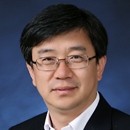
Doil Choi
Professor of the Department of Plant Science and Director of Plant Genomics and Breeding Institute of Seoul National University, Korea

Mikhail Spivakov
A Regulatory Genomics group leader at Babraham Institute, Cambridge UK. Interested in the logic and robustness of gene regulation, with a particular focus on computational approaches and ageing as the experimental system.
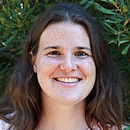
Barbara E. Engelhardt
Senior Investigator at Gladstone Institutes, Professor of Biomedical Data Science at Stanford University. My group develops statistical models and methods for high-dimensional genomic data, modeling human genetic variation and its impact on gene expression and splicing, with the goal of identifying mechanisms of human disorders and diseases.

Hannes Stockinger
Head of the Center for Pathophysiology, Infectiology and Immunology at the Medical University of Vienna and Chairman of one of the Center’s subunit, the Institute for Hygiene and Applied Immunology, where he is appointed as a full professor for molecular immunology. Further, current Chairman of the Federation of Austrian Scientific Societies. Served as officer for many other national and international scientific organizations and societies. For instance, long-lasting Treasurer of the European Federation of Immunological Societies (EFIS, 2006-2015), President of the Austrian Society for Allergology and Immunology (2000-2006), Board Member of the Austrian Science Fund (2005-2014). Identified and developed targets for diagnosis and therapeutic treatment of immunological and inflammatory diseases particularly on T cells and myeloid cells by monoclonal antibodies. The latter have been distributed to the community and used by health care centers, doctors and researchers for the diagnosis and therapy of immunological diseases and leukemias already for decades. The contribution to the understanding of how GPI-anchored receptor proteins transduce signals across the plasma membrane were fundamental for the identification and characterization of lipid rafts, membrane devices that are now recognized to control signaling across the plasma membrane. Published more than 180 papers with an h-factor of 47.

Tal Svoray
My contribution to the field of Ecology as a geographer includes the development of a new spatially and temporally explicit modeling approach. This approach allows to better understand the impact of the hydrological cycle on ecosystem productivity and soil erosion. The novelty in this approach lies in the ability to simulate field (rather than synthetic) conditions of spatial heterogeneity and temporal dynamics using GIS. This allows confronting advanced mathematical models with ecosystem complexity by using experiments, observations and measurements. The research group I established introduced the concept of coupling numeric simulation using Richard's equations with real conditions of semiarid hillslopes using spatial databases. This way we were able to compute water budgets in the heterogeneous stony soils of dry environments. This modelling approach was also used to tackle current practical questions such as the effect of climate change on ecosystem productivity.
The broad view on ecohydrological processes helped me to get invited as Guest Editor to edit two special issues in two leading journals: Water Resources Research (WRR) and Geomorphology, and to author two review papers (published in Int. J. of Remote Sensing and in Movement Ecology). My experience allowed me also to initiate and lead an international workshop on Confronting Mathematical Models with Ecosystem Complexity, hosting distinguished scientists from all over the world.

Anne Kuhn
Anne Kuhn holds a PhD in Environmental Science from the University of Rhode Island, and has expertise in the field of spatial statistics and developing approaches for evaluating the relative risks from chemical and non-chemical stressors on spatially structured populations of wildlife species across. Anne develops and evaluates watershed indicators to reflect and predict aquatic condition in lakes, streams and estuaries. Her current research involves evaluating key intrinsic factors controlling watershed physical processes and connectivity, and quantifying watershed-level stressors (e.g., land use, stable isotopes of nitrogen and carbon, nutrient loads, climate change, etc.) that influence the condition and integrity of water bodies within watersheds.

Kate Flay
Dr. Kate Flay joined City University of Hong Kong in July 2020 as an Assistant Professor in Production Animal Health. After graduating with a Bachelor of Veterinary Science with distinction from Massey University in New Zealand, she entered rural veterinary practice and worked with a range of production livestock and companion animal species. Following this, Kate returned to Massey in 2015 as a Lecturer in Pastoral Livestock Health in the School of Veterinary Sciences. At this time she also completed her PhD, focussed on wastage and productivity of commercial ewes. During her time at Massey, Kate was involved with the wider veterinary industry, serving on the Society of Sheep and Beef Cattle Veterinarians of the New Zealand Veterinary Association Committee and the Continuing Professional Development Advisory Group.
Dr. Flay’s research is focused on improving productivity of production livestock, particularly small ruminants. She also has a particular interest in wastage of livestock, including risk factors associated with wastage and practical strategies farmers can implement to reduce wastage within their systems.