Advisory Board and Editors Neuroscience



Simon Baron-Cohen
Simon Baron-Cohen is Professor of Developmental Psychopathology, University of Cambridge and Fellow at Trinity College, Cambridge. He is Director, Autism Research Centre (ARC) in Cambridge. He has a degree in Human Sciences from New College, Oxford, a PhD in Psychology from UCL, and an M.Phil in Clinical Psychology at the Institute of Psychiatry, Kings College, London, and he held lectureships in these departments. He is author of Mindblindness, The Essential Difference, Prenatal Testosterone in Mind, and Zero Degrees of Empathy. He has edited scholarly anthologies including Understanding Other Minds, Synaesthesia, and The Maladapted Mind. He has written books for parents and teachers including Autism and Asperger Syndrome: The Facts, and Teaching Children with Autism to Mindread. He has celebrated autism in An Exact Mind. He is author of the DVDs Mind Reading and The Transporters, to help children with autism learn emotion recognition, both nominated for BAFTA awards. He is author of >450 scientific articles. He has supervised 32 PhD students.

Cristina Becchio
Cristina is Associate Professor at the Psychology Department, University of Turin, and Senior Researcher at the Robotics, Brain and Cognitive Sciences Department, Italian Institute of Technology, Genova. After studying philosophy at the University of Turin, she joined a PhD Program in Cognitive Science in 2001. She became researcher at the University of Turin in 2006. She is interested in the cognitive and neural mechanisms underlying motor cognition.
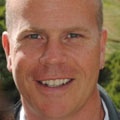
George E Bentley
Professor of Integrative Biology and Neuroscience.
Editorial Board of Biology, Neuroendcrinology, Scientific Reports, Domestic Animal Endocrinology, Frontiers in Systems and Integrative Pharmacology, Frontiers in Endocrinology.

Joanne Berghout
Dr. Berghout received her PhD in Biochemistry from McGill University in Montreal, QC where she researched the genetics of complex traits and susceptibility to infectious disease in humans and mouse models. Following that, she spent three years as the Outreach Coordinator for the Mouse Genome Informatics (MGI) database in Bar Harbor, ME. There, she trained researchers in genetics, genomics, data structures and data mining to answer biological questions, and worked closely with other members of the MGI group to develop and optimize the MGI resource. Now her research interests include genetics of all kinds, personalized medicine, big data, and scientific communication. She is currently pursuing projects in precision medicine for analysis of transcriptome data from patients with rare lung diseases (Sarcoidosis, Coccidiomycosis), and integrative network analysis of complex traits including Alzheimer's Disease. She is currently appointed at the University of Arizona's Center for Biomedical Informatics and Biostatistics (CB2) and The Center for Genetics and Genomic Medicine (TCG2M) in Tucson, AZ.

Maurizio Bertollo
Maurizio Bertollo is Associate Professor of Motor Behaviour and Sport Psychology at “G. d’Annunzio” University of Chieti-Pescara. He is affiliated with the Dept of Medicine and Aging Sciences, & currently serves as Vice-Director of the Behavioral Imaging and Neural Dynamics (BIND) Center.
Maurizio received his bachelor in Physical Education and Human Movement Science, followed by a master degree in Education (Pedagogy), a master degree in Psychology, and a doctoral degree in Sport Sciences. He also holds specializations in psychotherapy, developmental and learning disabilities, and sport psychology. Currently, he is a chartered psychologist and psychotherapist within the “Ordine Nazionale Psicologi” and member of the FEPSAC Managing council.
He has worked as a scientific consultant, psychologist, and/or coach for many Italian sports clubs, federations (e.g., Modern Pentathlon, Triathlon, Swimming, Rink Hockey, Soccer, Cycling, Track and Field, and Shooting) and for the National Olympic committee. Before moving to the University, he was also PE teacher, School Psychologist and Headmaster.
His research activity focuses on the processes and mechanisms underlying the development, maintenance and improvement of human motor behaviour and performance. Current research interests include Bio-psycho-physiological state underpinning performance, Individual Zones of Optimal Functioning, Stress recovery-balance in sport, Psychophysiological monitoring & intervention in sport.

Kevin J. Black
I am a movement disorders neuropsychiatrist. My research is primarily focused on neuroimaging and dopamine, especially in people with Tourette syndrome and Parkinson disease. I have also developed methods for structural imaging volumetry, analysis of brain images in nonhuman species, pharmacological fMRI (phMRI), and statistical analysis of anatomy-function relationships in deep brain stimulation (DBS).

Paolo Brambilla
Dr. Paolo Brambilla is MD specialist in Psychiatry and PhD. He is Associate Professor of Psychiatry at the University of Milan, Milan, Italy; Adjunct Associate Professor of Psychiatry, UTHouston, USA; Director, Psychiatric Clinic, Fondazione IRCCS Cà Granda Ospedale Maggiore Policlinico; Chair, EPA Neuroimaging Section; and CoEditor in chief of Journal of Affective Disorders
He is also scientific coordinator of (1) Research Unit on Brain Imaging and Neuropsychology at the Psychiatric Clinic at the University of Verona, and of (2) of developmental psychopathology studies at the IRCCS Scientific and Clinical Institute “E. Medea”, Polo FGV, Udine.
Currently, Dr. Brambilla is leading longitudinal studies in major psychoses, mood disorders and developmental psychopathology.
He is the recipient of several national and International scientific honours and grants, and is author/co-author of more than 250 original papers published in International peer-reviewed Journals (7000 citations).
According to Web of Science, he is amongst the top 100 most cited researchers in the field of bipolar disorder and is the 32th most cited researcher in the field of ‘Neurosciences & Psychology’ of the ‘Top Italian scientists”, based on via-academy.
His current lifetime h-index is 48 as calculated by Scopus, 53 by Google Scholar, 50 by ResearchGate. He also bears the Italian National habilitations for Full Professor of Psychiatry and Full Professor of Child and Adolescent NeuroPsychiatry.
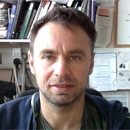
Saverio Brogna
Lecturer and principal investigator at the School of Biosciences of the University of Birmingham, UK. Interested in eukaryotic gene expression and particularly in understanding the links between RNA processing and translation.
At present his group research focuses on understanding nonsense mediated mRNA decay (NMD) and its links with pre-mRNA splicing.

Emiliano Brunamonti
I am Associate Professor at the Department of Physiology and Pharmacology of SAPIENZA, University of Rome, since 2019. After graduating in Experimental Psychology at SAPIENZA, University of Rome, I obtained a PhD in Behavioral Neurophysiology at the same University. From 2005 to 2010 I worked at the Department of Physiology of Queen's University, Kingston (ON), Canada and the Institut Universitari de Audiovisual, University Pompeu Fabra, Barcelona, Espana, focusing my research on the study of the neuronal correlate of motor decision in cortical brain areas. Since 2011 I have been working at the Department of Physiology and Pharmacology of SAPIENZA, University of Rome, focusing my research on the study of the neuronal correlates of inferential reasoning in both humans and monkeys.
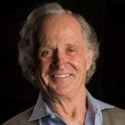
Mario R. Capecchi
Professor of Human Genetics at the University of Utah School of Medicine;
Distinguished Professor of Human Genetics and Biology;
Nobel Prize in Physiology or Medicine 2007;
Member of the National Academy of Sciences & the European Academy of Sciences.
Recipient of many awards including the Kyoto Prize in Basic Sciences; the Albert Lasker Award for Basic Medical Research; the National Medal of Science; the Wolf Prize in Medicine; the March of Dimes Prize in Developmental Biology; and the Nobel Prize in Physiology and Medicine with Smithies and Evans.

Joshua C Carr
Dr. Joshua Carr is an Assistant Professor in the Kinesiology Department at Texas Christian University and the Department of Medical Education at the Burnett School of Medicine. He is the Director of the Neuromuscular Physiology Laboratory on TCU’s main campus and was recently awarded the BIGXII Faculty Fellowship Award. His primary research focus relates to exercise training with a specific interest in the adaptations that occur with single-limb exercise and interventions that restore and enhance neuromuscular function. He uses surface electromyography, mechanomyography, and neuromuscular stimulation techniques to assess the human neuromuscular system with fatigue, training, injury, and disease.

Nathan Caruana
I am I am a cognitive neuroscientist within the Department of Cognitive Science at Macquarie University. I use virtual reality, eye tracking, motion capture and neurophysiology measures to study the cognitive and neural mechanisms of social perception, joint attention, and non-verbal social coordination - in typical development, autism and schizophrenia. In this work, I am specifically focused on developing interactive methods which balance ecological validity, experimental control and objectivity in our measurement of social attention, behaviour and corresponding neural processes.
Relating to this work, I also study how humans perceive and interact with social artificial agents (e.g., virtual avatars and physical robots). I am specifically interested in examining how our beliefs and expectations shape our experiences with artificial agents to inform how they can be optimally designed and positioned to fulfil their intended purpose.