Advisory Board and Editors Microbiology



Matthew PG Barnett
I'm currently a Senior Research Scientist in the Physiology & Health Team at AgResearch Limited, one of New Zealand's Crown Research Institutes (CRIs). I'm based at the University of Auckland's Liggins Institute, being involved in several projects investigating the importance of nutrition for health throughout life. The primary focus of these projects is intestinal health, but I'm also interested other aspects of human health, including cognition and mobility.
I graduated from The University of Auckland in May 2005 with a PhD in Biological Sciences. My thesis research focused on the importance of a mother’s diet during gestation and lactation on the risk of type-2 diabetes in her offspring. Since 2001 I've worked for AgResearch in a range of roles (including Research Associate, FRST Postdoctoral Fellow, and Research Scientist) and on a variety of topics. I was part of the Nutrigenomics New Zealand collaboration from 2004-2014, working on understanding how our diet and genome interact to influence health with a particular focus on intestinal function.
I was the Section Editor (Nutrigenomics) for the European Journal of Nutrition from 2014 to 2019.
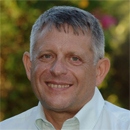
Edward A. Bayer
Professor, Wishner Chair of Bio-organic Chemistry. Early development of avidin-biotin technology. Co-discoverer of the cellulosome concept. Editor/Editoral Board: Biotechnology Advances, Biotechnology for Biofuels, Current Opinion in Biotechnology, Industrial Biotechnology. Member of Scientific Advisory Board, US-DOE BioEnergy Science Center (BESC). Sarstedt Research Award, The Ulitzky Prize, Fellowship of the American Academy of Microbiology and European Academy of Microgiology.

Travis Beddoe
Prof. Travis Beddoe is a multidisciplinary scientist, training initially as a plant biochemist before studying molecular chaperones in mitochondrial targeting as a PhD student (awarded March 2004), and eventually training in biophysical and structural biology in immune receptors as a postdoctoral researcher. He started his independent research career at Monash University with an NHMRC CDA fellowship (2008) followed by a Pfizer Australia Research fellowship (2010) in the area of glycan specificity in bacterial pathogenesis and physiology. Dr. Beddoe changed research fields when he was recruited to La Trobe University in 2014 as a senior lecturer to establish a laboratory focused on livestock-pathogen interactions in the School of Animal, Plant and Soil Science located in the AgriBio centre. His research is concentrated on aiding animal health with a focus on field-based diagnostics, molecular understanding of the role glycans and glycan-binding proteins play in disease pathogenesis and vaccine development.

Michael Beman
The overarching goal of my research program is to develop a predictive understanding of microbial ecology and biogeochemistry in the ‘Anthropocene’ sea. My research sits at the interface of microbial ecology, biogeochemistry, and global change science, and I work worldwide in reefs and estuaries, marine lakes and mountain lakes, and the open ocean. I focus on the responses of microbial communities, and the processes mediated by these communities, to environmental change—including climate change, ocean acidification, and ocean deoxygenation.
I received a B.S. from Yale University and a Ph.D. from Stanford in Geological and Environmental Sciences; before joining the UC Merced faculty in 2009, where I was a postdoc in Marine Environmental Biology at USC, a lecturer at UCLA, and an Assistant Researcher at the University of Hawai’i. I am an Associate Professor and member of the Sierra Nevada Research Institute and the Environmental Systems and Quantitative and Systems Biology graduate groups.

Kate N Bishop
Group Leader at The Francis Crick Institute from April 2015. Programme Leader and Wellcome Trust Career Development Fellow at National Institute for Medical Research in London, UK from end of 2008. Previously, Royal Society Dorothy Hodgkin Fellow at King’s College London.
Kate Bishop received a first class (hon) BSc in Biochemistry from the University of Bath following two research placements; one at the Karolinska Institute in Stockholm, Sweden and the other at Chiron Corporation in San Francisco, USA.
After completing her PhD studies with Jonathan Stoye working on the retroviral restriction factor, Fv1, she undertook postdoctoral training with Michael Malim at King's College London, investigating the APOBEC family of retroviral restriction factors.
Kate was awarded a prestigious Royal Society Dorothy Hodgkin Fellowship in 2004 to continue her APOBEC research.

Kimberly A Bishop-Lilly
Deputy Head of Genomics Department at Naval Medical Research Center, Biological Defense Research Directorate; Adjunct Assistant Professor of Emerging Infectious Diseases at Uniformed Services University of the Health Sciences

Ariel J Blocker
2011-2017: Reader in Microbiology, Schools of Cellular & Molecular Medicine and Biochemistry, University of Bristol
2007-2011: as above, Senior Lecturer in Microbiology
2001-2007: Dunn School of Pathology, University of Oxford: Guy Newton Senior Research Fellow
1997-2000 : Institute Pasteur, Paris: Postdoctoral fellow
1996 : EMBL, Heidelberg: Postdoctoral fellow
1991-1995 : EMBL, Heidelberg: PhD in Cell Biology
1988-1991 : University College, London: B. Sc. in Genetics, 1st class

Alexander Bolshoy
Dr. Bolshoy has completed his PhD from the Weizmann Institute of Science in 1993. He is the author of the book "Genome Clustering: from linguistics models to classification of genetic texts", Springer-Verlag, 2010, and many scientific articles. He is serving as an editorial member of several reputed journals like Bioinformatics and Biology Insights, Computational Biology and Chemistry, ISRN Bioinformatics; and Linguistic Frontiers.

Dario T Bonetta
Associate professor in Faculty of Science at Ontario Tech University. Co-founder Metasys Genomics Corp. Interests include: biologically based materials derived from plant and bacterial sources; plant and animal development; inter-kingdom signalling and cell communication.

Glen M Borchert
Dr. Glen Borchert holds joint appointments as an Assistant Professor in Biology and Pharmacology at the University of South Alabama. He originally received a B.S. in Biology from the University of Tennessee then completed a Ph.D. in Genetics from the University of Iowa. Dr. Borchert’s research focuses largely on identifying novel genetic regulators and defining their roles in oncogenesis, microbiology and speciation. Since starting his laboratory at South Alabama in August 2012, Dr. Borchert has published dozens of papers in peer reviewed journals and had numerous grant applications funded including a highly prestigious NSF CAREER award (2014-2019).

Dawn E Bowles
Dr. Dawn Elizabeth Bowles, PhD is Assistant Professor in Surgery within the Division of Surgical Sciences at Duke University School of Medicine. She obtained her Ph.D. in Microbiology from Louisiana State University.

William J Brazelton
Associate Professor, School of Biological Sciences, University of Utah.