Advisory Board and Editors Biotechnology



Sushma Naithani
Sushma Naithani is an Associate Professor Senior Research in the Department of Botany and Plant Pathology at Oregon State University, USA. The current focus of her research is on understanding information flow in living systems and how evolution shapes this flow using systems-level pathway modeling supported by high-quality biocuration, gene-orthology-based predictions, and analysis of omics data. She serves as a senior curator for the Plant Reactome knowledgebase. Sushma has authored 31 peer-reviewed refereed research articles in high-impact journals, including Nature, Nature Biotech, PNAS, etc. One of her research papers has been selected by the 'Faculty of 1000 Biology'. In addition, she has authored six book chapters and one Open Textbook (S. Naithani (2021): History and Science of Cultivated Plants published by Oregon State University Open Educational Resources, EBOOK ISBN: 978-1-955101-08-0, available at https://open.oregonstate.education/cultivatedplants). She is also an Associate Editor for Frontiers in Plant Science-Plant Biotechnology and served as the Editor-in-chief of the Current Plant Biology (2017-2023).
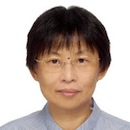
KoonGee Neoh
Professor of Chemical Engineering at the National University of Singapore. Recipient of the 1996 National Science Award of Singapore.

Franco Nigro
Full Professor of Plant Pathology at the Department of Soil, Plant and Food Sciences of the University of Bari - Aldo Moro. He holds the courses "Biotechnology for the Health and Safety of Vegetable Production integrated with the Certification of Agri-food Production" (Master's Degree in Biotechnology for Food Quality and Safety), and the module of Phytopathological Bacteriology (Bachelor Degree in Agricultural Science and Technology). The research activity focus on some relevant diseases of olive trees (quick decline syndrome, verticillium wilt, anthracnose, cercosporiosis), citrus fruits (Phytophthora root rot, and “mal secco” diseases), stone fruit (white root rot). Recently, he also reported the occurrence of Candidatus Phytoplasma phoenicium, a quarantine pathogen of the almond tree, in Apulia.

Nikolaos Nikoloudakis
Dr. Nikolaos Nikoloudakis is an Assistant Professor at the Cyprus University of Technology (CUT). He graduated (2002) from the Agricultural Biotechnology Department of the Agricultural University of Athens (AUA) and has a MSc in the field of plant biotechnology (2005). He obtained his PhD at the Plant Breeding and Biometry Laboratory (AUA) caring out research involving phylogenetic relationships of Avena species and the study of intergenomic modifications using interspecific hybrids of different ploidy levels (2009). Furthermore, he was a post-doc researcher and a special teaching staff at the Department of Agricultural Sciences, Biotechnology and Food Science (ABF) of the Cyprus University of Technology (2017-2022). He has also served as a technical manager of the national reference laboratories of the Hellenic Ministry of Rural Development and Food, regarding GMO detection in seed lots and the control of pathogenic viruses in plant reproductive material (2011-2016). He has contributed to the formation of research networks as a partner from CUT in several national and European projects and participates in several funded research projects (Horizon 2020, Horizon Europe, Prima, RIF and ECPGR). His main research interests are agricultural biotechnology, plant genetic resources, genotyping, and flow cytometry.

Corey Nislow
Corey Nislow's laboratory develops and uses cutting edge tools to address this central question: how can we understand the biological commonalities in all of the life sciences; from embryonic development, to the spread of infectious diseases to better ways to treat cancer. Each of these disciplines can be explained in the context of competition, interaction and evolution. His lab studies the interface between genes and the environment using parallel genome-wide screens, high throughput cell-based assays and next generation sequencing. Most recently, he and his scientific partner, Dr. Guri Giaever, are exploring how laboratory experiments can co-opt evolutionary processes to understand drug action. He enjoys teaching all aspects of biotechnology, genomics and drug discovery. He got his PhD from the University of Colorado, worked at several Biotechnology companies and was at Stanford and University of Toronto before joining UBC in 2013. He has published 161 papers and run 19 marathons.

Fabio TS Nogueira
Associate professor of Plant Molecular Biology and coordinator of the graduate program Plant Cell and Molecular Biology, University of Sao Paulo, Brazil. President, Institutional Biosafety Committee, University of Sao Paulo; Past President, Environmental Ethics in Research Committee, University of Sao Paulo.

Olorunseun O Ogunwobi
Dr. Ogunwobi obtained a medical degree from the University of Ibadan, Nigeria, a master's degree in biomedicine from the University of Hull, United Kingdom, a master's degree in clinical and translational science from the University of Florida, Gainesville, and a PhD in molecular biology from the University of East Anglia, Norwich, United Kingdom. He was the Founding Director of the Hunter College Center for Cancer Health Disparities Research. He is now the Barnett Rosenberg Professor of Biochemistry and Molecular Biology and Chairperson in the Department of Biochemistry and Molecular Biology at Michigan State University. In addition, he will serve as Co-Director of the forthcoming Center for Cancer Health Equity Research (CCHER) at Michigan State University. He is a translational cancer biologist whose work focuses on molecular mechanisms of progression of solid organ cancers with racial disparities, and on approaches to leverage non-coding RNA biology for potential clinical applications in cancer. His work has been funded by the National Institutes of Health, New York State, Carnegie Corporation of New York, and the National Science Foundation, among others. Dr. Ogunwobi was a Founding Contact Principal Investigator of the Synergistic Partnership for Enhancing Equity in Cancer Health (SPEECH) funded by U54 grants CA221704 and CA221705 from the National Cancer Institute. An author of 74 peer-reviewed journal articles and 3 book chapters, Dr. Ogunwobi has been issued 5 US patents for biotechnology inventions with potential clinical applications in cancer. He is the recipient of the 2022 Hunter College Presidential Award for Excellence in Scholarship or Creative Activity, and selected as a Jefferson Science Fellow by the National Academies of Sciences, Engineering, and Medicine, and as a Fellow of the Academy of Medicine Specialties of Nigeria. He is Co-Founder of UTR Therapeutics, Inc (winner of the 2023 XSeed Award from Deerfield), and NucleoBio, Inc.

Charles Odilichukwu R Okpala
Charles Odilichukwu R. Okpala is a Certified Food Scientist (CFS) - International Food Science Certification Commission (IFSCC-USA), Chartered Scientist (CSci) of the Science Council-UK, Fellow - Linnaean Society of London (FLS), Fellow - Institute of Food Science and Technology (FIFST-UK), Member - International Association of Food Protection (MIAFP-USA), Member - Institution of Agricultural Engineers (MIAgrE-UK), Professional Engineer (PEng-UK), Member - The Federalist Society (USA), among others. Charles' first college education was in Statistics and Computer Applications (CertDiplom, 2002) at the University of Nigeria Nsukka - Nigeria, followed by Agriculture (B.Sc. Hons, 2008) at Kwame Nkrumah University of Science and Technology, Kumasi-Ghana. Subsequently, he underwent specialist food science research training (Master of Research [MRES], 2010) at the University of Strathclyde, Glasgow-UK, and during that period, undertook chemical engineering training under the European Federation of Chemical Engineers at Koc Universitesi-Istanbul, Turkey(Intensive Lifelong Learning Diploma - Chemical Engineering with distinction, 2009). He recently accomplished an advanced specialist food nutrition technology research training at Wrocław University of Environmental and Life Sciences(UPWr), Wrocław-Poland (Dyplom Doktorski, Ph.D., 2023). He holds an excess of 75 other credentials, for example, Diplomas in Legal Studies, Social Work Studies, Psychology, Workplace Safety & Health, as well as certifications like FSPCA Preventive Controls for Human Food(USA); HACCP Meat & Poultry(USA); HACCP Fresh Fruit and Vegetable Packinghouse(USA); ServSafe® Instructor/Registered Examination Proctor(National Restaurant Association-USA); ServSafe® Food Protection Manager(National Restaurant Association-USA); Produce Safety Alliance (PSA) Train-the-Trainer (Association of Food and Drug Officials, USA); etc. Currently, he is a County Extension Agent at Assistant Professor cadre (Family & Consumer Science) - University of Georgia Cooperative Extension (Richmond County Office), College of Agricultural and Environmental Sciences, University of Georgia- Athens, USA, and before, Research Scholar - Faculty of Biotechnology and Food Sciences, Wrocław University of Environmental and Life Sciences, Wrocław-Poland. Previously held at other notable institutions include Research Fellow at IRBIM CNR (previously known as IAMC CNR) Mazara del Vallo, Trapani-Italy (2015-2016), and Research Scholar (School of Science, 2011-2013)/Research Associate (Global Public Health Unit, 2012-2013) at Monash University Sunway Campus, Malaysia. Adding to being an Extension Educator and Subject Matter Specialist, he freely lends his expertise as an Independent Academic-Research Practice Consultant, Lead Internal Quality Assurer, and Lean Six Sigma Black Belt Practitioner, among others. He has over 150 scholarly works in very promising ISI impact factor journals, with over 3000 Google Scholar citations, and over h-index of 25. In addition to being an academic/associate editor with some Scopus-indexed journals, he also serves as a scientific reviewer for over 45 others. He delivered posters/presentations at regional/state/international conferences/seminars. Adding to being a proud Strathclyder, Charles' interests include the following: utilization of animal products in sustainable global food systems; family consumer sciences/extension services; agri-food processing/production/quality; consumer safety/food protection; foodservice industries and their personnel development; environmental public health/epidemiology; qualitative and quantitative research methods; quality management of agrifood products/socio-related aspects of foods. Most essentially, Charles trusts Almighty God to lead him in academic, administrative, and vocational endeavors. Additionally, he is extremely passionate and zealous about ensuring colleagues/students, and community members strive to achieve, excel, and succeed.

Sonia MR Oliveira
Doctor Sonia Oliveira holds a Licenciatura in Biology (pre-Bologna) and a Master in Cellular and Molecular Biology from the University of Aveiro, where she also specialized in medicinal plants, toxicology, murine models, and spermatogenesis. In 2011 she moved to Australia to work in Reproductive Biological Sciences. She later explored the nerve-cancer connection in Cancer, namely in female cancers, and completed her Ph.D. in Human Physiology ( with a significant component in Medical Biochemistry and Neurophysiology) from the University of Newcastle (Australia) in 2018. She then worked with biomimetic systems and nanotechnology in diabetes and stem cells. She explored multiple methods for primary and secondary cell culture, always with a keen interest in histopathology, cell biology, and rare disorders. Participated in >40 event(s). (Co-)Supervised MSc dissertation(s) and final projects for course completion of LSc/BSc. And works mostly in the area(s) of Natural sciences with emphasis on Molecular and Cellular Biology, and Medical and Health Sciences with emphasis on Neurosciences, Cancer, Reproduction, Toxicology, Biotechnology, and Stem cells. Also has collaborations in Microbiology, Biomaterials, and Communication and Information technologies.

Luis G. C. Pacheco
Dr. Luis Pacheco is currently an Associate Professor of Biotechnology (Molecular Biology) at the Universidade Federal da Bahia (UFBA), in Salvador-BA, Brazil. During 2019, he has also been working as a Visiting Researcher at the Brigham and Women’s Hospital / Harvard Medical School, Boston-MA, USA. He received his 2010 PhD in Biochemistry and Molecular Biology from a leading university in Brazil, the Universidade Federal de Minas Gerais (UFMG), with an international split-site scholarship period (2008-2009) at the University of Warwick, in the United Kingdom. His research is focused on using functional genomics and synthetic biology approaches for development of novel genetic tools with broad applications in biotechnology, particularly in the fields of diagnostics of infectious diseases and therapeutics of inflammatory diseases.
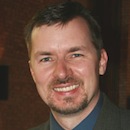
Sean P. Palecek
Professor of Chemical & Biological Engineering at the University of Wisconsin - Madison.

Santosh K Patnaik
After completing my training as a physician, I enrolled in a Ph.D. program to become a biomedical researcher. My doctoral training, in the broad field of biochemistry, and cell and molecular biology, focused on mechanisms of glycosylation, which is altered in diseases such as cancer and neuromuscular dystrophy. My current primary research focus is on RNA editing, and on microRNAs.