Academic Editors
The following people constitute the Editorial Board of Academic Editors for PeerJ. These active academics are the Editors who seek peer reviewers, evaluate their responses, and make editorial decisions on each submission to the journal. Learn more about becoming an Editor.



Peter R Girguis
Peter Girguis joined the Harvard faculty as an assistant professor in 2005, becoming full professor in 2012. His research efforts are aimed at better understanding how microbes mediate matter and energy flow through Earth’s biosphere. He develops novel methods and technologies for studying microbially-mediated energy flow and harvesting, including laboratory and in situ incubators that better mimic environmental conditions, and field-deployable instruments such as underwater mass spectrometers, carbon isotope analyzers and high-performance hydrogen sensors that allow him to study microbial processes in the lab and in situ.
Girguis has authored or co-authored over 85 publications, including papers in Nature, Science, the Proceedings of the National Academy of Sciences, and the Proceedings of the Royal Society. Girguis is a board member of the Ocean Exploration Trust (OET), is on Schmidt Ocean Institute vehicle advisory boards, and served as chair of the National Science Foundations’ Deep Submergence Science Committee (DeSSC).
Girguis’ honors include 5 consecutive years of commendations for distinguished teaching, the 2007 and 2011 Lindbergh Foundation Award for Science & Sustainability, a 2010 Honorable mention in the ENI International Energy and the Environment Award, a feature in the 2008 Discover Magazine’s “10 Everyday Technologies That Can Change the World” (bio-powered lights), and a 2008 Honorable Mention in the Buckminster Fuller Innovations in Science Award.

Ning Yan
Dr. Yan is Distinguished Professor in Forest Biomaterials Engineering at the University of Toronto. She also holds an Endowed Chair in Value Added Wood and Composite at the same University. She is recognized internationally for her research in conversion of lignocellulosic biomass into environmental-friendly chemical products and functional materials.
She specializes in forest-based biomaterials science and composites, bio-based adhesives and adhesion, digital printing, and surface sciences of paper. Currently, her research group is focused on developing novel environmentally-friendly green bio-based composites, producing green chemicals using renewable forestry biomass as feedstock, and engineering the next generation high valued paper based products.

Juan E. Palomares-Rius
My scientific career has been developed in the field of Plant Protection, mainly in plant-parasitic nematodes and how these organisms interact with the plants and other microorganisms in the soil in order to design effective Integrated Management in the agrosystem. Plant-parasitic nematodes could be a major limiting biological constrains for many crops. I have developed five main research lines during my scientific career: i) Study of the interaction plant-nematodes including the plant resistance characterization; ii) Integrative diagnostics and molecular characterization of plant-parasitic nematode species (including description of new species and group phylogenies). This subject has been done with genera as important as Meloidogyne, Pratylenchus, Xiphinema or Longidorus among others; iii) Soil ecological relationships in order to understand the nematode biodiversity; iv) Genetic population structure and molecular diversity of nematodes and plant-viruses vectored by nematodes; v) Genome sequencing and analysis. Nowadays I am working in the Institute for Sustainable Agriculture-CSIC (Spain) in order to unravel the diversity and new control methods against plant-parasitic nematodes in crops.

Bruce P Ayati
I am a professor in the Department of Mathematics at the University of Iowa, where I am a member of the Mathematical Biology and Numerical Analysis research groups. I also hold a secondary research appointment in the Department of Orthopedics & Rehabilitation.
My research interests are in the modeling and simulation of multicellular and tissue-level phenomena, including bone, cartilage, bacterial biofilms, tumor invasion, and the gut microbiome.

Noriko F Hiroi
Noriko Hiroi is Assistant Professor of the Department of Biosciences and Informatics, Keio University. She started to develop her career in Molecular Biology and Biochemistry, and currently works in Systems Biology and Quantitative Biology area. Her research interest includes in vivo oriented modelling, molecular mechanisms of higher-functions of central nerve systems, microfluidics technology and optical technologies and informatics for bioimaging.

Alessandro M Viganò
Dr. Alessandro Viganò is a Neurologist at the Fondazione Don Gnocchi in Italy.
His areas of expertise include Headaches, Migraine, Severe Brain Injury, Strokes, Dysphagia, Focal Muscle Vibration.

Daniel Mirman
Dan is a Senior Lecturer in Psychology at the University of Edinburgh, UK. His research investigates the neurobiology of language processing and language disorders using behavioural and eye-tracking experiments, neuroimaging, and computational modeling methods. His primary focus areas are the organisation of semantic knowledge and the functional neuroanatomy of spoken language.
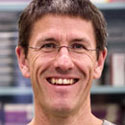
Christopher J. Jolly
Head of the DNA Repair Group, Centenary Institute, Sydney, Australia
Postdoctoral Fellow, MRC Laboratory of Molecular Biology, Cambridge, UK
Postdoctoral Fellow, John Curtin School of Medical Research, ANU, Canberra
PhD, Macquarie University/CSIRO, Sydney
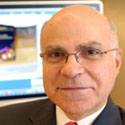
Ziad Kronfol
Ziad Kronfol, M.D. is Professor of Psychiatry and Psychiatry Clerkship Director at Weill Cornell Medicine – Qatar. He previously was Associate Professor of Psychiatry and Director of the Psychoneuroimmunology Program at the University of Michigan in Ann Arbor. Dr. Kronfol is past Vice-President of the Asian Federation of Psychiatric Associations, Distinguished Life Fellow of the American Psychiatric Association and member of the section on education in the World Psychiatric Association.

Chris J Creevey
Prof. Chris Creevey is Professor for Computational Biology in the Institute for Global Food Security at Queen's University Belfast. His main interests are identifying the genomic factors influencing phenotypic changes in organisms from Bacteria to Eukaryotes with a focus on animal microbiomes. He received his Ph.D. in 2002 from the National University of Ireland for his work in the area of phylogenetics and comparative genomics. Following this he worked as a postdoctoral researcher in NUI Maynooth and the European Molecular Biology Laboratory (EMBL) in Heidelberg, Germany. In 2009 he was awarded a Science Foundation Ireland Stokes lectureship in Teagasc Ireland and was awarded a Readership in Rumen Systems Biology in Aberystwyth University 2013. He started his current position in Queen's University Belfast in 2018.

M. Pilar Francino
M. P. Francino studied Biology at the National University of Mexico and obtained her Ph.D. at the University of Rochester (New York), working on analyses of rates and patterns of DNA sequence evolution in bacteria and primates. She conducted postdoctoral research in bacterial genetics as an EMBO Fellow at the University of Paris. After that, she served as a Research Scientist at the DOE Joint Genome Institute (JGI) for five years, and was Head of the JGI Evolutionary Genomics Program from 2007 to 2009. Since 2009, she is a Senior Scientist at the Genomics and Health Department of FISABIO-Public Health in Valencia, and has been Head of the Department since 2012. Her current research focuses on the metagenomic analysis of human microbiome communities, in particular on understanding the development of the gut microbiota in infants. Work in her group analyzes the taxonomic composition, coding capabilities and gene expression patterns of the gut microbial community at different stages during infancy, as well as the relationships of these features with infant health. In addition, she is also interested in understanding the forces that shape the structure, organization and evolution of genomes. In previous and current work, she has addressed genome and molecular evolution subjects at different scales, ranging from the impact of mutational biases during DNA sequence evolution, to the evolution of new genes and their regulatory regions and the coevolution of different genomic traits.
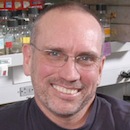
Robert J. Deschenes
Professor and Chair of the Department of Molecular Medicine, Morsani College of Medicine, University of South Florida, Fred Wright Professor of Cancer Biology