Advisory Board and Editors Genomics



Sushanta Deb
Dr. Sushanta Deb earned his Ph.D. in Evolutionary Microbial Genomics. During his early postdoctoral research, he focused on microbial ecology, microbiomes, probiotics, and comparative genomics. He later served as a Project Scientist at AIIMS Delhi, India. Currently, as a Postdoctoral Associate at Washington State University (WSU), USA, his research primarily centers on comparative genomics and metagenomics.

Dieter LD Deforce
Dieter Deforce PharmD, PhD, head of the Lab for Pharmaceutical Biotechnology at the Faculty of Pharmaceutical Sciences at the University of Gent, Belgium. He is chair of the Belgian Medicines Committee, he is member of the Scientific Advise Working Party of the EMA. He is a partner in NXT-GNT, a research consortium providing the research community next generation DNA-sequencing. He is also a partner in the Bioinformatics Institute Ghent From Nucleotides to Networks (BIG N2N) of the University Ghent. He is member of the board of directors of the VIB.
Research focuses around applying proteomics and genomics platforms (including Next Generation Sequencing) in the field of stem cell development, prenatal genetic diagnosis, (auto-)immunity and forensics.
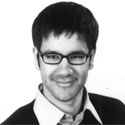
Christophe Dessimoz
SNSF Professor at the University of Lausanne, Reader at University College London, and Group Leader of the Swiss Institute of Bioinformatics

Agnes Dettai
Associate professor at the Muséum national d’Histoire naturelle, Paris. Curator of the fish barcode collection.
I study the systematics and evolution of Actinopterygians, especially at the inter/intra specific boundary and in species delineation with integrative approaches, but also on the evolution of mitogenomes in fish species from the Southern Ocean. I also work on molecular identification (barcoding, metabarcoding) of marine and freshwater fish and benthic species.

Nicholas J Dickens
Associate Research Professor in Bioinformatics at Florida Atlantic University. Research focus genomics of marine organisms, environmental microbiomes and machine learning to understand genome sequence. Wellcome Trust Centre for Molecular Parasitology, University of Glasgow Bioinformatics team for 7 years and lead the team for 4 of those. Also lead an experimental sequencing team in the Centre and has a bioinformatics research group. Originally, studied Biology at Imperial College London and moved into bioinformatics at NV Organon Pharmaceuticals in the Netherlands. Following this he had a research post at the MRC Functional Genetics Unit, University of Oxford where he stayed to do his genome informatics PhD. Has held research post-doctoral posts in London working in type-2 diabetes and cardiovascular disease at Imperial College, and cancer biology at the Institute of Cancer Research.

Jocelyne DiRuggiero
Associate professor of Biology and Earth and Planetary Sciences; member of the Center for Astrophysical Sciences; co-founder and director of the Institute for Planets and Life. We use extremophiles to address fundamental questions in biology, in particular mechanisms underlying the diversity of microbial communities, their functioning, and their responses to environmental perturbations. At the molecular level, we use archaeal model systems to investigate adaptive mechanisms to environmental stresses.

Trang Do
Dr. Trang Do earned her PhD degree from the National University of Singapore in 2013. She is a proactive and motivated educator and data scientist, showcasing a track record of effectively managing expansive and intricate projects alongside engagements with stakeholders and government agencies. Her expertise spans data and computer science, coupled with a foundation in economics and bioinformatics, driving an ongoing pursuit of professional development. Her research interests encompass a wide scope within data science, intelligent systems, and interdisciplinary computing. Presently, her primary focus centers on machine learning, deep learning, explainable AI, data analysis, and visualization, particularly within the realms of health informatics, drug discovery, bioinformatics, tourism, and intelligent systems.

Sule Dogan
Dr. Sule Dogan has BSc in Biology from Ankara University, MSc in Embryology and another Master’s degree in science education, both from Dokuz Eylul University in Turkey. After completing her Andrology and Embryology training, she worked at the IVF Clinic of Dokuz Eylul University Medical School between 2007 and 2009. She completed her PhD in Life Sciences/ Genetics program at Mississippi State University. Dr. Dogan joined IVF Michigan Fertility Centers as an embryologist in 2013, started serving as the quality control and laboratory supervisor in 2015 and then became the laboratory director in 2019. She has opened up new andrology laboratories, trained many andrologists and embryologists. She is currently serving as the director of laboratory operations in many locations of IVF Michigan and IVF Ohio Fertility Centers. Dr. Dogan is a certified by ABB as Technical Supervisor in Andrology and Embryology, and as High Complexity Lab Director (HCLD). She has many publications in international journals, including many book chapters. Dr. Dogan has been serving as a reviewer for scientific journals and conferences since 2010.

Douglas S Domingues
I am an Assistant Professor in Plant Molecular Genetics at the "Luiz de Queiroz" College of Agriculture, University of São Paulo, Brazil. My main interests are devoted to understanding gene and genome evolution in plants, working on genome-wide analyses, including transcriptional analyses of gene families relevant to plant metabolism, RNA-seq analyses in plants, as well as studies on non-coding RNAs and transposable elements.

Timothy P Driscoll
Associate Professor at West Virginia University Department of Biology. PhD in Genomics, Bioinformatics, and Computational Biology from Virginia Tech. Our research centers on the distribution, evolution, and design of interventions for zoonotic and vector-borne infectious diseases. I focus on Rickettsiales and other intracellular pathogens, using phylogenomics and related approaches to understand virulence and pathogenicity.

Peter Dunfield
Professor, Biological Sciences, University of Calgary. Alberta Ingenuity New Faculty. Formerly Senior Scientist, Extremophile Research Group, Institute for Geological and Nuclear Sciences, New Zealand, and Research Group Leader, Max-Planck Institute for Terrestrial Microbiology, Marburg, Germany

Tushar K. Dutta
I am a Senior Scientist at the Indian Agricultural Research Institute, involved in pursuing basic and applied research in the field of Nematology and Entomology.
As an alternative to Bt Cry toxins for insect pest management, a number of novel bacterial protein toxins (Txp40, TcaB) derived from an insect-parasitic bacterium Photorhabdus akhurstii (symbiont of nematode Heterorhabditis indica) were characterized. The mode of action and pathogenesis process of these toxins were investigated in different lepidopteran insects including Galleria mellonella, Helicoverpa armigera, Spodoptera litura and S. exigua. The potential receptor proteins and their binding sites for these toxins were unravelled from the insect midgut epithelial cells.
My other research interests include molecular basis of plant-nematode interaction. Using RNAi, functional analysis of several plant parasitism processes was deciphered including the role of Mi-cpl-1 in metabolic process, FLP and NLP neuropeptides in neuromusculation process, ODR and TAX proteins in chemotaxis process, cell wall degrading enzymes and various MSP effectors in infection process of plant nematodes. I have contributed in understanding the genetic basis of nematode resistance in rice via genome-wide association mapping coupled with omics-driven strategies. I am currently pursuing genome editing research for developing nematode resistance by adopting CRISPR-Cas9 strategy in Arabidopsis, rice and tomato.