Advisory Board and Editors Radiology & Medical Imaging



Kejal Kantarci
Associate Professor of Radiology
2014 Elected Member - Lewy Body Disease Association Scientific Advisory Council
2012 Elected Secretary of the Psychiatric MR Spectroscopy and Imaging Study Group -
International Society of Magnetic Resonance in Medicine
2008 Dorothy Dillon Eweson Lecture Series Award - American Federation for Aging Research
2008 Excellence Through Teamwork Award - Mayo Clinic
2007 Beeson Award - National Institute on Aging, American Federation of Aging Research, John Hardford Foundation, Atlantic Philantropies, and Starr Foundation
2005 Multidisciplinary Clinical Research Development Award (NIH K12 Roadmap Initiative) - Clinical Research Scholars Program
2004 New Investigator Award - Alzheimer's Association

Feng Liu
Feng Liu received his Ph.D. degree from the School of Life Science and Technology, University of Electronic Science and Technology of China and went on to work in the Department of Radiology and Tianjin Key Laboratory of Functional Imaging, Tianjin Medical University General Hospital, China. Now he is a professor and his current research interests include Brain and Cognition, Magnetic Resonance Imaging, Imaging Genetic and Multivariate Pattern Analysis.
Current research focuses on investigating the impact of the environmental factors (e.g., green space, PM2.5, etc) on human brain measured by magnetic resonance imaging.
Homepage: https://fengliu001.github.io/

Shivam Mehta
Dr. Mehta has expertise in the biology of orthodontic tooth movement, mini-screw assisted rapid palatal expansion, Artificial Intelligence in dentistry and a passion for improving the health and wellbeing of Osteogenesis Imperfecta. Dr. Mehta is thankful to the American Association of Orthodontists Foundation (AAOF), Northeastern Society of Orthodontists (NESO), National Science Foundation (NSF) Innovation Corps (I-Corps) for supporting his research with more than 4 grants. He works as an Assistant Professor at Marquette University School of Dentistry, American Dental Association (ADA) Standard’s Committee - Represents the interests of United States regarding dental and orthodontic materials as an active member of ADA Standards Committee on Dental Products (SCDP)/Standards Committee on Dental Informatics (SCDI); Secretary American Dental Education Association (ADEA) Postgraduate Application Support Service Advisory Council; Northeastern Society of Orthodontists (NESO) Annual Planning Committee and moderator for scientific sessions; Past core-member of President’s Council on Race and Diversity.

Ajinkya M Pawar
Dr. Ajinkya Pawar is a dedicated researcher and enthusiastic adopter of new technologies which improve treatment results both for doctors and patients. He has decided to dedicate his work life to broaden and expand his knowledge for Endodontics. In his young span as Endodontist, he has already published more than 90 scientific studies in both National and International Indexed Journals with high Impact Factors, and a few more in press and under preparation, together with high ranked International Researchers.
He is passionate about learning new developments in Endodontics and he has travelled around the world pursuing this passion. He has attended various numerous National and International Conferences as a Student, Delegate, Keynote/Guest Speaker, Chairperson, and Moderator. He also serves as the Editorial Board member of various journals.
Dr. Ajinkya has been awarded with Fellowship by Pierre Fauchard Academy (India and USA Section) in 2016, Best Endodontist of the Year 2016, 2017, 2019 by FamDent India and India's Young Dental Researcher of the Year 2017.

Yonghong Peng
Dr. Peng is a Professor of Data Science at the University of Sunderland. He is a Principal Investigator in Bioinformatics and Systems Biology and Medicine, and Principal Data Scientist working on Big Data Integration, Data Mining and Computational Intelligence. Dr. Peng's Data Science and BioMedical informatics (DS & BMI) research group focuses on development of innovative data analytics approaches to enable systematical analysis of biological data, medical images, and healthcare data and to gain new knowledge and insights from the integrative analytics of diverse data sources.

Don C Rojas
Professor of Cognitive Neuroscience
Chair, Department of Psychology
The main focus of my research endeavors is sensory and motor processing in neurodevelopmental disorders such as autism and childhood onset schizophrenia. A major theme in my work has been the identification of heritable biomarkers in autism, using non-invasive neuroimaging and electrophysiological techniques in first-degree relatives. Recent work has focused on auditory temporal processing and gamma-band timing deficits as well as magnetic resonance spectroscopy of amino acid neurotransmitter systems associated with gamma-band oscillations. I am also affiliated with the Magnetoencephalography (MEG) Laboratory and Brain Imaging Center at the University of Colorado Anschutz Medical Campus and have expertise in several brain-imaging methods, primarily MEG, but also including structural MRI, fMRI and MR spectroscopy. Current research at CSU involves EEG and functional near infrared spectroscopy (fNIRS) to examine the coupling of electrophysiology and hemodynamics in sensory and motor systems.

Rowayda A. Sadek
Prof Rowayda A. Sadek is Professor of Network Engineering, Helwan University, Cairo, Egypt. She received her Ph.D. in Communication and Electronics, and Electrical Engineering from the Faculty of Engineering, Alexandria University, Egypt. Prof. Sadek is the founder and the Director of the Hub of Creativity and Scientific Research, Helwan University. She is URSI senior member and also the General Secretary, URSI – Egypt, IEEE member. Her research interest focuses on Network Engineering, Network Security, Wireless and Mobile Networking and Communication, Multimedia (signal, image, speech, video) Processing, Cloud Computing and the Internet of Things.

Consolato Sergi
Dr. Consolato M. Sergi is Chief of Anatomical Pathology of the Children's Hospital of Eastern Ontario, University of Ottawa, Ontario, Canada and Emeritus Professor of Pathology and Pediatrics of the University of Alberta, Canada. Dr. Sergi was born in Rome (Italy), obtained his MD degree with honors at the University of Genoa, Italy, his Human Pathology degree at the University of Heidelberg, Germany, the title of the hon. Clinical Reader of the University of Bristol, UK, his Ph.D./Habilitation at the University of Innsbruck, Austria, his MSc Public Health in Austria, and his FRCPC degree at the Royal College in Ottawa. Dr. Sergi’s specialty areas of interest are congenital heart disease and metabolic diseases, obstructive cholangiopathies, carcinogenesis (bone/soft tissue/liver), gut microbiome, and mitochondrial DNA related cardiomyopathies.

Kamran Shaukat
Dr Kamran Shaukat is a Senior Learning Facilitator at Torrens University Australia and a researcher in the Centre for Artificial Intelligence Research and Optimisation. With more than 12 years of teaching and research experience, he specialises in artificial intelligence, machine learning, deep learning, cybersecurity, malware detection and health informatics. Kamran is recognised in the top 2% of researchers globally, with more than 75 peer-reviewed publications, four authored books, an h-index of 36 and over 5,600 citations. He has demonstrated excellence in curriculum development, PhD supervision and international academic collaboration, and is committed to leading industry-relevant programs and interdisciplinary research. Kamran holds a PhD in Computer Science and a Master of Science in Computer Science, and is a member of both ACM and IEEE.
Jair C. Soares
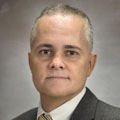
Dr. Soares obtained his M.D. in 1990 from the University of Sao Paulo School of Medicine, Brazil. He completed his psychiatric training at the University of Pittsburgh Medical Center, followed by a postdoctoral fellowship in neuroimaging research at the department of Psychiatry at Yale University School of Medicine. He has extensive clinical research experience on brain imaging, neurocognitive methods and clinical trials primarily in the field of mood disorders.

Kaspar Staub
I am an epidemiologist and historian interested in anthropometry, body height, obesity and neonatal health on the one hand, and historical epidemiology (past and present epidemics and pandemics, etc.) on the other. I am leading a research group at the University of Zurich at the Institute of Evolutionary Medicine.

Easter S Suviseshamuthu
Dr. Suviseshamuthu is an Associate Research Scientist at the Human Performance and Engineering Research Lab, Kessler Foundation, West Orange, NJ, U.S.A., since Dec. 2015.
He received the B.E. degree in Electronics and Communication Engineering from the Government College of Engineering, Tirunelveli, India (1988), the M.E. degree in Applied Electronics from Bharathiar University, Coimbatore, India (2001), and the Ph.D. in Multispectral Satellite Image Analysis from the Laboratoire des Sciences de l’Information et des Systèmes, Université de la Méditerranée, Marseille, France (2007). He was Post-Doctoral Fellow at the Bioimaging and Biostructure Institute, Italian National Research Council, Naples, Italy, (2008 to 2010), the Department of Mathematical Engineering, Université catholique de Louvain, Louvain-la-Neuve, Belgium, (2010 to 2014), and the GIPSA-Lab, Université Joseph Fourier, Grenoble, France (2014 to 2015).
His research focus encompasses statistical signal processing, blind source separation, medical imaging, optimization on matrix manifolds, machine learning, biomedical signal analysis, and bio-inspired computing. He serves as Associate Editor of IEEE Access.