Advisory Board and Editors Biochemistry



Christophe Hano
Dr. Christophe Hano, completed his PhD in 2005 in Plant Physiology, Biochemistry and Molecular Biology, and is Associate Professor at the University of Orleans with research activities the ICOA Lab (UMR7311 CNRS). His research career has focused on applied plant metabolism, plant biotechnology and green (bio)chemistry.
Currently, he is developing research projects aimed at studying plant secondary/specialized metabolism to lead to the development of natural products with interests in the fields of pharmacology and/or cosmetics. In particular, his research focuses on the green extraction (NaDES) and analytical methods applied to plant polyphenols, elucidation of their biosynthetic patways and their exploitation by metabolic engineering approaches.

Hidekazu Hiroaki
Dr. Hidekazu Hiroaki is Professor within the Graduate School of Pharmaceutical Sciences, Nagoya University, Japan. He received his PhD in Pharmaceutical Sciences (PhD thesis "Spectroscopic study for interaction between DNA oligonucleotide and bleomycin”) from the Graduate School of Osaka University, Japan in 1992.
Dr Hiroaki's research focuses on the structural biology of proteins by using solution NMR techniques, including protein-protein and protein-drug interaction. He is also focusing on NMR-assisted in silico drug discovery as well as protein structure determination. He is also an expert of intrinsically disordered proteins and some disease related amyloid genic proteins.
Professional experience:
2012-present: Professor, Graduate School of Pharmaceutical Sciences, Nagoya University (Nagoya, Aichi, Japan)
2011-2012: Professor, Research Center for Structural Biology, Department of Science, Nagoya University (Nagoya, Aichi, Japan)
2007-2011: Professor, Division of Structural Biology, Graduate School of Medicine, Kobe University, (Kobe, Hyogo, Japan)
2001-2007: Associate Professor, International Graduate School of Art and Science, Yokohama City University, (Kanagawa, Japan)
1995-2001: Research Scientist, Division of Structural Biology, Biomolecular Engineering Research Institute (BERI) (Suita, Osaka, Japan)
1994-1995: Visiting Scientist, Research Centre, F Hoffman La Roche (Basel, Switzerland)
1992-1994: Research Scientist, Department of Molecular Genetics, Nippon Roche Research Center (Kanagawa, Japan)

Noriko F Hiroi
Noriko Hiroi is Assistant Professor of the Department of Biosciences and Informatics, Keio University. She started to develop her career in Molecular Biology and Biochemistry, and currently works in Systems Biology and Quantitative Biology area. Her research interest includes in vivo oriented modelling, molecular mechanisms of higher-functions of central nerve systems, microfluidics technology and optical technologies and informatics for bioimaging.

Altijana Hromić-Jahjefendić
Dr. Altijana Hromić-Jahjefendić is an associate professor at the Genetics and Bioengineering Department at International University of Sarajevo, Bosnia and Herzegovina. She obtained her bachelor's degree in chemistry and master's degree in Biochemistry and Molecular Biomedicine at Graz University of Technology, Austria. After that she worked for Austrian Center of Industrial Biotechnology and continued to pursue her PhD degree in Biochemistry and Molecular Biomedicine with the focus on Structural biology. Since 2018. she works as professor at International University of Sarajevo at the Genetics and Bioengineering Department. She authored many scientific publications with international colleagues in the field of COVID-19 and cancer research.

Matt I Hutchings
Professor of Molecular Microbiology at the University of East Anglia which is on the Norwich Research Park, Norwich UK.

Mohammad Irfan
Dr. Mohammad Irfan is a plant biologist having research interests in abiotic stress biology of crop plants particularly horticultural crops. During his doctoral and postdoctoral projects, he studied the fruit quality traits affected by abiotic stresses. In his current projects, he investigates the molecular mechanism underlying plant-specialized metabolic pathways and biosynthesis of high-value phytochemicals, such as anthocyanins and carotenoids of horticultural crops under abiotic stresses using transcriptomics, metabolomics, glycomic and functional genomic approaches.

Łukasz Jaremko
Dr. Łukasz Jaremko is Associate Professor at King Abdullah University of Science and Technology.
Research in Dr. Jaremko's Molecular Diagnostics and Drug Discovery (MD3) group focuses on atomic-level insight into essential and topical questions from biochemistry and medicine.
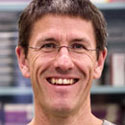
Christopher J. Jolly
Head of the DNA Repair Group, Centenary Institute, Sydney, Australia
Postdoctoral Fellow, MRC Laboratory of Molecular Biology, Cambridge, UK
Postdoctoral Fellow, John Curtin School of Medical Research, ANU, Canberra
PhD, Macquarie University/CSIRO, Sydney

Leny Jose
Dr. Leny Jose is a Scientist and Assistant professor at Rajiv Gandhi Centre for Biotechnology, India. Prior to this he was an Assistant Research Professor in Dermatology at Indiana University School of Medicine, USA. He obtained his PhD in 2014 from the University of Kerala and did postdoctoral research at Indiana University, USA. His research interests are focused on the pathogenesis of the human papillomavirus and also in bacterial pathogenesis.

Christine Josenhans
Christine Josenhans is Professor for Microbiology and Medical Microbiology at Max von Pettenkofer Institute of Ludwig Maximilians University Munich and an infectious disease specialist. Until 2017, she was Associate Professor at Hannover Medical School, Germany, also in the field of infection research and molecular and cellular microbiology. Her research foci are on infectious disease agents in general, with specialization in microbiology, biochemistry, immunology, and host-pathogen interactions. She performed her Post-doctoral studies on Yersinia host-pathogen interactions, more specifically on their type III secretion system pore proteins. Current research foci are in persistent bacterial and viral infections, host-pathogen crosstalk and immune interference, as well as in the causal link between infections and cancer.
She is on the board of several undergraduate and graduate teaching programs.

Marina George Kalyuzhnaya
Education:
2000 – PhD. (Microbiology). Center for Microbiology and Biotechnology//Institute of Biochemistry and Physiology of Microorganisms, Russian Academy of Sciences, Russia
1994 – BS/ MS (Biology, Microbiology). Dnepropetrovsk State University, Department of Microbiology, Ukraine
1994 – Pre-doctoral training in “Molecular Biology, Gene Engineering and Biotechnology” M. V. Lomonosov Moscow State University, Russia.
Positions Held:
2018 - Associate Professor, Biology Department, VII, San Diego State University
2015 - 2018 Assistant Professor, Biology Department, VII, San Diego State University
2015 - Affiliate Assistant Professor, Department of Microbiology, University of Washington
2013 - 2015 Visiting Scholar, SIO, University of California San Diego
2012 - 2015 Research Associate Professor, Department of Microbiology, University of Washington
2006 - 2012 Research Assistant Professor, Department of Microbiology, University of Washington
2001 - 2006 Research Associate, Department of Chemical Engineering, University of Washington
1997 - 2002 Junior Research Scientist, G.K. Skryabin Institute of Biochemistry & Physiology of Microorganisms, Russian Academy of 1995 - 1997 Sciences Engineer-investigator, G.K. Skryabin Institute of Biochemistry & Physiology of Microorganisms, Russian Academy of Sciences

Natarajan Kannan
Dr. Natarajan Kannan is Professor of Biochemistry & Molecular Biology at the Institute of Bioinformatics, University of Georgia.
Dr. Kannan's research group is an interdisciplinary research group using concepts and techniques from diverse disciplines including biophysics, biochemistry, and bioinformatics to understand how proteins, the molecular machines of life, work. Their current efforts are focused on protein kinases, a large and diverse family of enzymes that propagate cellular signals through the controlled phosphorylation of protein and small molecule substrates. They are additionally exploring other enzyme superfamilies, such as glycosyltransferases, critical in protein folding and metabolic pathways. They use a combination of computational and experimental approaches to understand how natural sequence variation contributes to functional variation in these enzyme superfamilies, and how non-natural variation contributes to disease.