Academic Editors
The following people constitute the Editorial Board of Academic Editors for PeerJ. These active academics are the Editors who seek peer reviewers, evaluate their responses, and make editorial decisions on each submission to the journal. Learn more about becoming an Editor.



Zemin Ning
Zemin Ning is a Senior Scientific Manager and heads the group of "High Performance Algorithm" at the Wellcome Sanger Institute, UK. Trained in Engineering/Physics, he has been active in genome informatics, specializing in sequence alignment and genome assembly. After completing a PhD degree at Aston University and postdoc training at the Cavendish Laboratory, Cambridge University, he joined in the Sanger Institute in 1999 to pursue bioinformatics research. Over the past years, he and his colleagues in the group have developed a number of bioinformatics tools, which are widely appreciated by the genomics community. The group has also produced over 30 de novo assemblies from large animal and plant genomes, including Gorilla, Zebrafish, Tasmanian Devil, Panda and Bamboo.

Neil Dagnall
Dr Neil Dagnall is a Professor in Applied Cognitive Psychology at Manchester Metropolitan University (MMU). His research focuses on applied aspects of cognition, particularly thinking style and cognitive-perceptual factors that influence scientifically unsubstantiated beliefs (i.e., belief in the paranormal, conspiratorial ideation, pseudo-science, and urban legends), decision-making, and behaviour change. Neil also has an interest in psychometric scale development and evaluation, which has resulted in recent publications examining the structure and best use of established psychological measures. Relatedly, Neil works also in the performance field, particularly the development of non-cognitive skills. This has resulted in associations with sporting organizations. Neil’s work is acknowledged internationally as demonstrated by his good publication record (150 plus peer reviewed articles), a history of attracting funding (e.g., Bial Research Fellowships), commercial enterprises (e.g., Knowledge Transfer Partnerships), and an outstanding record of public engagement and knowledge exchange.

Rajesh Bhardwaj
Dr. Rajesh Bhardwaj is a senior research fellow at the National Institute of Environmental Health Sciences in North Carolina, USA. He is skilled in combining molecular and structural biology techniques as well as pharmacological and computational approaches with state-of-the-art high-throughput screening to dissect the gating and regulatory molecular mechanisms of calcium channels, calcium sensors and solute carrier family transporters. His research interests include studying calcium signaling in health and disease with a focus on the endoplasmic reticulum membrane contact sites with plasma membrane and mitochondria.
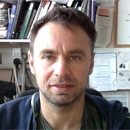
Saverio Brogna
Lecturer and principal investigator at the School of Biosciences of the University of Birmingham, UK. Interested in eukaryotic gene expression and particularly in understanding the links between RNA processing and translation.
At present his group research focuses on understanding nonsense mediated mRNA decay (NMD) and its links with pre-mRNA splicing.

Ricardo Castro Alves
Dr. Ricardo Castro Alves specialises in periodontology and is the Head of the Department of Periodontology at the Instituto Universitário Egas Moniz. His is also Head of the Clinical Research Unit at Centro de Investigação Interdisciplinar Egas Moniz (CiiEM), Co-Coordinator of the Post-Graduate Program in Clinical Periodontology, Professor of the Post-Graduate Program in Implant Dentistry and an invited Professor at several Post-Graduation Courses.

Shahroo Etemad-Moghadam
Associate Professor at Dental Research Center, Tehran University of Medical Sciences.
DDS, MS, Observer at the Armed Forces Institute of Pathology (AFIP), Washington D.C.
Associate Editor/Editorial Board: Frontiers in Dentistry, BMC Cancer.
Research Interests: Oral and Maxillofacial Pathology, Angiogenesis, Odontogenic Benign and Malignant Lesions, Cellular and Molecular interactions in Cancer

Despina Koletsi
Despina Koletsi is currently Senior Teaching & Research Staff (Oberassistentin) at the University of Zurich. She qualified from the School of Dentistry, University of Athens and received her orthodontic training from the same University, where she completed a Master of Science in Orthodontics. She earned a Doctorate from the University of Bonn and a second Master’s Degree in Epidemiology from the London School of Hygiene and Tropical Medicine, University of London. She also completed the postgraduate programme in Learning and Teaching in Higher Education of the University of London and obtained the University of London Worldwide Recognised Tutor Status. She has been in private orthodontic practice in Athens, Greece, since 2012.
Dr Koletsi has published more than 80 scientific and methodological papers in international peer- reviewed journals and has given more than 40 lectures and presentations. Her research interests and areas of expertise focus on orthodontics, epidemiology, research methodology and meta- epidemiology. She serves as Academic Editor/ member of the Editorial Board in 6 peer- reviewed journals and as an Independent Reviewer for 35 international journals in Orthodontics, Paediatric Dentistry, Dentistry, Medicine, Epidemiology and Evidence- based research, including the prestigious British Medical Journal.

Annemariè Avenant-Oldewage
Prof. Annemariè Avenant-Oldewage is Professor of Zoology at the University of Johannesburg. Her research group uses fish parasites as sentinels for environmental degradation and describes the morphology (including genetic characterisation), ecology and pathology of these fish parasites. They are currently focusing on Diplozoidae, Gyrodactylidae, Nematoda, Copepoda and Branchiura.

Farzin Shabani
I am an Associate Investigator in palaeo-ecological vegetation modeling for the new ARC Centre of Excellence for Australian Biodiversity and Heritage (CABAH). I am also a Research Fellow in environmental modeling and climate change in the Department of Biological Sciences at Macquarie University.
My profile at Macquarie University: https://directory.science.mq.edu.au/users/1600
My profile at Flinders University: https://www.flinders.edu.au/people/farzin.shabani
ARC Centre of Excellence for Australian Biodiversity and Heritage (CABAH): https://epicaustralia.org.au/

Christopher R Noto
I am a vertebrate paleontologist working on the taphonomy, paleoecology, and functional morphology of Mesozoic vertebrates including dinosaurs, crocodilians, mammals, and birds. I am the principal investigator at the Arlington Archosaur Site with a position of Research Affiliate in the Perot Museum of Nature and Science in Dallas, Texas.

Daniel F Hughes
Dr. Daniel Hughes is an Assistant Professor of Biology at Coe College, where he studies how organisms, species, and entire communities respond to change, both in the past and present. His research begins with natural history observations and then leverages comparative approaches from diverse fields to study ecological and evolutionary processes, mostly in reptiles and amphibians. Dr. Hughes' work stems from the interrelated aims of tracking the impacts of global changes and improving the conservation of species.

Christof M Jäger
I am a computational chemist and data scientist and group leader at AstraZeneca. My research activities all share the motivation to bring the power of computational chemistry to new chemical problems in pharmaceutical research and beyond, to fundamentally understand properties and functions of organic molecules, to reveal hidden chemical questions and to promote solutions for chemical challenges and focus on the development and application of efficient and transferable computational techniques and workflows.
Past and present research involved multi-disciplinary research in the areas of reactivity prediction, catalysis, biotechnology, bio-organic, colloid, and radical chemistry, molecular self-assembly and supramolecular chemistry, ion effects, and molecular electronics in organic electronic devices.
Following my undergraduate studies of Molecular Science I received my PhD in Computational Chemistry from the University of Erlangen-Nuernberg, Germany in 2010. I then worked as a Postdoc for the Cluster of Excellence Engineering Advanced Materials (EAM) until 2014, when I joined the Sustainable Process Technology (SPT) Research Group in in the Faculty of Engineering of the University of Nottingham, first as an EU and UoN funded fellow, then as Assistant Professor in Biotechnology and Computational Chemistry. In September 2022 I joined AstraZeneca in Gothenburg / Sweden to work in predictive computational chemistry and data science within the Pharmaceutical Science department.