Academic Editors
The following people constitute the Editorial Board of Academic Editors for PeerJ. These active academics are the Editors who seek peer reviewers, evaluate their responses, and make editorial decisions on each submission to the journal. Learn more about becoming an Editor.



Renato Benesperi
Associate Professor at the Department of Biology of the University of Florence.
His main research activity focuses on ecology, diversity and systematic of lichens. Research topics include the assessment and management of impacts of human activities (e.g. forest management, invasive alien species, climate changes) on lichen and plant communities.
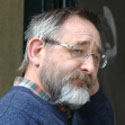
Jean Clobert
Senior Researcher (DR hc, CNRS), Station de Ecologie Experimentale du CNRS à Moulis. Member of the Acamedia Europaea.
After having developed statistical methods for the study of population dynamics in nature, my research focus has shifted since 15 years towards the study of three main topic :
* The study of dispersal evolution (causes, mechanisms and consequences). The approaches which have been developed are demographic, physiological, behavioural and genetic. Three model systems have been chosen to study the genetic and plastic responses of dispersal to variations in the environment, two lizards species, the common lizard (Lacerta vivipara, coll M. Massot) and the side blotched lizard (Uta stansburiana.coll B. Sinervo), and a ciliate (Tetrahymena thermophila).
* The study of trade offs and phenotypic plasticity. I have been interested by the link between predation/parasitism and clutch size or/other traits evolution. I alm also interested by the evolution, control and organisation of trade-offs, in particular with respect to phenotypic plasticity.
* Population structure and extinction rate. We examine the role of the different sources of heterogeneity (demographic environmental) and in particular internal (mating system, polymorphism, type of competition) in population viability.

Mansour Sobeh
Mansour Sobeh holds a B.Sc. in Chemistry from Ain Shams University, Egypt, an M.Sc. in Analytical Chemistry from the German University in Cairo, Egypt, and a Ph.D. in Natural Sciences (Dr. rer. nat.) from Heidelberg University, Germany. He is currently an Assistant Professor at Mohammed VI Polytechnic University

Shuangtao Ma
Assistant Professor of Medicine
Michigan State University

Konstantin K. Turoverov
Professor of Molecular Biology, Head of the Laboratory of Structural Dynamics, Stability and Folding of Proteins of the Institute of Cytology, Russian Academy of Science.

Guorong Zhang
Associate Professor and wheat breeder at the Kansas State University, USA. Research interests: wheat genetics and variety development, genetic mapping, marker assisted selection, and genetic diversity.

Robin SS Kramer
I am currently a senior lecturer at the University of Lincoln, UK. My work focusses on face recognition, specifically how we become familiar with faces despite (or because of) within-person variability in facial appearance.

Lies Notebaert
Dr Lies Notebaert is an Associate Professor at the School of Psychological Science, and Director of the Centre for the Advancement of Research on Emotion. Her research aims to disentangle the complex interactions between cognition, emotion, and behavior, particularly in individuals exposed to adversity. Lies takes a cognitive science approach to study why some individuals are more resilient to adversity than others. She has a particular interest in the role of cognitive flexibility in individuals’ capacity to show adaption to change.

Xiangyang Xu
Research Geneticist (Plant) at the USDA-ARS Wheat, Peanut, and Other Field Crop Research Unit.
My current interest is in wheat genetics, genomics, and breeding. I focus on wheat pest and disease resistance, including Russian wheat aphid, greenbug, bird cherry oat aphid, leaf rusts, and powdery mildew resistance etc.

Erik E Cordes
Dr. Erik Cordes is a Professor and the Vice Chair of Biology at Temple University. He has worked on the ecology of deep-sea corals and hydrocarbon seeps for over 20 years. He studies these ecosystems at all levels of organization, from energy flow in ecosystems and patterns of community assembly, down to gene expression and microbial processes. Dr. Cordes worked on deep-sea corals for his Master’s thesis at Moss Landing Marine Labs, worked on cold-seep ecology for his Ph.D. at Penn State University, and studied the microbial communities within hydrothermal vent chimneys during his NSF Post-Doctoral Fellowship at Harvard. At Temple, his lab has continued to explore the deep Gulf of Mexico while working on the effects of the Deepwater Horizon oil spill on deep-sea coral communities and the effects of ocean acidification on the reef-forming deep-sea coral Lophelia pertusa. Ongoing investigations in the Cordes lab include the seeps and corals off the Pacific coast of Costa Rica, the deep-sea corals of the Phoenix Islands, and the various deepwater habitats of the Atlantic coast of the US.

Thomas Hartung
Professor of Toxicology (Chair for Evidence-based Toxicology), Pharmacology, Molecular Microbiology and Immunology at Johns Hopkins Bloomberg School of Public Health, Baltimore, and University of Konstanz, Germany; Director of their Centers for Alternatives to Animal Testing (CAAT). Former Head of the European Center for the Validation of Alternative Methods (ECVAM), Ispra, Italy.
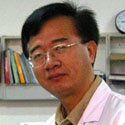
Linsheng Song
Professor of Marine Biology and Vice President of Dalian Ocean University. Member of council of the Chinese Society of Malacology, fellow of the Chinese Society for Oceanology and Limnology. Editorial Board Member of Fish & Shellfish Immnology, Developmental and Comparative Immunology, Scientific Report.