Advisory Board and Editors Molecular Biology



Natasha de Vere
Head of Conservation and Research at the National Botanic Garden of Wales and Senior Lecturer at the Institute of Biological, Environmental and Rural Sciences (IBERS) at Aberystwyth University.
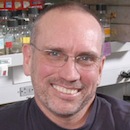
Robert J. Deschenes
Professor and Chair of the Department of Molecular Medicine, Morsani College of Medicine, University of South Florida, Fred Wright Professor of Cancer Biology

Charles A. Dinarello
Charles A. Dinarello is Professor of Medicine and Immunology at the University of Colorado School of Medicine, and Professor of Experimental Medicine at Radboud University in the Netherlands.
Dr. Dinarello has published over 600 original research articles and 250 reviews and book chapters on cytokines, particularly on Interleukin-1, Interleukin-18, and related cytokines. The Institute for Scientific Information listed Dr. Dinarello as the world's 4th most-cited scientist during the 20 years from 1983-2002.
In 1998, Professor Dinarello was elected to the United States National Academy of Sciences, and in 2011, he became a foreign member of the Royal Netherlands Academy of Arts and Sciences. He is a member of the Board of Governors of the Weizmann Institute (Israel) and Ben Gurion University (Israel), former Vice President of the American Society of Clinical Investigation, and was President of the International Cytokine Society. He received the Squibb Award (USA), Ernst Jung Prize in Medicine (Germany), Chirone Prize (Italian National Academy of Medicine), Carol Nachman Prize (Germany), Sheikh Hamdan bin Rashdid al Madktoum Award (United Arab Emirates), Beering Prize (USA), Albany Prize in Medical Research (USA), Crafoord Prize of the Royal Swedish Academy of Sciences (Sweden), Paul Ehrlich Prize (Germany), Bonfils-Stanton Prize (USA), the Novartiz Prize in Clinical Immunology (Switzerland) and the Bonazinga Award (USA).

Jocelyne DiRuggiero
Associate professor of Biology and Earth and Planetary Sciences; member of the Center for Astrophysical Sciences; co-founder and director of the Institute for Planets and Life. We use extremophiles to address fundamental questions in biology, in particular mechanisms underlying the diversity of microbial communities, their functioning, and their responses to environmental perturbations. At the molecular level, we use archaeal model systems to investigate adaptive mechanisms to environmental stresses.

Sule Dogan
Dr. Sule Dogan has BSc in Biology from Ankara University, MSc in Embryology and another Master’s degree in science education, both from Dokuz Eylul University in Turkey. After completing her Andrology and Embryology training, she worked at the IVF Clinic of Dokuz Eylul University Medical School between 2007 and 2009. She completed her PhD in Life Sciences/ Genetics program at Mississippi State University. Dr. Dogan joined IVF Michigan Fertility Centers as an embryologist in 2013, started serving as the quality control and laboratory supervisor in 2015 and then became the laboratory director in 2019. She has opened up new andrology laboratories, trained many andrologists and embryologists. She is currently serving as the director of laboratory operations in many locations of IVF Michigan and IVF Ohio Fertility Centers. Dr. Dogan is a certified by ABB as Technical Supervisor in Andrology and Embryology, and as High Complexity Lab Director (HCLD). She has many publications in international journals, including many book chapters. Dr. Dogan has been serving as a reviewer for scientific journals and conferences since 2010.

Douglas S Domingues
I am an Assistant Professor in Plant Molecular Genetics at the "Luiz de Queiroz" College of Agriculture, University of São Paulo, Brazil. My main interests are devoted to understanding gene and genome evolution in plants, working on genome-wide analyses, including transcriptional analyses of gene families relevant to plant metabolism, RNA-seq analyses in plants, as well as studies on non-coding RNAs and transposable elements.

Elaine A Dunlop
Dr. Elaine Dunlop is a Lecturer in the Division of Cancer and Genetics at Cardiff University. She received her PhD in Cancer Research from Queen's University, Belfast and her research now centres on the inherited genetic conditions, Tuberous Sclerosis Complex and Birt-Hogg-Dubé syndrome where patients are predisposed to develop cysts and tumours. She is interested in the crossover between the cell signalling observed in these genetic diseases and the pathways which are at fault in cancer, with a focus on mTORC1 growth pathways, autophagy and the tumour microenvironment.

Tushar K. Dutta
I am a Senior Scientist at the Indian Agricultural Research Institute, involved in pursuing basic and applied research in the field of Nematology and Entomology.
As an alternative to Bt Cry toxins for insect pest management, a number of novel bacterial protein toxins (Txp40, TcaB) derived from an insect-parasitic bacterium Photorhabdus akhurstii (symbiont of nematode Heterorhabditis indica) were characterized. The mode of action and pathogenesis process of these toxins were investigated in different lepidopteran insects including Galleria mellonella, Helicoverpa armigera, Spodoptera litura and S. exigua. The potential receptor proteins and their binding sites for these toxins were unravelled from the insect midgut epithelial cells.
My other research interests include molecular basis of plant-nematode interaction. Using RNAi, functional analysis of several plant parasitism processes was deciphered including the role of Mi-cpl-1 in metabolic process, FLP and NLP neuropeptides in neuromusculation process, ODR and TAX proteins in chemotaxis process, cell wall degrading enzymes and various MSP effectors in infection process of plant nematodes. I have contributed in understanding the genetic basis of nematode resistance in rice via genome-wide association mapping coupled with omics-driven strategies. I am currently pursuing genome editing research for developing nematode resistance by adopting CRISPR-Cas9 strategy in Arabidopsis, rice and tomato.

Andrew L Eamens
Dr Andrew Eamens joined the School of Health at the University of the Sunshine Coast as a Lecturer in Biomedical Science in 2022. Prior to joining the University of the Sunshine Coast, Andrew held teaching or research positions at the University of Queensland, University of Newcastle, University of Sydney, University of York, and CSIRO Agriculture and Food.

Jurgen Engelberth
Dr. Jurgen Engelberth has a Ph.D. in plant physiology from the Ruhr University Bochum, Germany. After working at the Max Planck Institute for Chemical Ecology and at USDA, ARS, CMAVE in Gainesville, FL, he joined the biology faculty at the University of Texas at San Antonio (UTSA). He is currently an Associate Professor for plant biochemistry. He is an Associate Editor for Plant Signaling and Behavior and Plants. His work is focussed on plant-plant interactions by volatiles signals in response to biotic and abiotic stresses.

Birthe Fahrenkrog
PhD in Cell Biology from the Biozentrum, University of Basel. Postdoctoral stays at the EMBL Heidelberg and the Biozentrum Basel. Group leader at the Biozentrum Basel (2003-2009), 2009-2020 Professor at the ULB, since August 2020 Senior Research Associate in the group of Prof. Dr. Roderick Lim at the Biozentrum, University of Basel. Research interest: nuclear pore complexes and nucleocytoplasmic transport; the role of nuclear pore proteins beyond nucleocytoplasmic transport. Editorial board member: Microbial Cell; Cells.

Faiza Farhan
Dr. Faiza Farhan earned a PhD in Clinical Science (specializing in stem cells) from Imperial College London in 2023.
Drawing on more than three years of editorial experience, Dr. Farhan seamlessly integrates her scientific knowledge with editorial prowess. Her extensive background in stem cell research fundamentally shapes her approach to scientific content editing. This powerful combination of rigorous academic training and practical editing expertise enables her to transform complex scientific concepts into clear, accessible information.