Since our launch, PeerJ has given authors the option of publishing the peer-reviews for their articles (and approximately 80% of our authors have chosen to do so). These public reviews have always had a unique URL (and hence have been citable by that URL),...
Research Updates – Transcranial Doppler ultrasound to assess cerebrovascular reactivity
Please be seated… Transcranial Doppler ultrasound (TCD) allows measurement of blood flow velocities in the intracranial vessels, and until last year's publication in PeerJ of “Transcranial Doppler ultrasound to assess cerebrovascular reactivity:...
Interview with an Author – Michelle Quayle
Have you ever wanted to play with an interactive PDF in a scientific article? Michelle Quayle and her colleagues have made it possible for you. Last week, we published their article “An interactive three dimensional approach to anatomical description—the...
Blog about science? Kiss your grant proposal goodbye
I was absolutely stunned when I discovered this while watching a presentation from UC Davis Professor, PeerJ Academic Editor and author, Jonathan Eisen. The controversial segment of the presentation, embedded below, starts at the 9 minute and 17 second mark. Uncertain...
Research Updates – Intestinal microbiota and blood serum lipids
Tell me what’s in your guts, I’ll tell you what’s in your blood! Last year, PeerJ published “Associations between the human intestinal microbiota, Lactobacillus rhamnosus GG and serum lipids indicated by integrated analysis of high-throughput...
Cervical ribs in mammals – why it matters
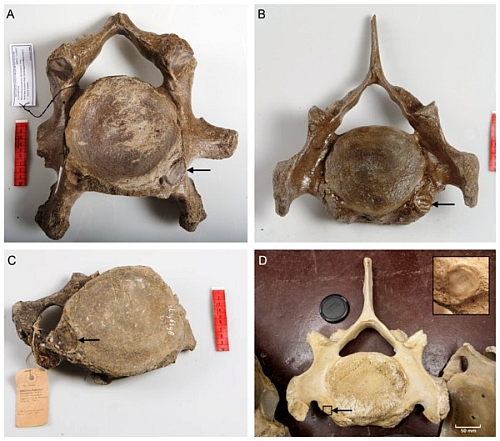
Last month, we published “Extraordinary incidence of cervical ribs indicates vulnerable condition in Late Pleistocene mammoths”, which received quite a bit of attention in the press. In this article, Frietson Galis and her group describe the presence of a...
Interview with an Author – David Solomon
Earlier this week, we published “A survey of authors publishing in four megajournals” by David Solomon, Professor at the Department of Internal Medicine and at the Office of Medical Education Research and Development, Michigan State University. This study...
Research Updates – Coronatine in nonhost disease resistance in plants
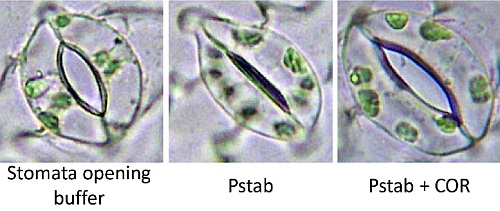
Pseudomonas syringae is the most widespread bacterial pathogen in plants. Several strains of P. syringae produce the phytotoxin coronatine, which inhibits plant defense responses and contributes to disease symptom development. In a well-received PeerJ study ...
Author Interview – Michael Proulx
The lighting of a scene is an important factor that the visual system considers to help it identify objects. As soon as you interpret a visual object as possibly being three-dimensional, your visual system immediately tries to determine where the light is coming from,...
Author Interview – Abel Valdivia and the invasive lionfish
Take a look at this awesome image featured on our homepage. It illustrates the article “Re-examining the relationship between invasive lionfish and native grouper in the Caribbean” which we published today. This study re-evaluated the potential ecological...