PeerJ Section
Chemistry
Analytical Chemistry (other)
Atomic Spectroscopy
Bioinorganic Chemistry
Biomolecules
Bioorganic Chemistry
Biophysical Chemistry
Biosynthesis
Catalysis
Chemometrics
Cluster Chemistry
Coordination Chemistry
Crystallography
Electrochemistry
Green Chemistry
Hyphenated Techniques
Infrared Spectroscopy
Inorganic Chemistry (other)
Kinetics and Reactions
Main Group Inorganic Chemistry
Mass Spectrometry
Molecular and Collisional Dynamics
Natural Products
NMR Spectroscopy
Novel Analytical Technologies
Nuclear Chemistry
Omics Technologies
Organic Chemistry (other)
Organic Compounds
Organometallic Chemistry
Photochemistry
Physical Chemistry (other)
Physical Organic Chemistry
Polymers
Radicals and Ions
Raman Spectroscopy
Sample Handling
Sensors
Separation Science
Solid-State Chemistry
Spectroscopic Analysis
Spectroscopy
Stereochemistry
Surface and Structural Imaging
Surfaces and Interfaces
Synthetic Organic Chemistry
Theoretical and Computational Chemistry
Thermodynamics and Statistical Mechanics
Transition Metal Chemistry
Transport Phenomena
UV-Visible Spectroscopy
Welcome to your community’s home at PeerJ. Sections are community led and exemplify a research community’s shared values, norms and interests.
The citation average is 3.8 (view impact metrics).
3,463 Followers
Section Highlights
View all Chemistry articles

24 April 2025
Understanding colloidal behavior in açaí (Euterpe oleraceae)-based nanoemulsions
"This manuscript provides valuable insights into the colloidal behavior of açaí-based nanoemulsions, contributing to the advancement of nanotechnology in cosmetic and pharmaceutical applications. The findings enhance our understanding of natural product formulations and their stability. By exploring the behavior of açaí-based nanoemulsions, the study opens up new avenues for innovative, sustainable products. This work significantly impacts the development of eco-friendly and effective delivery systems in various industries."
 Lubna Rasheed, Handling Editor
Lubna Rasheed, Handling Editor
20 September 2024
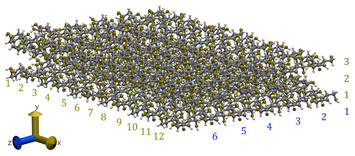
Unveiling causal relationship between non-covalent interactions and evaluated Young’s modulus within oligolignols-cellulose complexes
"This paper presents an approach for predicting a macroscopic mechanical property (Young's modulus) of a complex material (oligolignol-cellulose) from microscopic properties (in particular, analysis of the electron density around hydrogen bonds).
This is relevant both for scientists interested in the (mechanical) properties of similar materials and for researchers developing and applying the quantum-chemical methods used for the analysis."
 Hans Senn, Handling Editor
Hans Senn, Handling Editor
28 March 2024
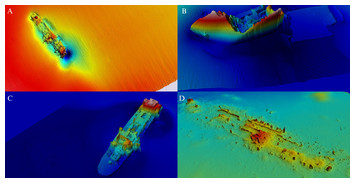
Baltic Sea shipwrecks as a source of hazardous pollution
"The Baltic Sea is a unique ecosystem, and several shipwrecks have been reported in it. Such wrecks are now known to leach organic pollutants, fossil fuels as well as heavy metals into the surrounding water. The coverage of the reported study have future implications for both human and aquatic lives in the Baltic Sea"
 Timothy Omara, Handling Editor
Timothy Omara, Handling Editor
31 January 2024
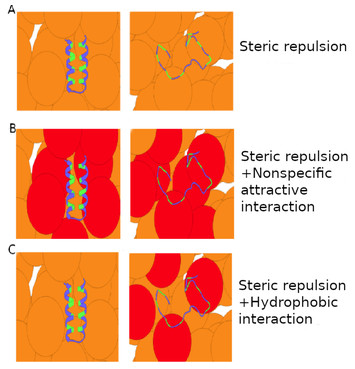
Comparing effects of attractive interactions in crowded systems: nonspecific, hydrophobic, and hydrogen bond interactions
"The environment within a cell is crowded with many species, but many studies attempt to extrapolate behavior in a cell from low concentration systems. The work nicely illuminates crowding effects that arise from excluded volume, non-specific attractive interactions, and hydrogen bonding on a 35-amino acid chain."
 Gerrick Lindberg, Handling Editor
Gerrick Lindberg, Handling Editor
24 January 2024
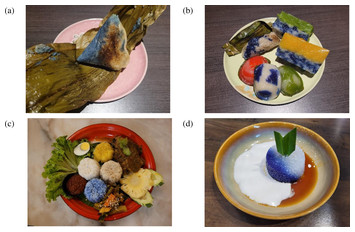
Glycerol-based extracts of Clitoria ternatea (Butterfly Pea Flower) with enhanced antioxidant potential
"This study demonstrates enhanced antioxidant potential of glycerol-based Clitoria ternatea (Butterfly Pea Flower) extracts, a novel finding."
 Rachel Ann Hauser-Davis, Handling Editor
Rachel Ann Hauser-Davis, Handling Editor
5 December 2023
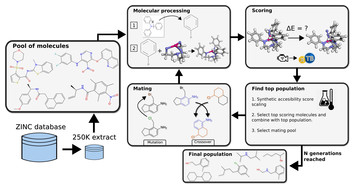
Genetic algorithm-based re-optimization of the Schrock catalyst for dinitrogen fixation
"Predictive catalysis methodologies including combinations computational chemistry and machine learning techniques, are essential to support and boost sustainable chemical advances and chemical manufacturing by rationally supporting and replacing burdensome experimental endeavours. This study contributes to expanding the predictive catalysis toolbox for optimising Schrock catalysts for dinitrogen fixation, one of the most critical processes for sustaining biological life on earth."
 Christof Jäger, Handling Editor
Christof Jäger, Handling Editor
14 June 2023
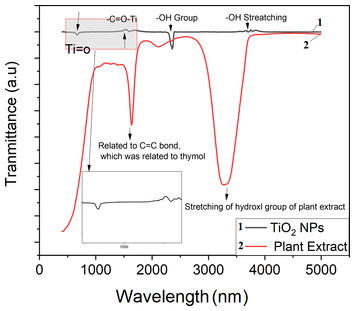
Antifouling polymeric nanocomposite membrane based on interfacial polymerization of polyamide enhanced with green TiO2 nanoparticles for water desalination
"The article is an interesting read as it deals with a modified thin film nanocomposite membrane for water desalination specially using good scientific methodology to deduce some important inferenceswhich is a rather much needed research in the current ecological scenario."
Lubna Rasheed, Handling Editor
Lubna Rasheed, Handling Editor

28 November 2022
Analysing binding stoichiometries in NMR titration experiments using Monte Carlo simulation and resampling techniques
"This is a multidisciplinary work. It uses a powerful analytical tool to resolve chemical structures to measure binding constants between ligands and receptors, which is a very elegant approach. As complexation occurs, the technique senses the changes in the environment for each proton as the stoichiometries changes."
 Emanuel Carrilho, Handling Editor
Emanuel Carrilho, Handling Editor
27 October 2022
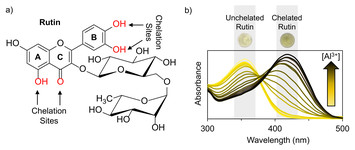
A simple, cost-effective colorimetric assay for aluminum ions via complexation with the flavonoid rutin
"A great example of biogenic materials utilized as a complexing agent for analysis of aluminum shows that toxic complexing agents can be substituted with readily available biological materials."
 Scott Wallen, Handling Editor
Scott Wallen, Handling Editor
21 September 2022
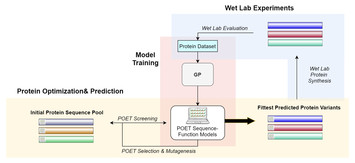
Using genetic programming to predict and optimize protein function
"The new algorithm POET has the potential to be used in both predictive protein function and downstream protein design."
 Brenda Oppert, Section Editor
Brenda Oppert, Section Editor





3,463 Followers


