
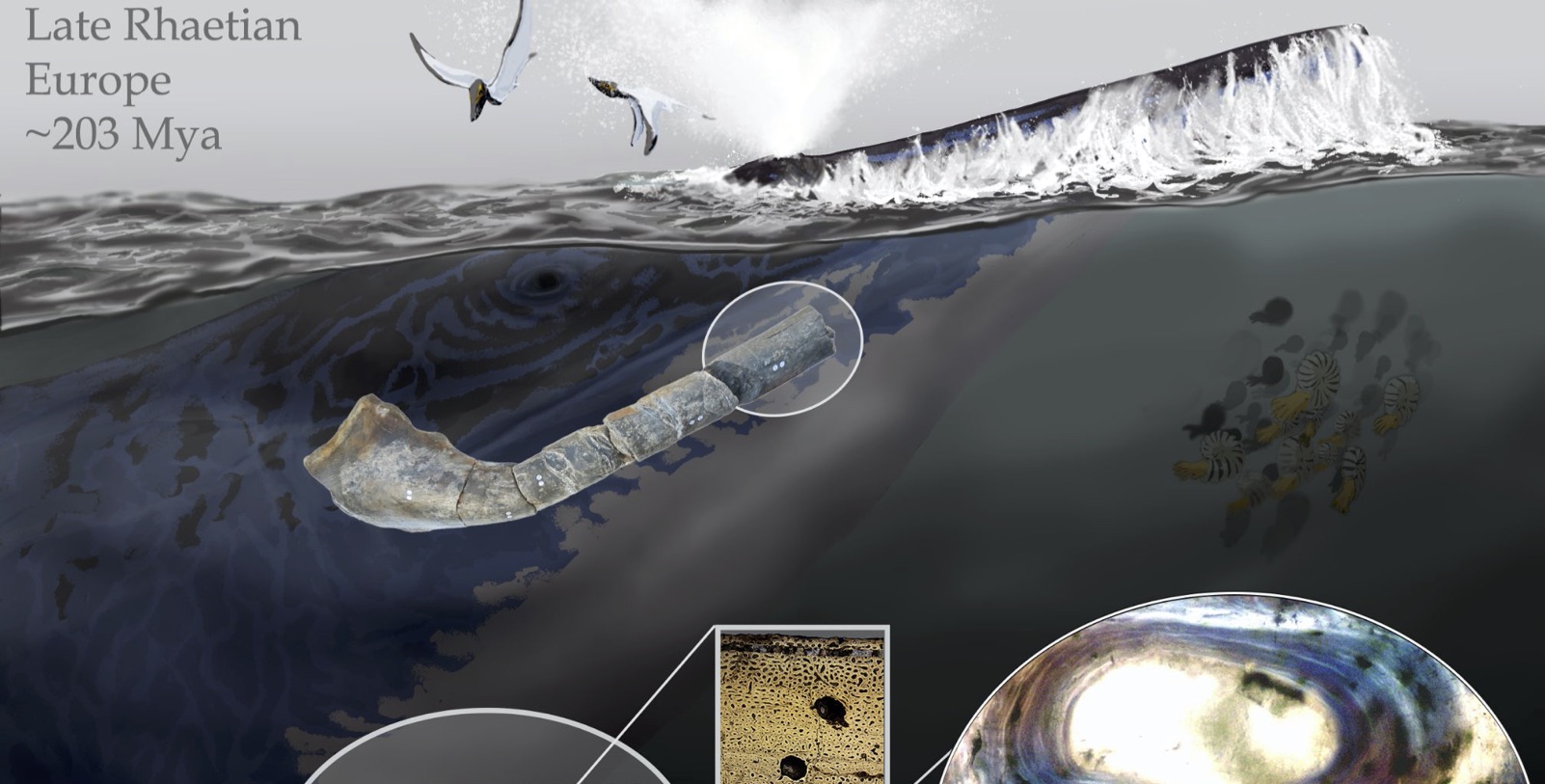
"Do some mysterious bones belong to gigantic ichthyosaurs?"
In the Press
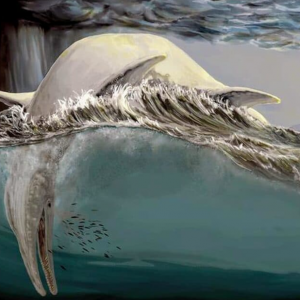
Mysterious 150-year-old bones identified as ichthyosaur jaws

Mysterious Bones May Belong to Giant Ichthyosaur
.
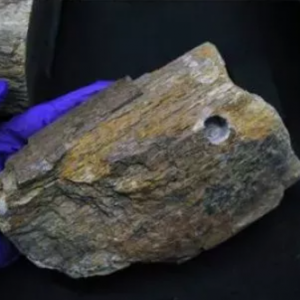
Paleontologists May Have Solved 150-Year-Old Bone Mystery
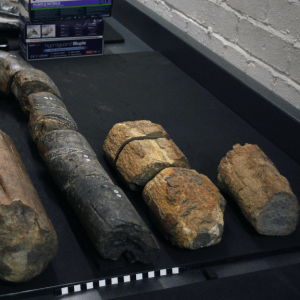
Huge Fossilized Bones Found Throughout Europe are from a Gigantic Ichthyosaur Hitherto Unknown
Marcello Perillo
Rheinische Friedrich-Wilhelms Universität Bonn
For All Readers - AI Explainer
What is the research about?
This research investigates the origin of large, unidentified fossil bone segments found in European Rhaetian (Late Triassic) deposits, which have puzzled scientists since the 19th century.
What were the proposed explanations for these fossils?
Various hypotheses were suggested, including giant amphibian bones, dinosaur long bone shafts, and giant ichthyosaur jaw bone segments.
What is the ‘Giant Ichthyosaur Hypothesis’?
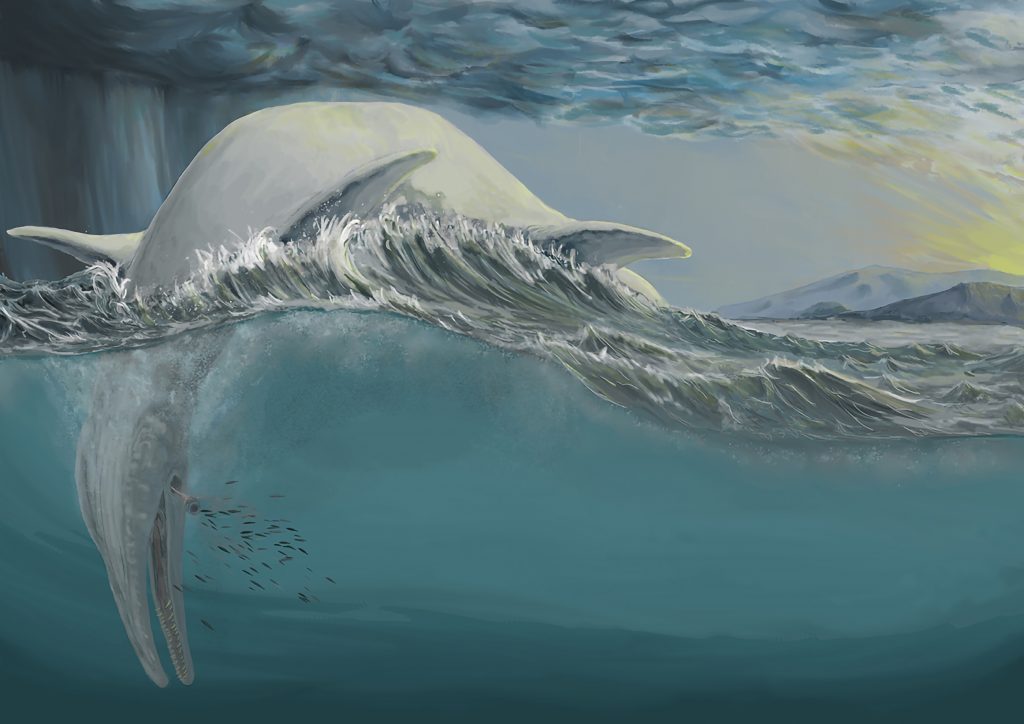
It proposes that the large bone segments are actually jaw bone fragments from giant ichthyosaurs.
How did the researchers test this hypothesis?
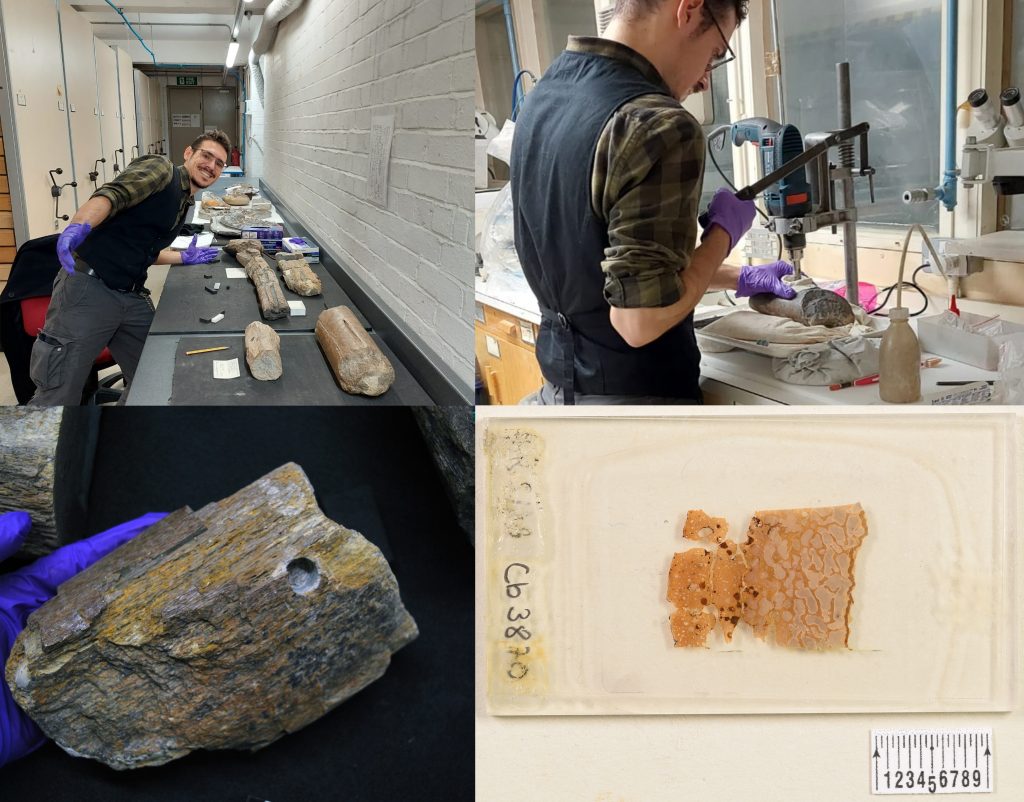
They used bone histology, studying the microscopic structure of the bone tissue, to compare the European specimens with known ichthyosaur specimens.
What did they find in their analysis?
The histological features of the European specimens, such as a unique bone matrix type, vascular architecture, growth marks, and abundance of secondary osteons, were consistent with those of giant ichthyosaurs.
What does this mean for our understanding of these fossils?
It rules out previous theories suggesting the bones belonged to dinosaurs or other ancient reptiles, supporting the idea that they are indeed remnants of giant ichthyosaurs.
Why is this significant?
This research showcases the power of paleohistology in identifying the taxonomic affinity of fragmentary bone specimens and adds to our knowledge of the diversity of ancient marine reptiles during the Late Triassic period.

What are Article Spotlights?
Spotlighted articles are press released, and feature author interviews, AI explainers and more.
If you have published in Peer J and would like to be featured in an Article Spotlight please contact PeerJ.