

Problems with quality using the analytical hierarchy approach, vendors’ perspective on software outsourcing priorities
- Published
- Accepted
- Received
- Academic Editor
- Massimiliano Fasi
- Subject Areas
- Computer Education, Software Engineering
- Keywords
- Outsourcing, Quality of service, Software development, SLR and AHP, Information management
- Copyright
- © 2026 Khan et al.
- Licence
- This is an open access article distributed under the terms of the Creative Commons Attribution License, which permits unrestricted use, distribution, reproduction and adaptation in any medium and for any purpose provided that it is properly attributed. For attribution, the original author(s), title, publication source (PeerJ Computer Science) and either DOI or URL of the article must be cited.
- Cite this article
- 2026. Problems with quality using the analytical hierarchy approach, vendors’ perspective on software outsourcing priorities. PeerJ Computer Science 12:e3013 https://doi.org/10.7717/peerj-cs.3013
Abstract
The primary objective of software companies is to maintain product quality and competitiveness in the market while minimizing development costs. Outsourcing can be a strategic approach to achieving this goal. However, outsourcing also presents various challenges that can impact product quality. Despite extensive research on outsourcing, comprehensive discussions on challenges remain limited to the literature on outsourcing; there is a significant gap in comprehensive discussions on these challenges. This article aims to bridge this gap by identifying and prioritizing quality challenges in outsourcing using the Analytical Hierarchy Process (AHP) technique. Through a thorough literature review, we identified challenges such as cultural differences, requirement analysis, remoteness, communication, and collaboration issues (5-C’s), and linguistic skills. We then validated these challenges through an empirical survey with software experts. A worldwide survey was conducted, garnering 80 responses from diverse geographical locations: Asia (37), Europe (26), North America (15), and Australia (2). Finally, we applied the AHP technique to prioritize these challenges, categorizing them into various levels. According to the Analytic Hierarchy Process (AHP) analysis, the ‘Requirement Analysis Challenge’ emerges as the foremost quality challenge, followed closely by ‘Lack of Expertise’ and ‘Limited Technical Capability’, ranking second and third respectively among the 12 identified challenges. We believe that the findings of this article will provide valuable insights for the vendor community, software development teams, client organizations, or project managers enabling them to better address outsourcing challenges and improve product quality.
Introduction
Due to increased access to qualified people, cost reduction, and improved product quality, outsourcing has been more popular among businesses since the start of globalization. In particular, information technology (IT) companies use outsourcing to reduce time constraints, recruiting obstacles, skill shortages, and the difficulty of locating qualified applicants. Software outsourcing quality management trends are changing as a result of the need for software development of the highest caliber (Li & Guohua, 2017). A noteworthy trend in the field is the implementation of agile approaches, which prioritize teamwork, adaptability, and ongoing enhancement (Khan & Khan, 2014). Suppliers can produce software that satisfies customer requirements and industry standards with this strategy. Another development in quality assurance is the growing application of automation and artificial intelligence to tasks like testing and defect finding (Khan & Khan, 2014). This innovation lowers overall costs and increases the dependability of the software by assisting vendors in recognizing and resolving quality concerns sooner. In order to guarantee high-quality software development, trends in software outsourcing quality management are generally moving toward more automated, data-driven, and collaborative methods (Brian, 2018; Khan, Niazi & Ahmad, 2009).
The software outsourcing industry has seen significant growth in recent years, driven by the ability to deliver high-quality products at lower costs (Khan & Khan, 2014). Brian (2018) highlighted that outsourcing offers companies access to skilled workers while keeping labor costs low. IT companies are using the outsourcing strategy for business to improve consistently (Khan, Niazi & Ahmad, 2009). Rahman et al. (2020) called outsourcing ‘a business strategy’ for getting quality products. Shameem et al. (2018) described the implementation of software outsourcing by developing efficient and effective products. Khan, Hussain & Zamir (2020) argued that software companies adopted the path of software outsourcing to get quality products while minimizing their production costs.
In software outsourcing, vendor organizations hire clients to develop either one or the whole parts of software (Khan et al., 2021b). Clients and vendors enter into agreements for the delivery of software development-related activities, and in exchange, the vendors pay the clients for the job (Soon & Slaughter, 1998). However, there are many advantages to software outsourcing, but it is not risk-free. In offshore software development (OSD), quality is the main issue (Barney et al., 2014), and the quality of a product cannot be attained until challenges related to it are not properly managed (Niazi et al., 2016b).
Despite extensive research on outsourcing, there is a significant lack of comprehensive discussions regarding the quality-related challenges faced by vendor organizations in offshore software development. Existing literature often focuses on general outsourcing strategies rather than the specific quality challenges that can impact project success.
This article seeks to identify and explore the various quality-related issues that arise during the outsourcing of software development to offshore locations. Understanding these challenges is crucial for improving processes and ensuring the delivery of high-quality software products. This article aims to establish a framework for prioritizing and categorizing the quality-related challenges identified in RQ I, which will aid in addressing them effectively.
This study addresses this knowledge gap by:
-
(1)
Identifying challenges: Conducting a systematic literature review to pinpoint the key quality challenges faced by vendors in offshore software development.
-
(2)
Empirical validation: Utilizing surveys to validate these challenges with industry experts, ensuring that the findings reflect real-world experiences.
-
(3)
Prioritization framework: Applying the Analytical Hierarchy Process (AHP) to categorize and prioritize challenges, providing a structured approach for vendors to tackle these issues.
Besides many advantages, quality is the main issue that software vendor companies often face. The aim of this research is to explore the quality-related challenges from the vendor’s perspective in software outsourcing. To achieve such a goal, the following research questions (RQs) are formulated:
RQ I. What quality-related challenges do vendor organizations encounter in offshore software development outsourcing?
RQ II: How can these challenges be prioritized or categorized using the following parameters?
Yearly article frequency: Analyzing the number of articles published each year to identify trends and patterns.
Country-wise article frequency: Examining the number of articles published by country to identify regional focuses.
Country vs. year-wise quality challenge frequency: Comparing the frequency of quality challenges by country and year.
Country-wise vs. quality challenge article frequency: Analyzing the number of articles published on specific quality challenges by country.
Decade-wise quality challenge discussion: Examining how quality challenges have been discussed and addressed over the past decades.
Organization size-wise analysis: Investigating how quality challenges vary by organization size.
Methodology-wise analysis: Examining how different research methodologies address quality challenges.
The article is organized as: ‘Literature Review’ presents a literature review of the identified challenges. ‘Research Methodology’ explores the proposed research methodology, which consists of three steps i.e., Identification of challenges from systematic literature reviews (SLR), Verification of quality challenges from industry practitioners and Prioritization of challenges using the AHP technique. ‘Limitations’ deals with the limitations of the study. ‘Conclusions’ presents the conclusion and future work. Finally, ‘Recommendation’ present the recommendation.
Literature review
According to Deshpande et al. (2010), cultural differences are the fundamental challenge for outsourcing (Mishra & Mishra, 2014), and cultural differences are due to low software quality. In Casado-Lumbreras et al. (2011), the authors mentioned that software development is a socio-technical process that can be affected by cultural differences and challenges. Mishra & Mishra (2014) argued that culturally important challenges can impact the quality of the product in outsourcing. Fazli & Bittner (2017) mentioned that cultural differences potentially threaten productivity if they are ignored in outsourcing. Gurung & Prater (2006) stated that if the outsourcing culture factor is properly handled, it can play a vital role in the project’s success. For the successful execution of the project, both the client and vendor must understand each cultures efficiently (Alsanoosy, Spichkova & Harland, 2018). To deal with the challenge of cultural differences, awareness is necessary for both the client and vendor in globalization of software development (GSD) (Boroujerdi & Wang, 2013).
Mighetti & Hadad (2016) considered the requirement phase as the entrance requirement for the rest of the software development phases. Collecting requirements is a difficult task for co-located projects. The GSD complicates the situation even further (Alnuem, Ahmad & Khan, 2012). Requirement gathering and analysis in GSD are quite different from collocated projects (Ali & Lai, 2017). Yassen et al. (2019) stated that requirement gathering is a difficult phase for both client and vendor, as in GSD, both are far away from each other. Requirement gathering is the key challenge for outsourced products (Shafiq, Zhang & Akbar, 2019). Akbar (2019) mentioned requirement management as a challenging task in the GSD scenario. Iqbal et al. (2020) argued that most software outsourcing projects fail due to requirements management. Partial involvement or non-involvement of clients during the requirements gathering phase may affect the quality of software products (Kamaruddin, Arshad & Mohamed, 2012). Inappropriate management may affect the quality of the software but also become the reason for the failure of projects (Prikladnicki, Audy & Evaristo, 2003). Sawyer, Sommerville & Viller (1998) mentioned that if the requirements of the product are not properly described, it will ultimately increase the production cost as well as affect the quality of the product. To produce quality products in GSD, requirement change management (RCM) plays a vital role (Kauppinen & Kujala, 2001). If changes in requirements are not dealt with properly by the team, then the output of the product will not be satisfactory in terms of task management, data management, application management, device management, goal management, etc (Adnan Khan et al., 2022). According to Ali & Lai (2016), for handling these changes, systematic approaches should be adopted.
Khalid, Ul-Ain & Khushboo (2017) mentioned that language challenges in GSD cannot be neglected. The language barrier is also a critical challenge that affects the process of gathering requirements (Damian & Zowghi, 2003), and it may degrade the quality of a software product. Abufardeh & Magel (2010) stated that GSD project quality is affected due to language challenges. Language-difference challenges in GSD can create misunderstandings among team members (Khan et al., 2021c), which may lower the quality of work (Bajta et al., 2015). In Khan & Azeem (2014)), it is mentioned that in offshore software development organizations (OSDO), 52% of challenges are associated with language proficiency. Yu, Guan & Ramaswamy (2016) stated that it is not easy to work in GSD due to different time zones. The remoteness challenge may negatively affect the process (Mighetti & Hadad, 2016) and create miscommunication among team members, which decreases the quality of products (Shanyour & Qusef, 2018). Usman, Khan & Qasim (2020) mentioned remoteness challenges as one of the critical challenges for the outsourcing industry. Khan et al. (2015) considered geographical distance a key challenge for GSD.
Ammad et al. (2019) considered the communication challenge a serious threat to the stability of GSD projects. According to Shah, Raza & Ulhaq (2012), ineffective coordination and communication create problems for developers and customers in GSD. Moreover, weak communication skills in GSD projects impact the developmental process (Khalid, Ul-Ain & Khushboo, 2017). As in GSD, there is a lack of face-to-face interaction challenges, so different standards of communication are adopted, which also hamper the process (Ali & Lai, 2021). In Khalid, Ul-Ain & Khushboo (2017), the authors confirm that in GSD, interaction challenges impact the developmental process. Jusoh et al. (2018) stated that good communication guarantees project success. In GSD, a lack of proper communication may degrade the quality of products (Layman et al., 2006). Ulziit et al. (2015) stated that quality issues arise in GSD due to communication. Niazi et al. (2016a) mentioned that due to communication issues in GSD, the stakeholders may not get the requirements properly and affect the outcome. Shameem, Kumar & Chandra (2015) mentioned that GSD project success or failure depends on effective communication among team members. Lack of successful communication in GSD between team members leads to project failure (Alzoubi, Gill & Al-Ani, 2015). Inayat, Salim & Marczak (2017) considered the communication gap for the low quality of the product in GSD. In Khan et al. (2016), the authors mentioned ‘communication and collaboration challenges between stakeholders’ as the top critical challenge, having a frequency of 96% associated with multisource project management barriers faced by vendors. Alsanoosy, Spichkova & Harland (2019) conducted 32 interviews with practitioners belonging to two different cultural countries and concluded that requirement engineering activities can also be impacted by a cultural challenge.
The management of projects in a GSD environment is more challenging as compared to co-located projects (Nidiffer & Dolan, 2005). The project management domain in the context of GSD is still not yet developed (Jain & Suman, 2018). Dealing with project management challenges in an ad hoc manner in a GSD environment ultimately affects the quality and productivity of software (Gao, Itaru & Toyoshima, 2002). da Silva et al. (2010) also considered project management challenges in GSD. According to Niazi et al. (2016b), the failure of projects in the GSD scenario is due to not giving importance to the project management challenge. Khan et al. (2022b, 2023) stated that 49% of barriers to GSD projects are associated with a lack of project management skills. Shafiq et al. (2018) proposed that a specialist project manager with vast experience in project management would overcome the management challenges. According to Moe & Šmite (2008), GSD project success or failure depends upon trust. Vithana, Asirvatham & Johar (2017) stated that in GSD, trust development among team members is a difficult task since they are far away from each other. In a GSD context, lack of trust among team members also lowers software production and quality (Moe & Šmite, 2008). ul Haq et al. (2011) also pointed out that a lack of trust is a critical challenge for GSD. Koskenkylä (2012) mentioned that GSD trust challenges arise due to a lack of face-to-face meetings. Ali et al. (2019) mentioned in their studies that 82% of challenges occur due to ‘vendor opportunism and low mutual trust’ in outsourcing partnerships. Jalali, Gencel & Šmite (2010) investigate that trust challenges also impact the employee’s performance in the organization. Building up trust in GSD projects takes much more time as compared to co-located projects (Vithana, Asirvatham & Johar, 2017). Once trust is built up, proper communication between clients and vendors will increase the quality of products (Kirilov, 2012).
Lack of team spirit also reduces the quality of outsourced software (Stetten et al., 2010). Ammad et al. (2019) mentioned that 20% of the risk factor in GSD projects is due to a loss of team spirit. Quality can also be affected when the client and vendor have no exposure to outsourcing projects (Abdullah & Verner, 2008). Ali et al. (2019) also mentioned that projects may fail when vendors’ have no exposure to outsourcing projects. Khan et al. (2016) argued that in outsourcing, before the execution of the contract with clients’, vendors’ organizations must assess their capabilities, i.e., technical and managerial. In Rahman et al. (2020), the author’s study examined employee skills (77%) and considered them a critical success factor in GSD projects. Employee turnover is common in offshore projects, which adversely affects the quality of software (Bass et al., 2018). The confidence of team members was lower due to the employee turnover (Abdullah & Verner, 2008).
The modern, fast-paced digital environment makes software outsourcing quality management imperative. Businesses need high-quality software solutions that satisfy industry standards and their own unique needs, since software is increasingly used to power corporate operations and creativity (Ammad et al., 2019). Yet, there are several serious quality hazards associated with outsourcing software development, including a lack of control, cultural differences, and misunderstandings (Ali et al., 2019). A competitive edge in the market is provided by software that is delivered with a high degree of efficiency, security, dependability, and reliability thanks to effective quality management in software outsourcing (Kirilov, 2012). In addition, quality management lowers the chance of project failures, saves money on rework and problem fixes, and fosters long-term relationships between customers and vendors. Thus, in order to guarantee software project success and preserve a competitive edge in the market, software outsourcing quality control is crucial.
The proposed article gives an overview of the challenges that impact quality from vendors’ perspectives in the context of software outsourcing. Previous research studies only discussed challenges related to the quality of co-located projects. While this study focuses on the quality-related challenges of offshore software outsourcing development from vendors’ perspectives, it will also assist vendor organizations in focusing on quality-related challenges. Our study especially looks at the issues affecting quality in offshore software development, while other work examines issues in a variety of scenarios. Our findings help vendor organizations by pointing out important issues that might jeopardize the production of high-quality software. By recognizing these issues, vendors may take proactive measures to resolve them, guaranteeing higher-quality results in software development projects conducted overseas.
Research methodology
The research methodology in this study follows three phases as the Fig. 1 illustrate: first, identifying challenges via a systematic literature review; second, validating these challenges with industry practitioners; and third, prioritizing the challenges using the AHP technique.
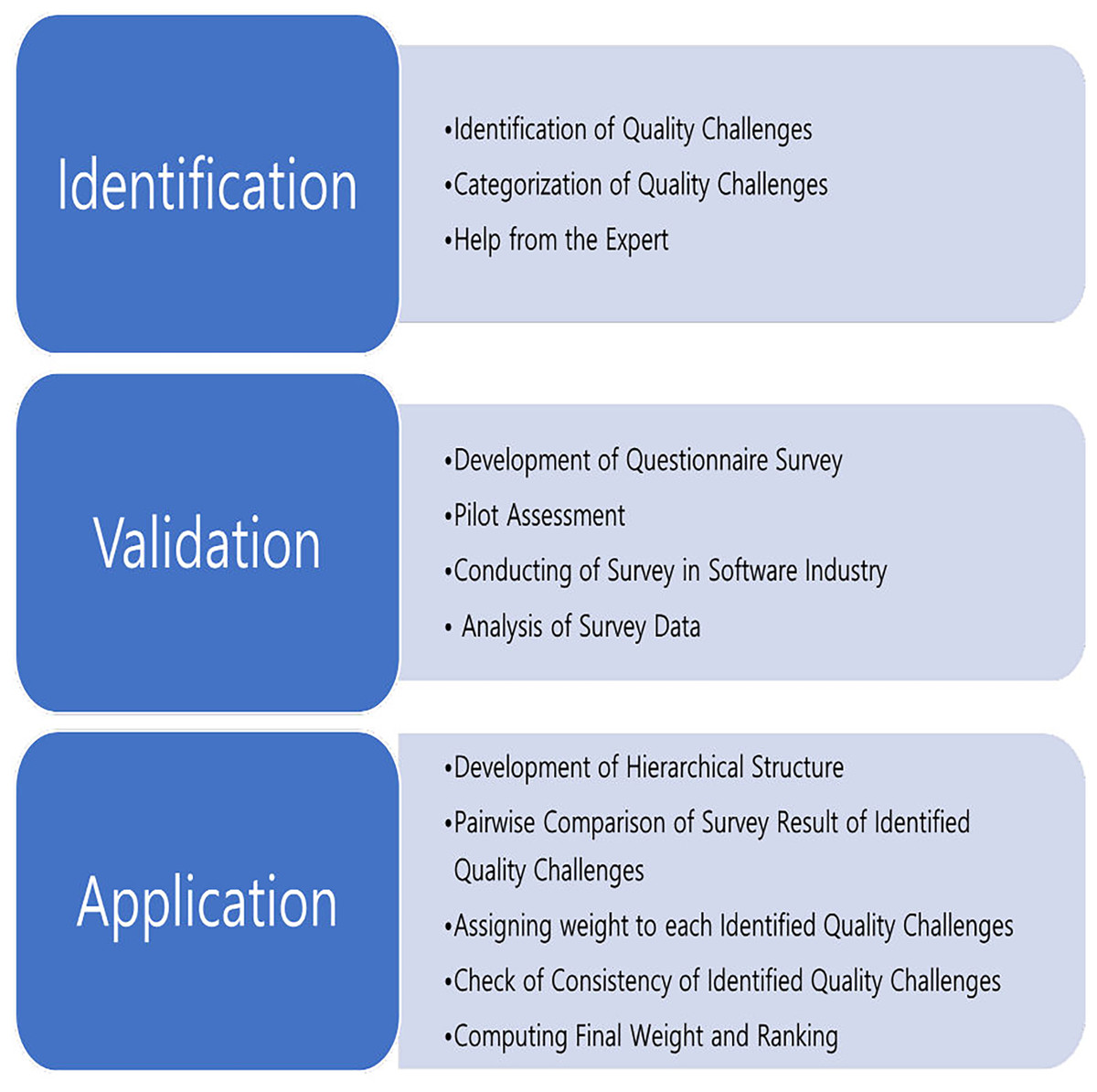
Figure 1: Research methodology.
The research process is divided into three stages, as seen in Fig. 1. We determined the difficulties’ quality, their classification, and the expert’s feedback in the identification part. The second portion focuses on the process of validating the SLR results. The questionnaire survey form is developed here, and a pilot study is used to validate it. Survey data is then analyzed when the survey is completed. In the application’s last portion, we assess the difficulties and determine their weight using the AHP approach.
Phase I: identification of challenges
During this phase, identification of different quality challenges from the vendor’s point of view in the context of software outsourcing takes place. For this purpose, SLR is considered the road map for this research. For the development of SLR protocols, different protocols are studied (Yaseen et al., 2016; Achimugu et al., 2014; Kitchenham & Charters, 2007; Ahmad et al., 2022). In this article, the snowballing technique is used for data collection, while the snowballing technique was also used in qualitative research (Naderifar, Goli & Ghaljaie, 2017). Other researchers (Khan et al., 2016) also used the snowballing approach during their research work. The snowball sampling technique helps the researcher reach populations that are difficult to sample. Furthermore, snowball sampling requires planning as compared to other sampling techniques, and it is easy to find out specific areas of interest from the population. During the data synthesis phase, the article identified the various quality challenges for RQ1 from the sample size of 78 final selected articles. Initially, 35 challenges are extracted, as shown in Fig. 2. Here you can see the overall synthesis of the identified challenges. We merged all those challenges which have some relation and made a single group of them. We defined search terms, and on the basis of these terms, we defined the search string. We use this string in various digital libraries like Science Direct, IEEE, Springer Link, etc. Initially, we select the articles on the basis of title, abstract, and keywords. In the final selection, we consider only those articles that are more relevant to our defined research questions. We extracted challenges from all the final selected articles in the extraction table. We then synthesized the challenges and made groups of all those challenges that were more related to one another.
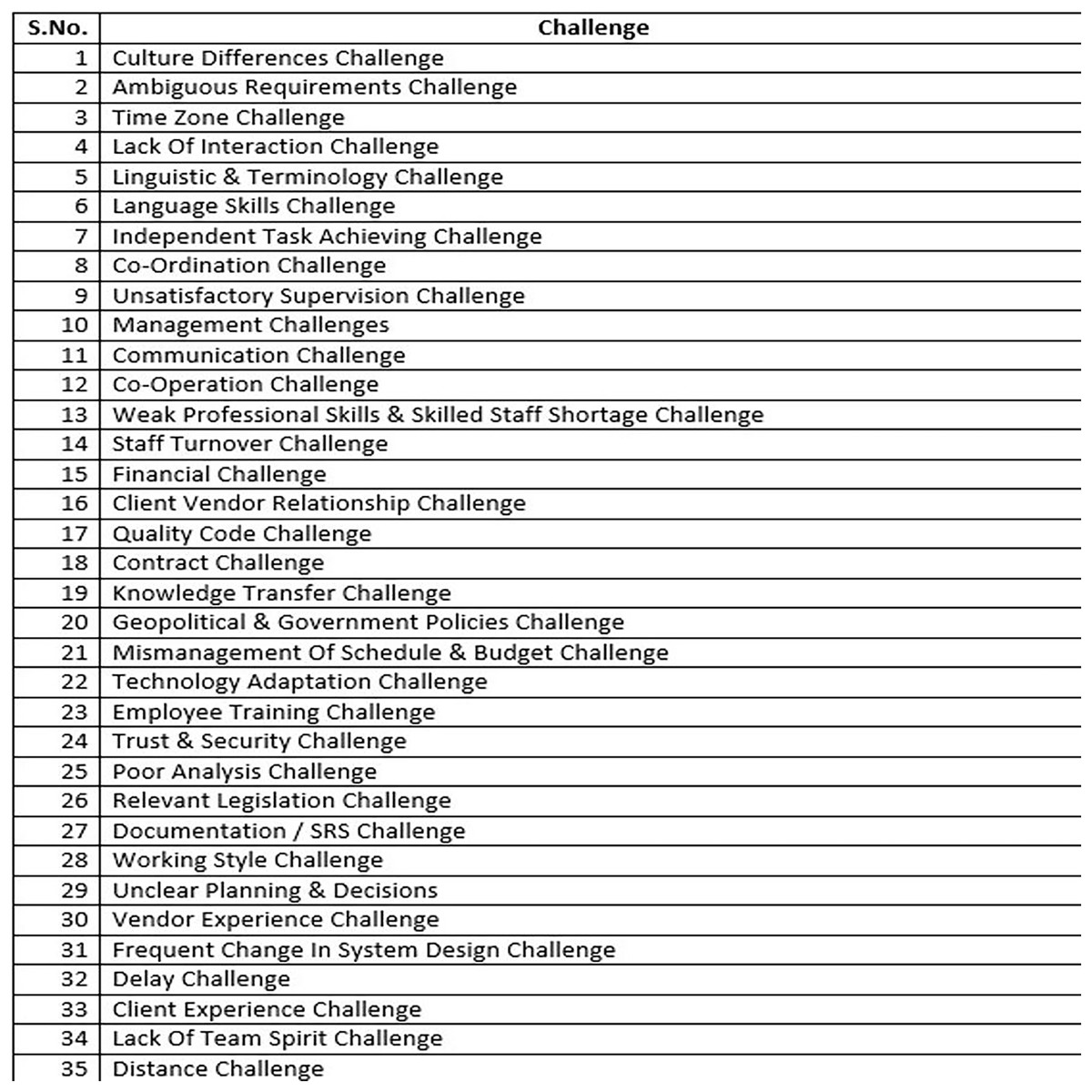
Figure 2: Thirty-five initially identified challenges.
We then reviewed and categorized these challenges into 12 groups with the help of Software Engineering Research Group (SERG) team members, as shown in Table 1. The grouping was based on the similarity of challenges, i.e., the nature of the challenge or its synonymy with other challenges. For example, the “5-C’s challenge” was comprised of five other challenges, i.e., “communication, coordination, client-vendor relationship (connection), cooperation, and lack of interaction (contact)”. All these challenges are related to each other, so we merged them into one group. Similarly, the “requirement analysis challenge” was comprised of ‘poor analysis, ambiguous requirements, and frequent changes in the system’, and merged them into another group. “Lack of Expert Challenge” was relevant to experience, and we grouped it into six sub-challenges such as ‘Weak professional skills and skilled staff shortage challenge’, ‘Knowledge transfer challenge’, ‘Technology adaptation challenge’, ‘Employee training challenge’, ‘Vendor experience challenge’, and ‘Client experience challenge’. Table 1 shows 12 merging or groupings of challenges.
| Quality challenges | Challenge code | No. of merged challenges | Frequency (N = 78) | Percentage |
|---|---|---|---|---|
| Culture differences barriers | C1 | 2 | 27 | 35 |
| Requirements analysis challenge | C2 | 3 | 27 | 35 |
| 5-C’s challenge | C3 | 5 | 26 | 33 |
| Lack of expert challenge | C4 | 5 | 25 | 32 |
| Management challenge | C5 | 2 | 14 | 18 |
| Remoteness challenge | C6 | 2 | 13 | 17 |
| Agreement deed challenge | C7 | 3 | 13 | 17 |
| Linguistic skills challenge | C8 | 2 | 11 | 14 |
| Code quality challenge | C9 | 2 | 11 | 14 |
| Employees’ turnover challenge | C10 | 1 | 8 | 10 |
| Geo strategic economic challenge | C11 | 4 | 7 | 9 |
| Individualistic approach challenge | C12 | 3 | 5 | 6 |
| Total challenges | 34 |
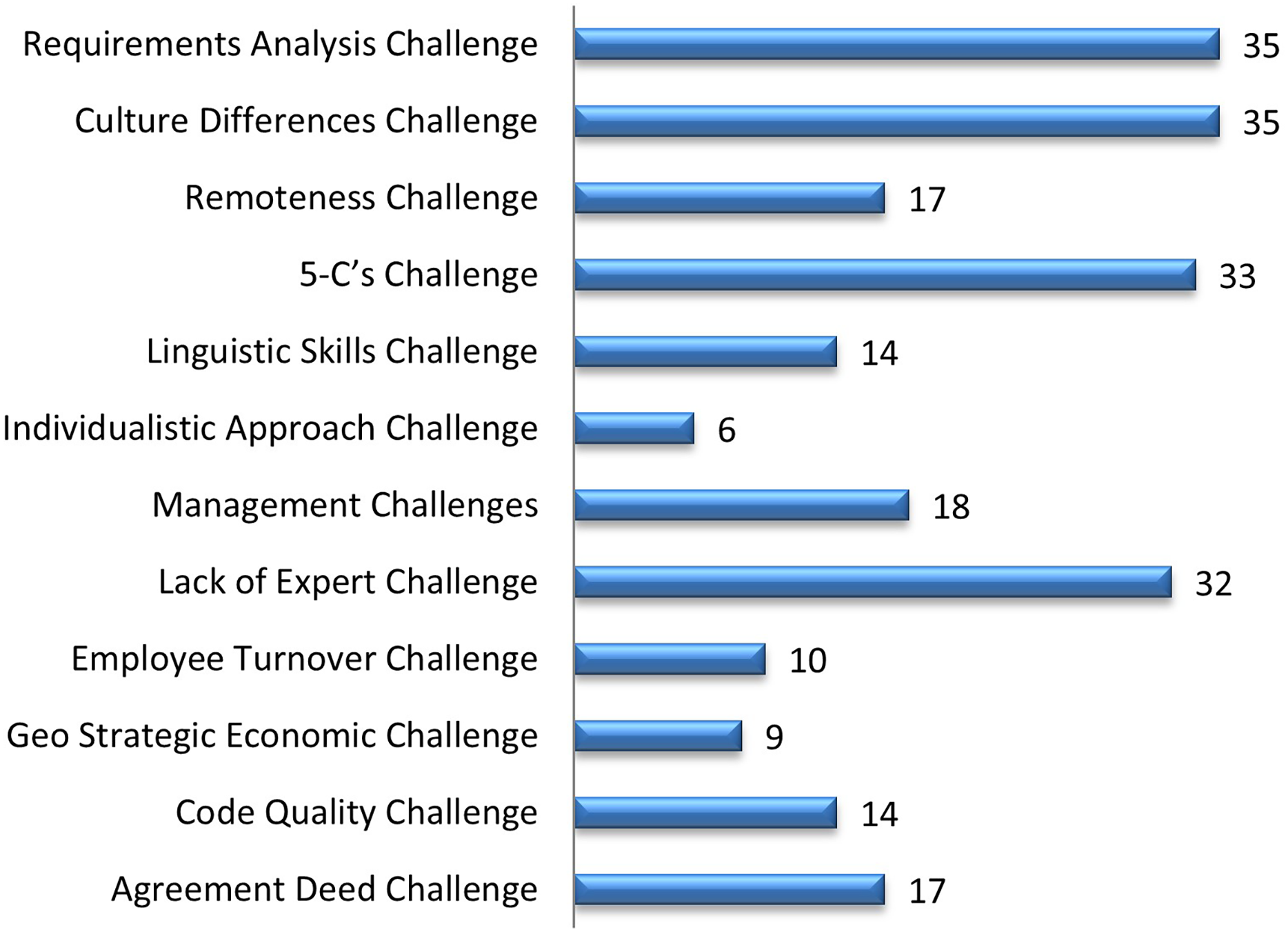
SLR frequency and percentage of merged identified quality challenges are shown in Fig. 3. Requirement analysis and “culture differences challenges” are 35%, respectively, while “5-C challenge” is 33%, “lack of expert challenge” is 32%, “agreement deed” and “remoteness challenge” are 17%, and “management challenge” is 18%.
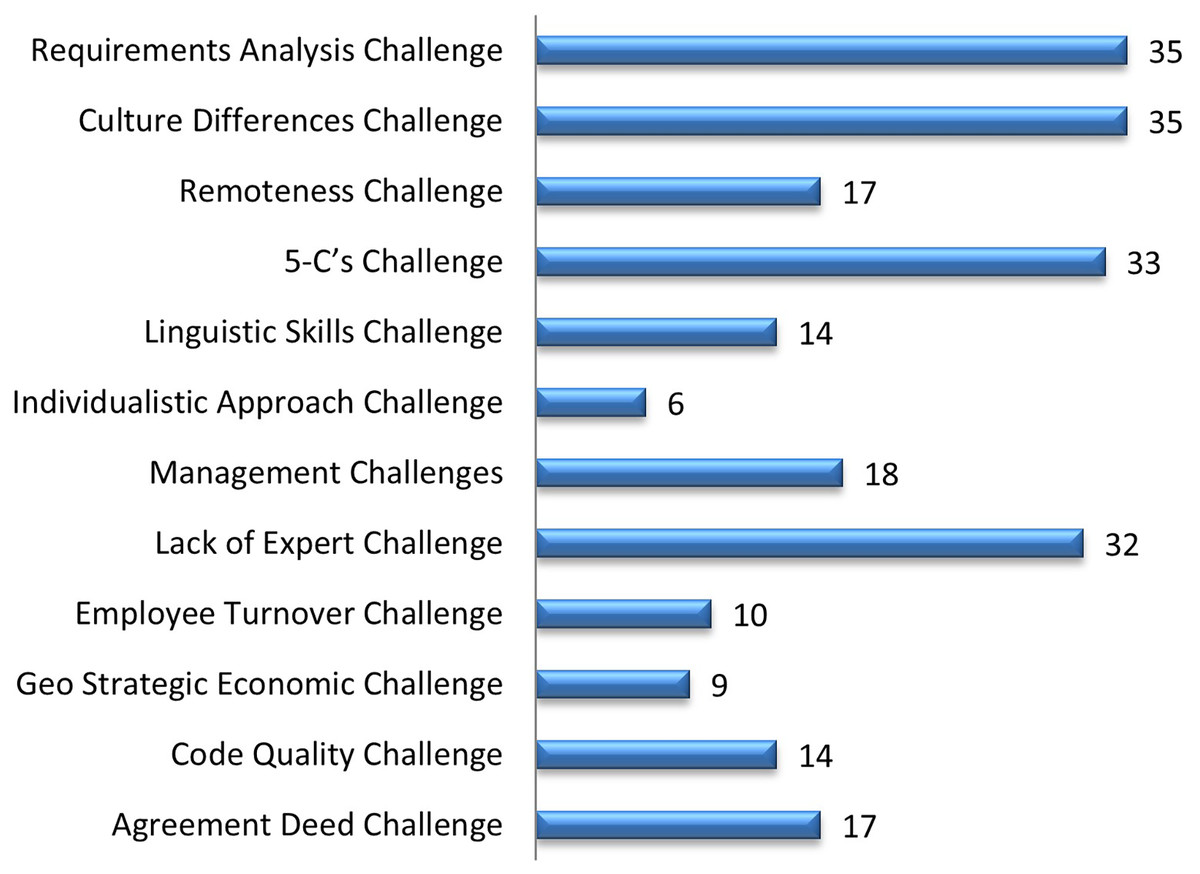
Figure 3: SLR frequency and percentage of quality challenges.
RQII. How can these challenges be prioritized or categorized using the following parameters?
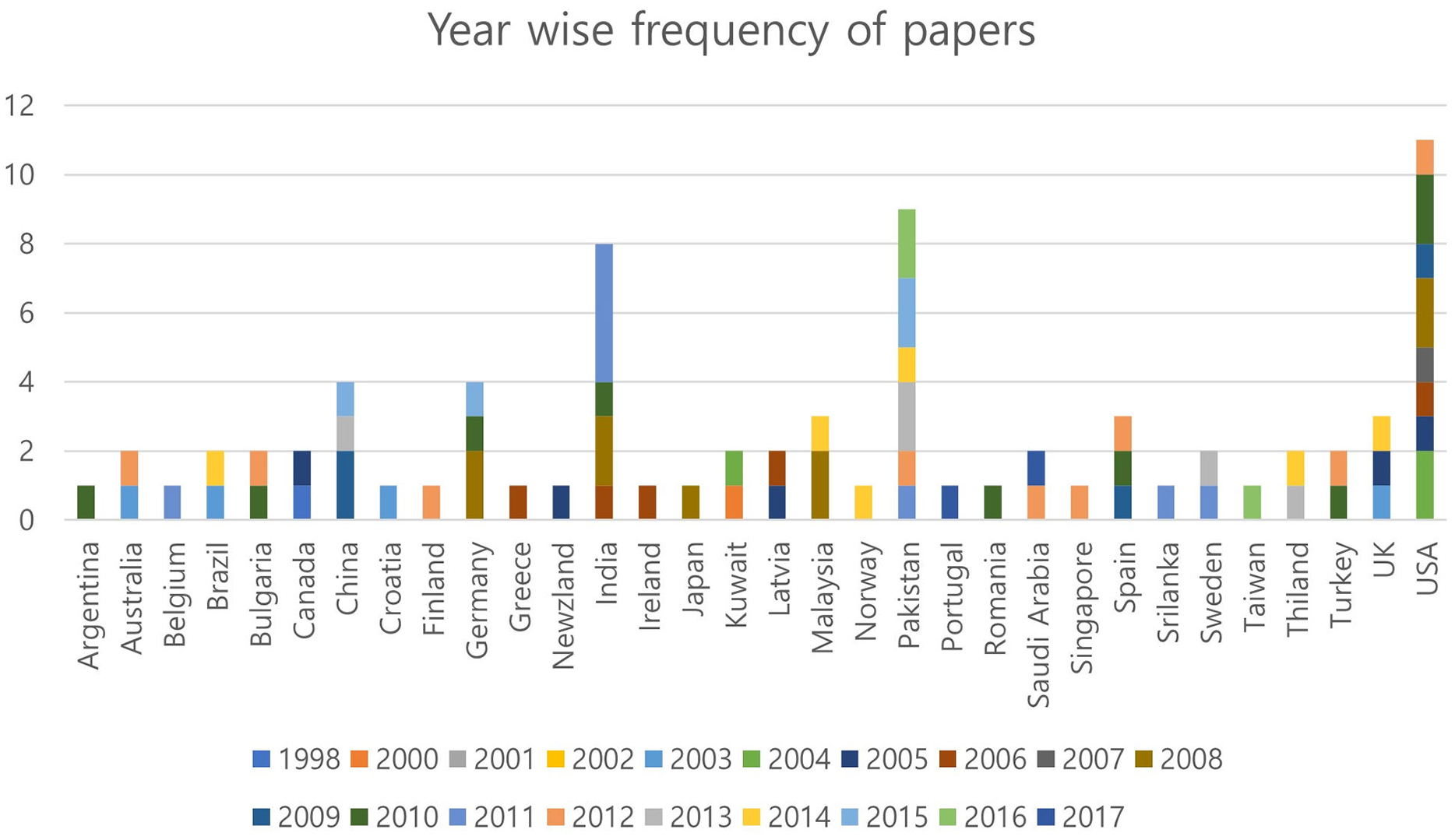
We further analyzed the identified challenges using different parameters based on RQII. The distribution of articles by year is illustrated in Fig. 4, revealing the annual frequency of publications. Furthermore, Fig. 5 presents the country-wise distribution of articles, highlighting the top contributing countries to quality challenges in offshore software development. The country-vs-year-wise quality challenge frequency result is shown in Fig. 6, where country-vs-year-wise quality challenge frequency is discussed.
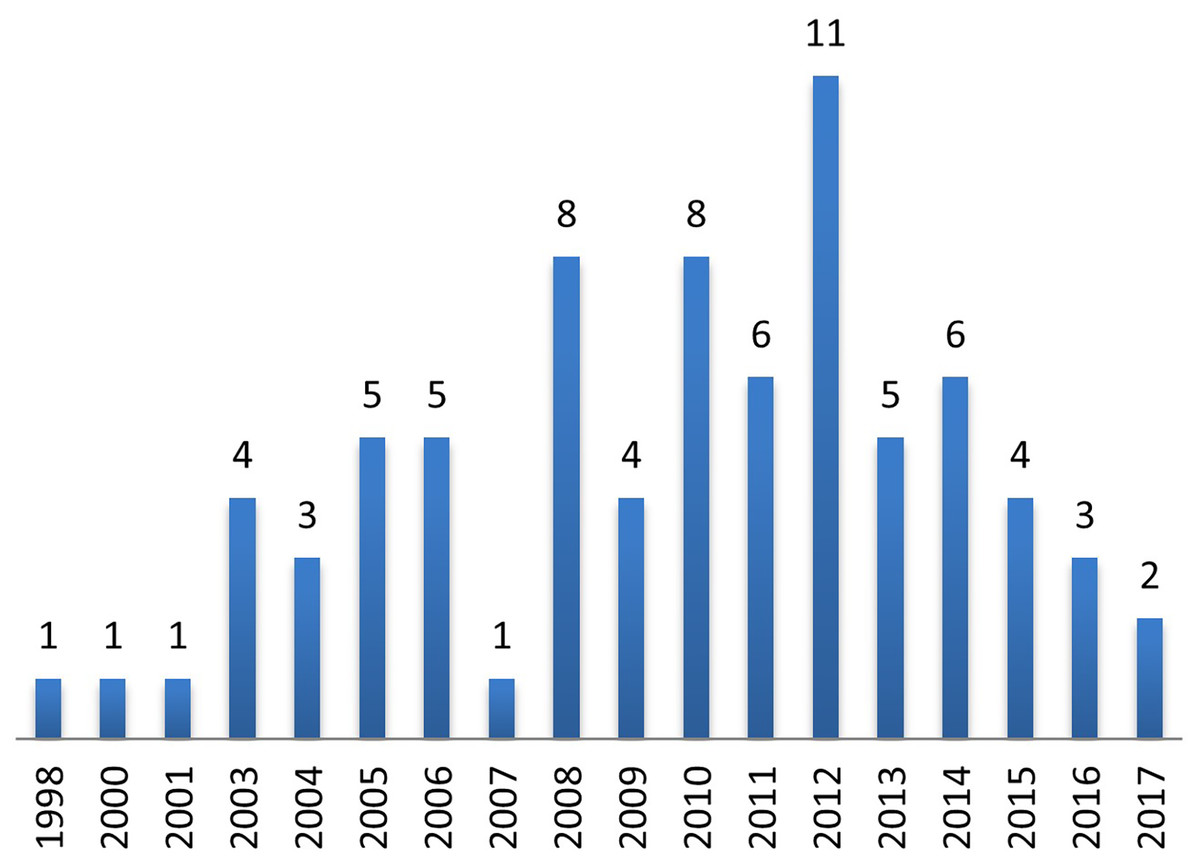
Figure 4: Article frequency year-wise result.
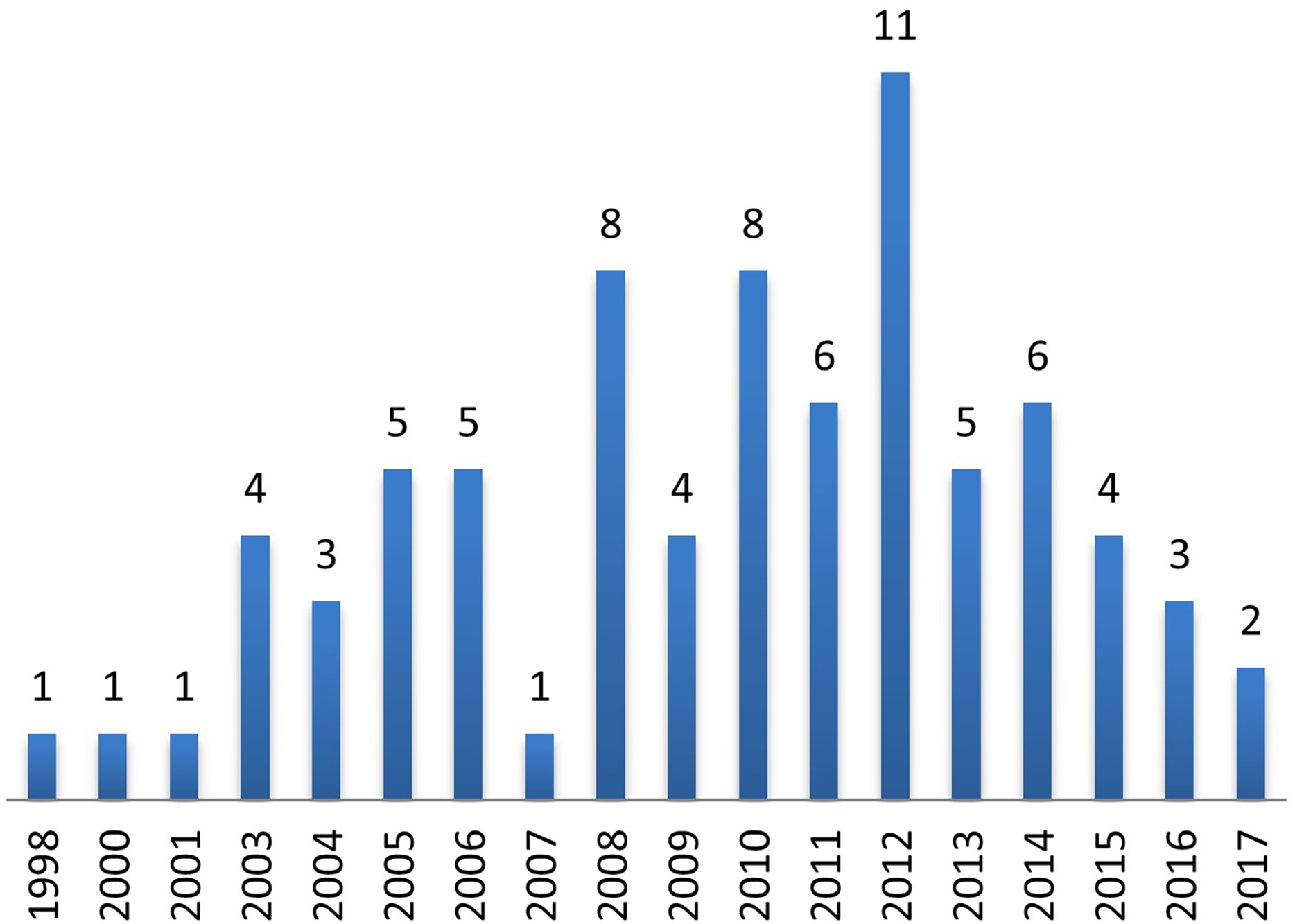
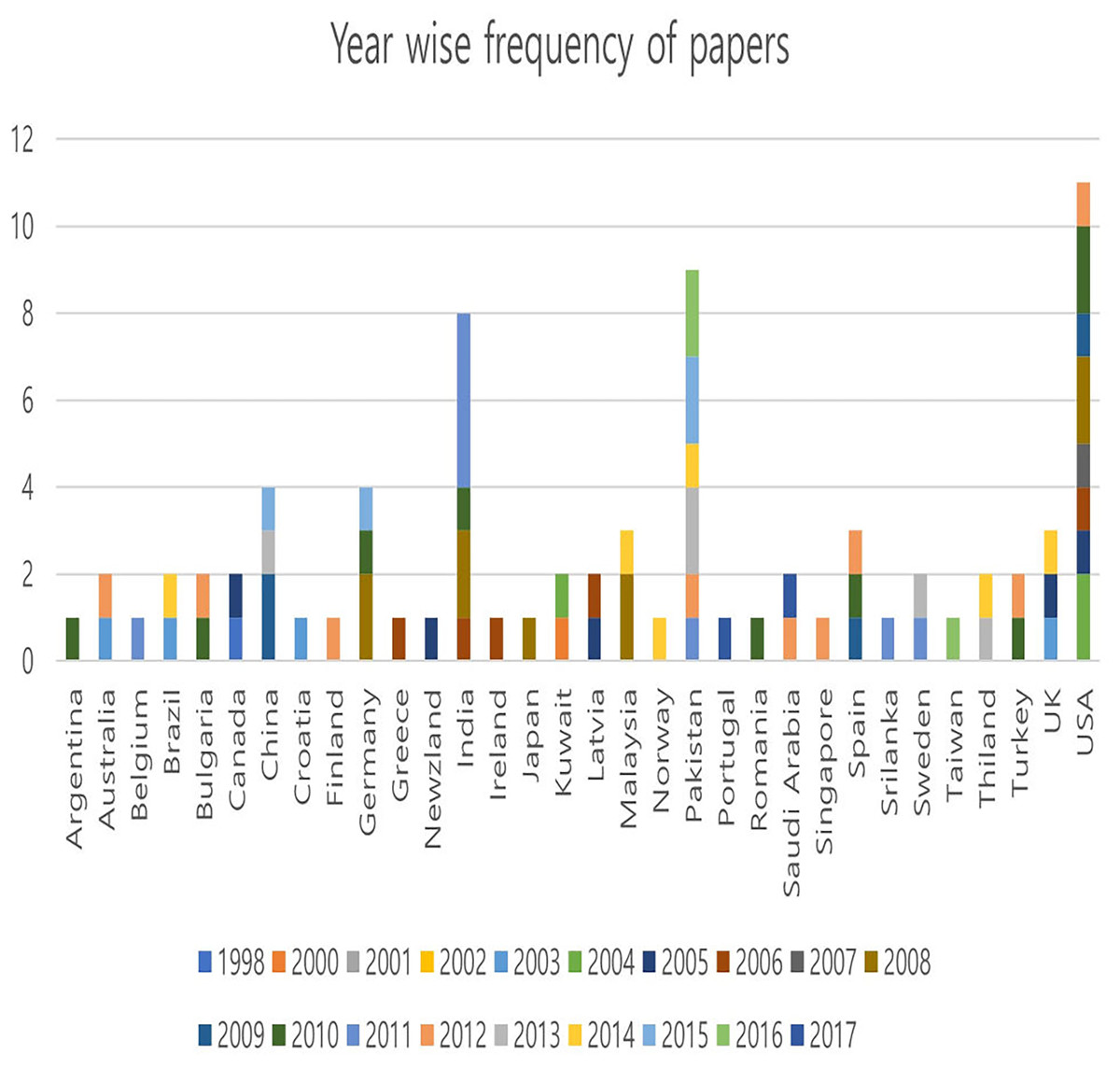
Figure 5: Country wise article frequency.
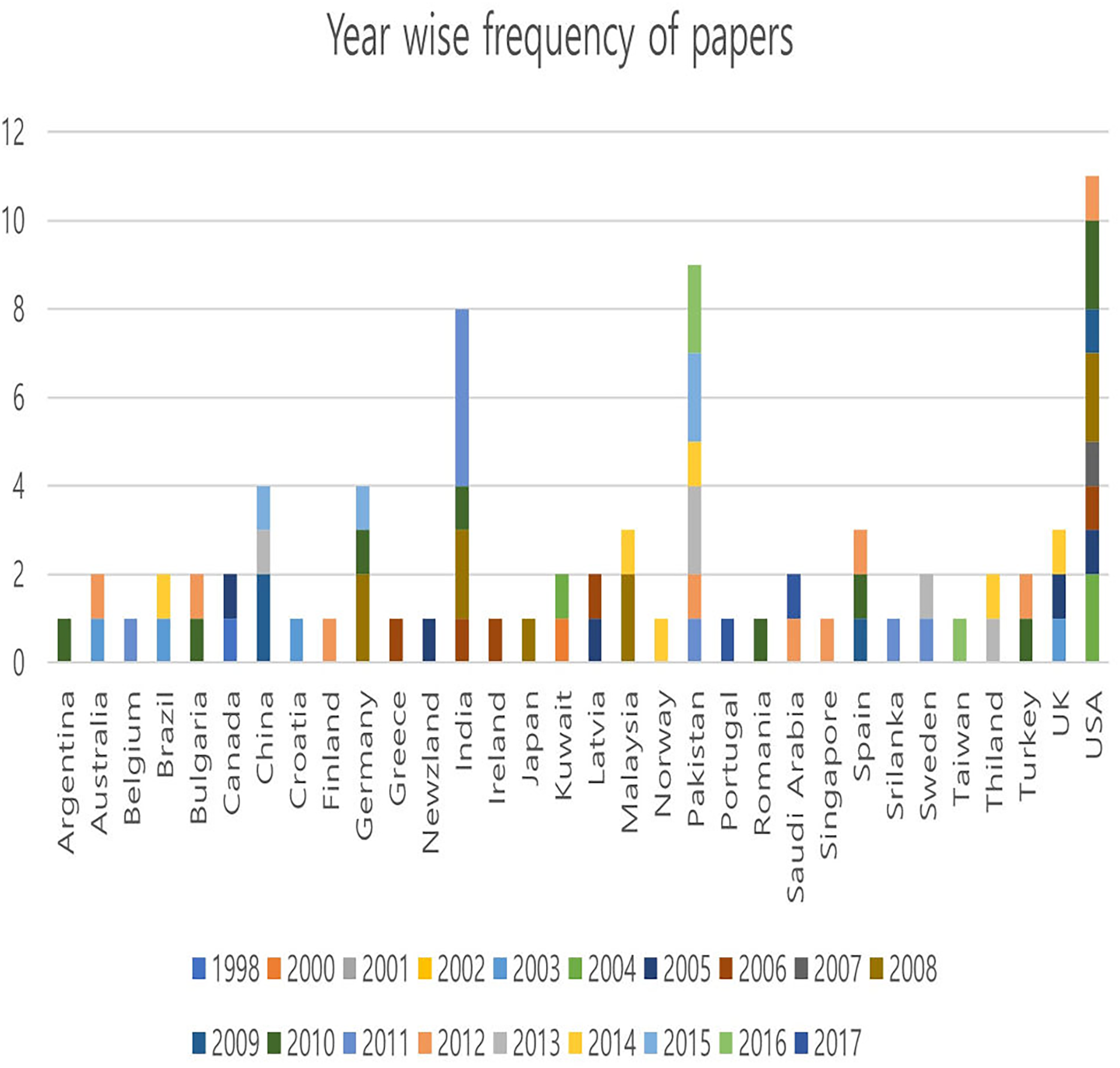
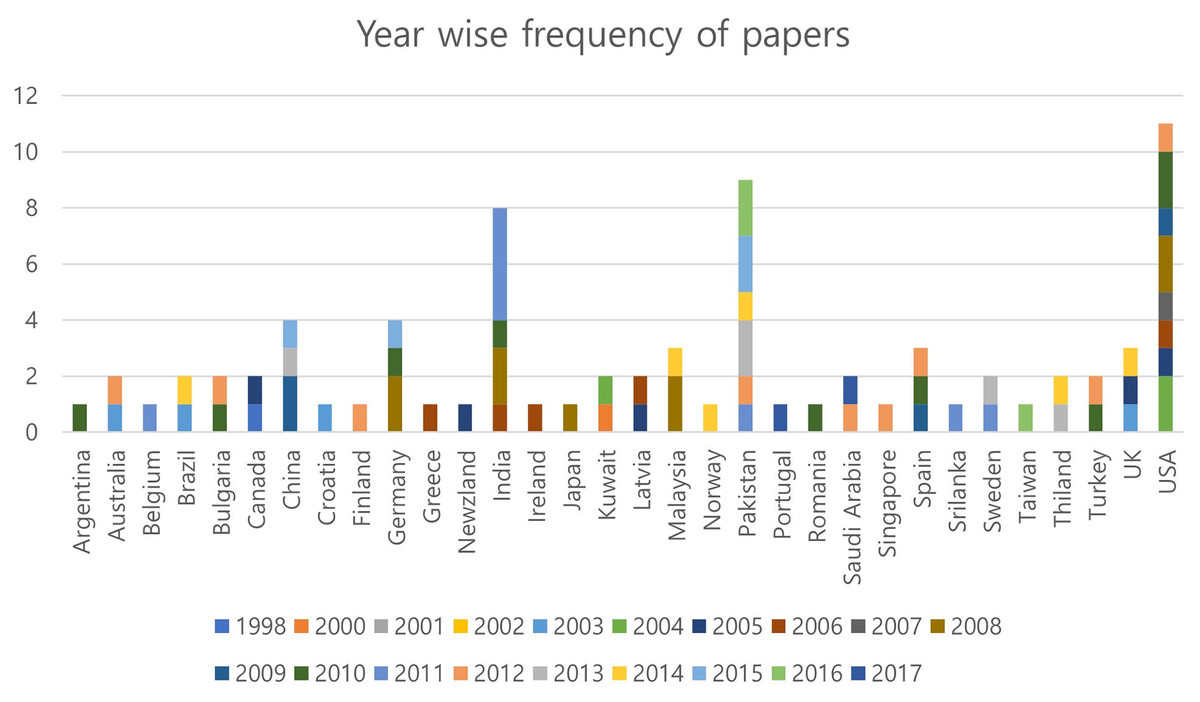
Figure 6: Country-wise vs year-wise quality challenges article frequency.
Decade-wise quality challenge analysis is shown in Table 2. Furthermore, we have also analyzed the quality challenges decade-wise over two decades, for example, 1998–2007 and 2008–17. To investigate this relationship, we employed the chi-square test (Rakesh & Singhal, 2015; Franke, Ho & Christie, 2012), specifically the linear-by-linear association test. The results revealed a statistically significant difference (p < 0.05), indicating a strong association between variables to find the difference across two decades. Table 2 shows such findings. Table 2 revealed that p > α = 0.05 for all the challenges except for the ‘Geo strategic economic challenge’. Therefore, it can be concluded from the results that there has been no significant difference in almost all these decades except for the geo-strategic economic challenge.
| Quality challenge | Period-I | Period-II | Chi square test (Linear-by-linear association) α = 0.05 | ||||
|---|---|---|---|---|---|---|---|
| 1998–2007 (N = 21) | %age | 2008–2017 (N = 57) | %age | x2 | df | p | |
| Culture differences challenges (CDC) | 8 | 38 | 19 | 33 | 0.152 | 1 | 0.697 |
| Requirements analysis challenge (RAC) | 6 | 29 | 21 | 37 | 0.458 | 1 | 0.499 |
| Remoteness challenge | 6 | 29 | 7 | 12 | 2.895 | 1 | 0.089 |
| 5-C’s challenge | 5 | 24 | 21 | 37 | 1.158 | 1 | 0.282 |
| Linguistic skills challenge (LSC) | 5 | 24 | 6 | 11 | 2.207 | 1 | 0.137 |
| Individualistic approach challenge (IAC) | 1 | 5 | 4 | 7 | 0.128 | 1 | 0.72 |
| Management challenge (MC) | 5 | 24 | 9 | 16 | 0.662 | 1 | 0.416 |
| Lack of expert challenge (LEC) | 4 | 19 | 21 | 37 | 2.377 | 1 | 0.123 |
| Employees’ turnover challenge (ETC) | 1 | 5 | 7 | 12 | 0.93 | 1 | 0.335 |
| Geo strategic economic challenge (GSEC) | 5 | 24 | 2 | 4 | 7.643 | 1 | 0.006 |
| Code quality challenge (CQC) | 1 | 5 | 10 | 18 | 2.481 | 1 | 0.115 |
| Agreement deed challenge (ADC) | 6 | 29 | 7 | 12 | 2.895 | 1 | 0.089 |
Claudiu (2012) argued that government policies are not fixed, and frequent changes in policies affect the economy, which in turn may affect software outsourcing project delivery. It means that a people-friendly policy will boost the business of outsourcing. Khan, Currie & Weerakody (2003) stated that the adversely instable political situation of the country might delay the project delivery and, at some point, stop the process. Therefore, political stability is the first element for flourishing in the business of outsourcing.
Organization size wise analysis was conducted and according to the Bureau of Statistics Australia (Australian Bureau of Statistics, 2001); those organizations which have employees less than <20 need to be considered small, whilst those organizations which have the employees in between one and 199 be considered medium, and organization with employees more than >200 be considered large in size. Figure 7 shows the SLR data organization size-wise results. Finally, Table 3 shows the results, research methodology-wise. A non-experimental, i.e., theoretical model (Jiménez, Piattini & Vizcaíno, 2009), is only for study purposes and not tested.
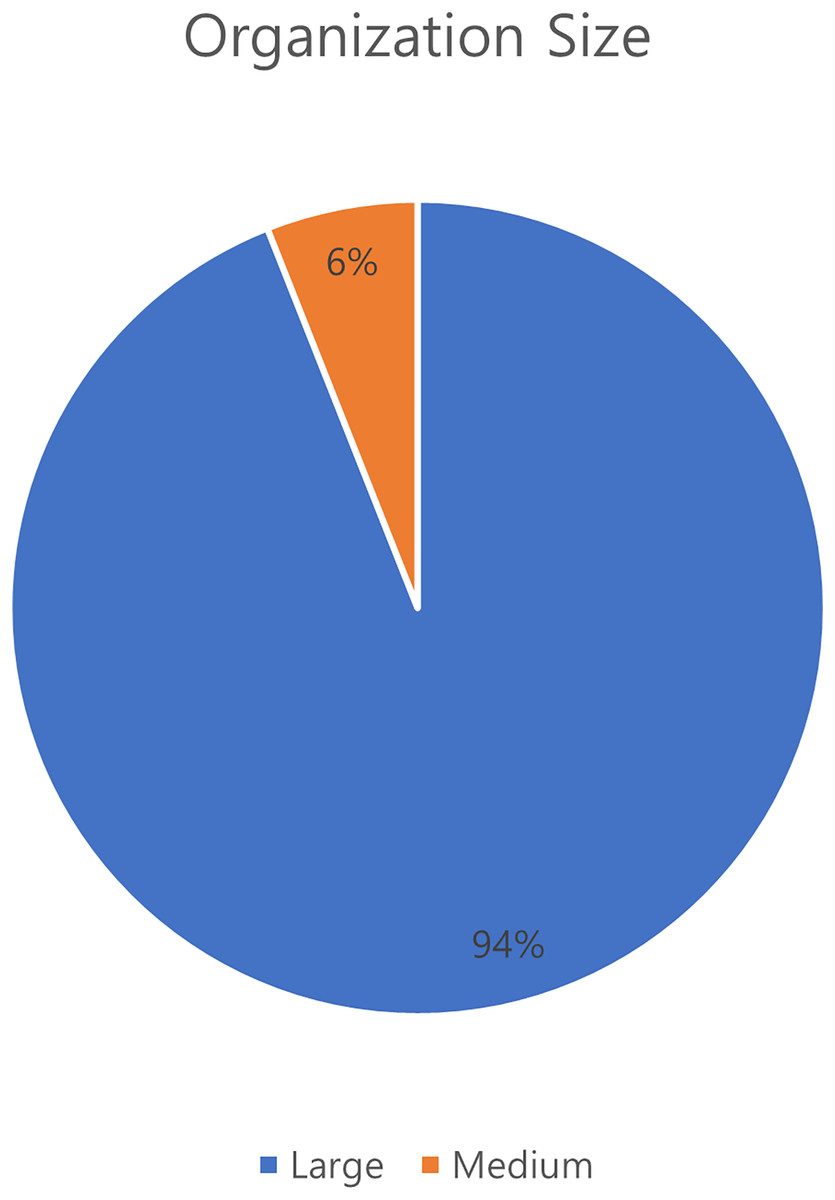
Figure 7: Organization size wise analysis.
| S. No | Research methodology | No of analysis |
|---|---|---|
| 1 | Case study | 13 |
| 2 | Experimental | 5 |
| 3 | Interview | 7 |
| 4 | Mixed | 6 |
| 5 | Non experimental | 4 |
| 6 | Report | 5 |
| 7 | SLR | 21 |
| 8 | Survey | 17 |
Phase II: validation
A questionnaire survey was used for validation purposes. The questionnaire survey (both offline and online) (https://goo.gl/forms/mj2crBDvZEtY1yKS2) was prepared keeping in mind the findings of the identified quality challenges. Before conducting the survey, a pilot survey was conducted to measure the validity of the content included in the survey. A questionnaire was sent to the Software Engineering Group of Malakand University to validate the content of the questionnaire. Out of the distributed surveys, we received a total of 47 completed responses, which belonged to more than 10 different software companies. We assured the participants that their secrecy would not be disclosed. The participant pool consisted of diverse professionals from the software development industry, including front-end developers, Android developers, web developers, Software Quality Assurance (SQA) specialists, IT managers, and iPhone app developers. The questionnaire survey was conducted from February 21 to April 10, 2019. After that, we reviewed the submitted data manually to ensure there were no missing or incomplete responses.
Moreover, for the questionnaire survey, we chose a 3-point Likert scale, i.e., agree, not sure, and disagree, as it was comparatively easier for participants to respond. Where “agree” meant that the participant was totally satisfied with the concerned quality challenge, “not sure” meant that the participant remained unbiased or neutral to share his or her views about the identified quality challenges. “Not agree” meant that the participant was not satisfied with the identified quality challenges.
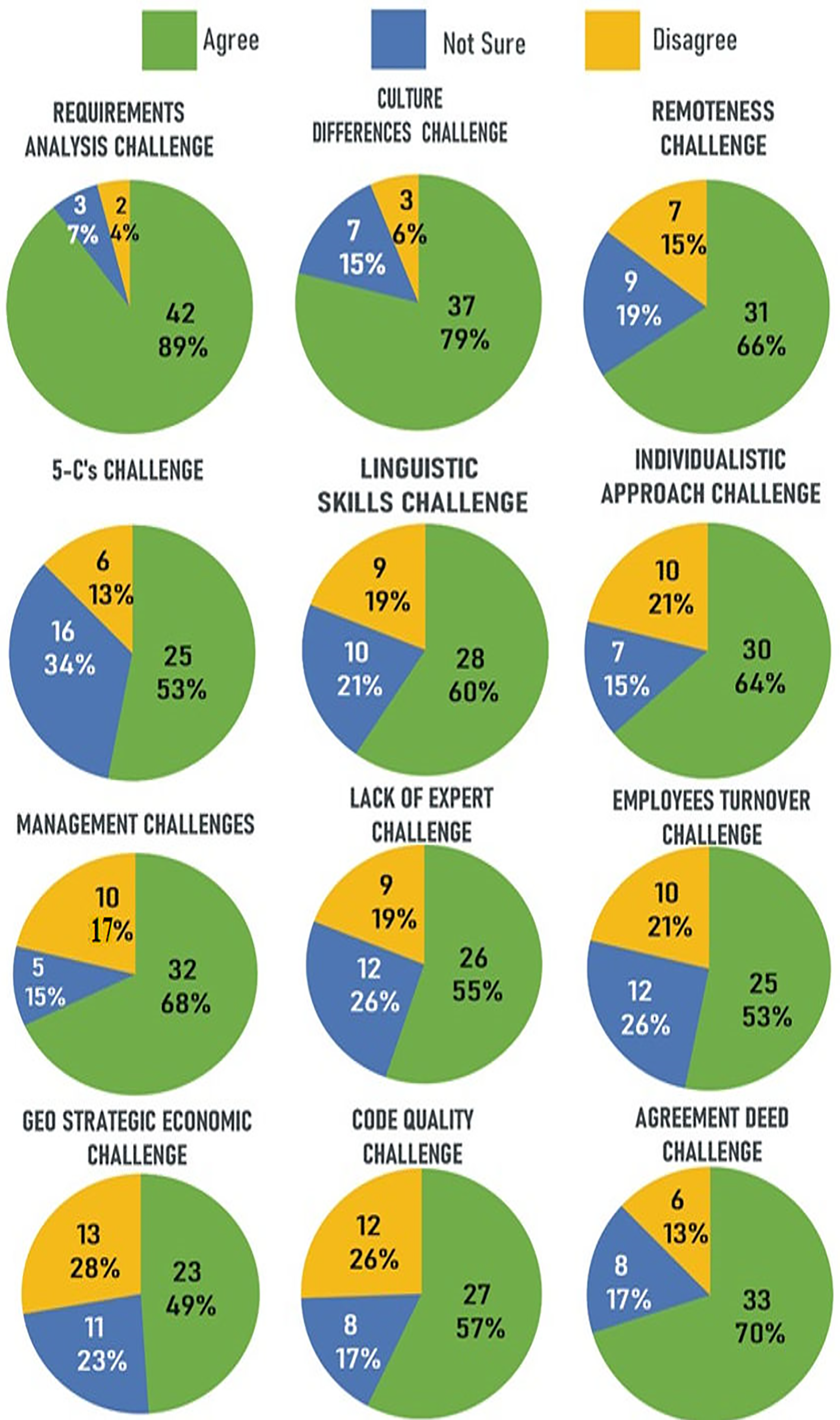
Where 42 (89%) participants out of 47 selected the choice of agree for the “Requirements Analysis Challenge,” three participants selected the choice of not sure or remained neutral, and two participants selected the disagree option for the said challenge. Figure 8 Quality Challenges Survey Results.
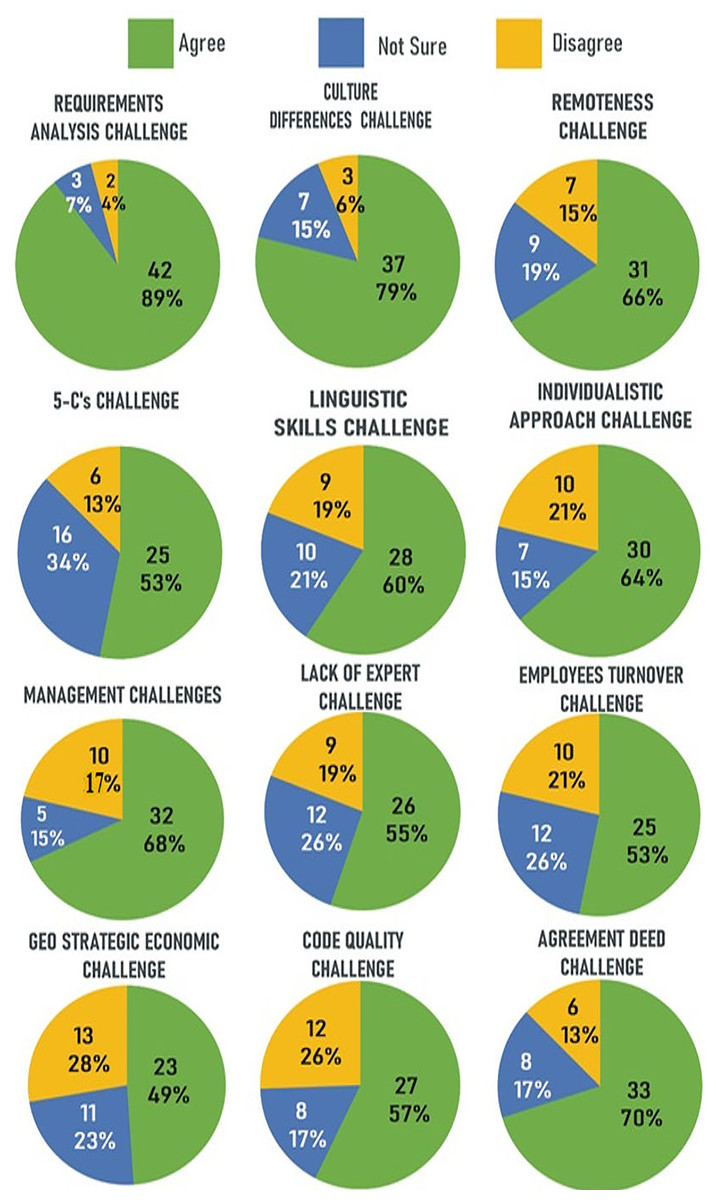
Figure 8: Result of interview.
Job title/position
We have analyzed 47 participants based on their job title/position, as shown in Table 4.
| S. No | Job title | No. of participant |
|---|---|---|
| 1 | 2D game developer | 1 |
| 2 | Andriod developer | 5 |
| 3 | ASO/SEO expert | 1 |
| 4 | Assistant project manager | 1 |
| 5 | Backend developer | 1 |
| 6 | CEO | 4 |
| 7 | Developer and integration engineer | 1 |
| 8 | Front end developer | 2 |
| 9 | Graphic designer | 2 |
| 10 | Integration engineer | 1 |
| 11 | IOS developer | 1 |
| 12 | IT manager | 1 |
| 13 | Java developer | 1 |
| 14 | Manager integration | 1 |
| 15 | Project manager | 2 |
| 16 | Quality assurance leader | 1 |
| 17 | Senior android developer | 1 |
| 18 | Senior developer | 1 |
| 19 | Senior software engineer | 2 |
| 20 | Software developer | 1 |
| 21 | Software engineer (Mobile Apps) | 1 |
| 22 | Software quality engineer | 1 |
| 23 | SQA | 1 |
| 24 | Support engineer | 1 |
| 25 | Team leader | 1 |
| 26 | Web designer | 1 |
| 27 | Web developer | 1 |
| 28 | Software engineer | 9 |
Size of organization
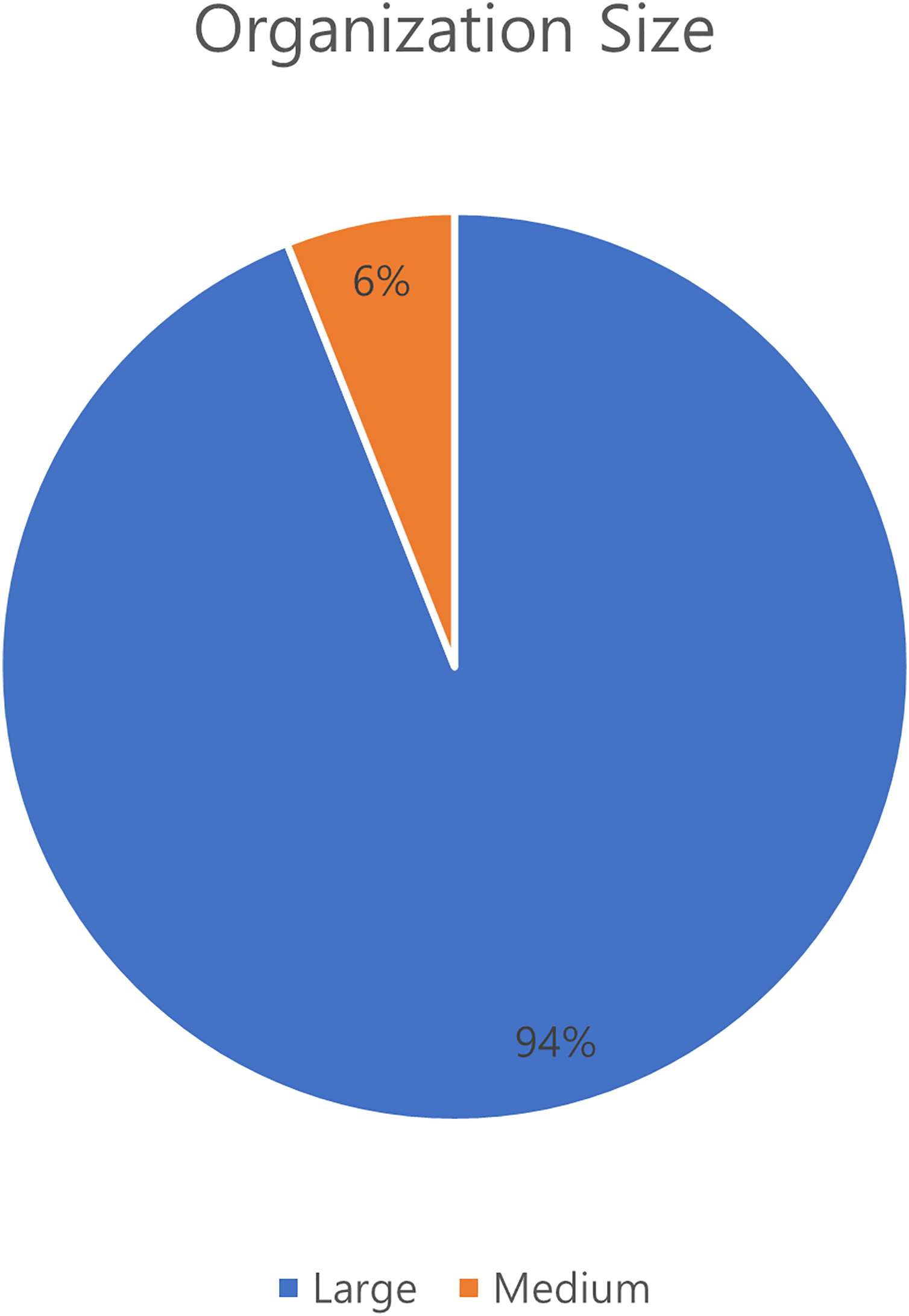
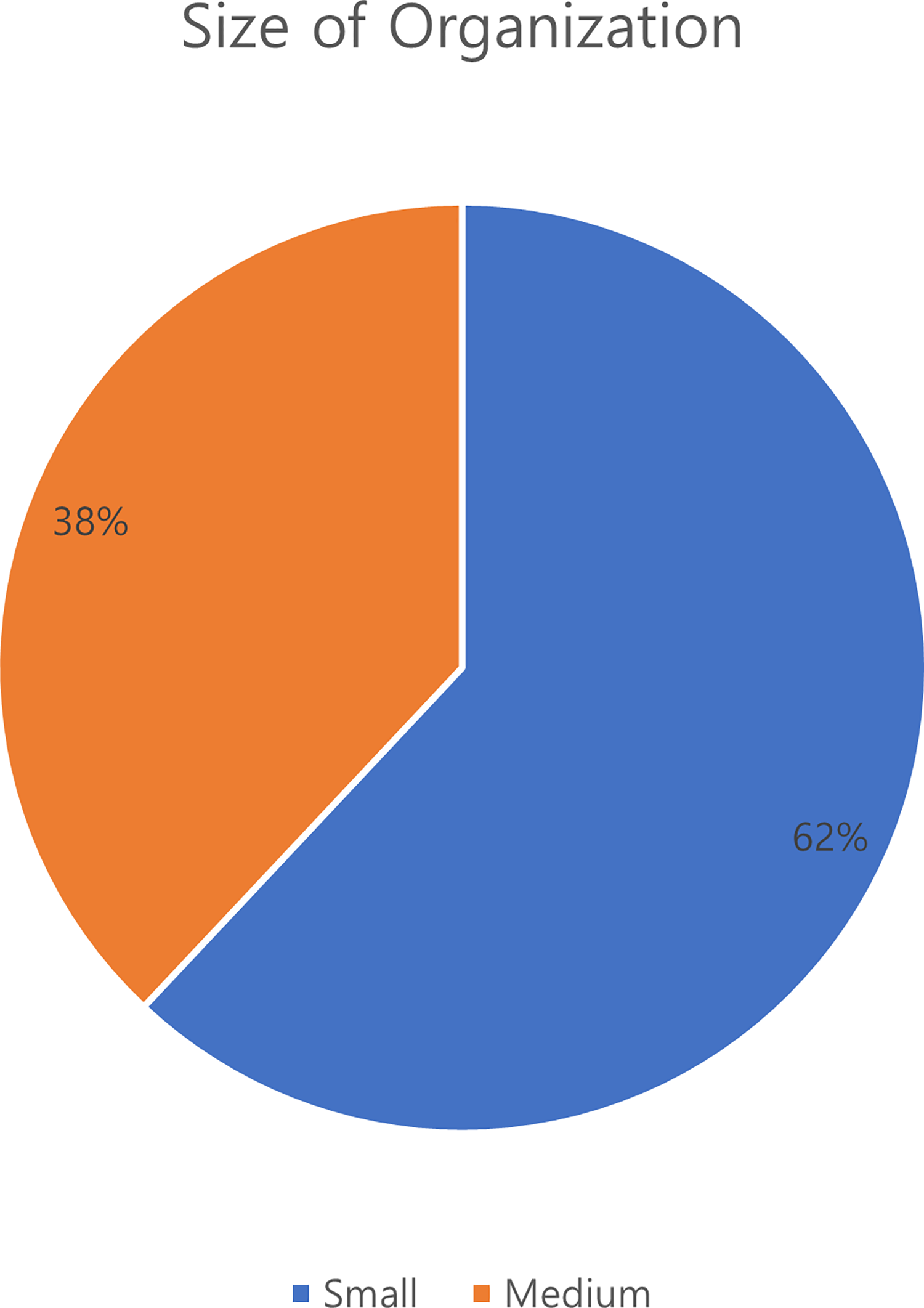
Next, we have also analyzed the size of the organization where the survey was conducted; the result is shown in Fig. 9.
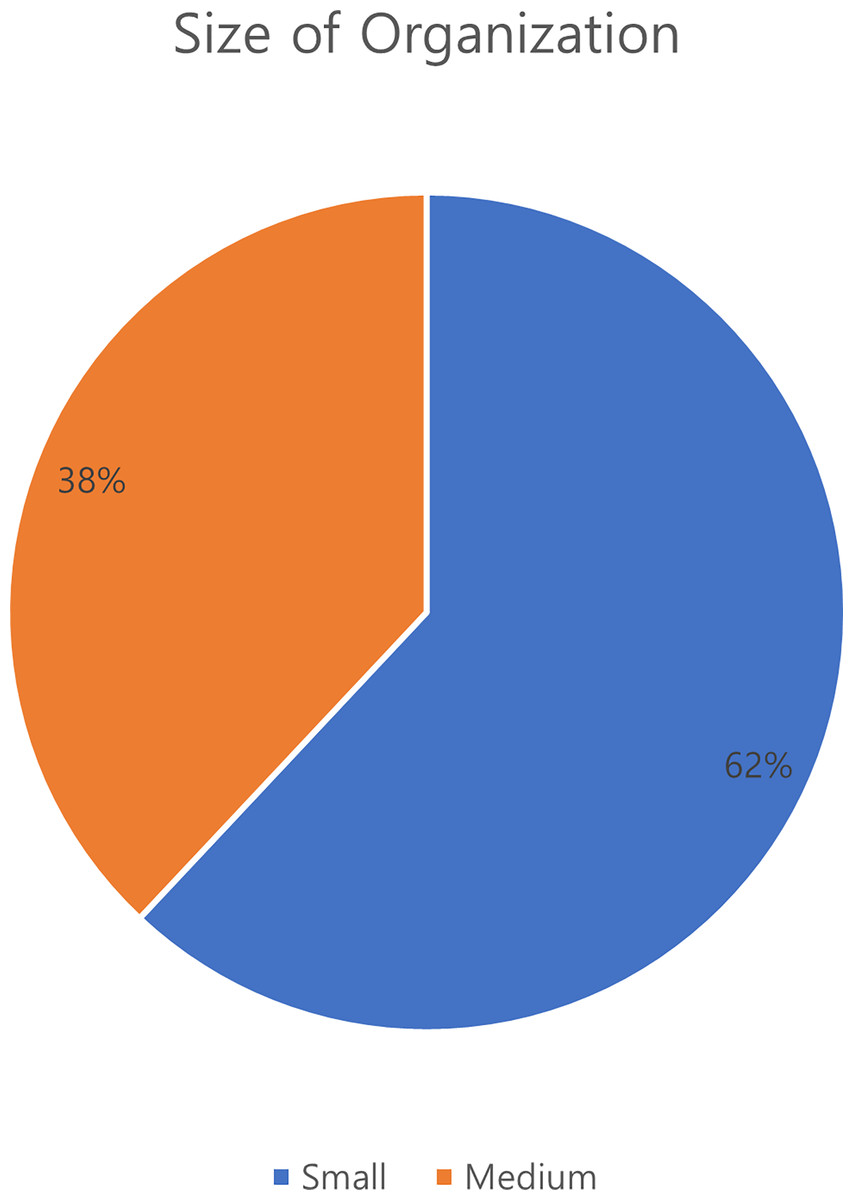
Figure 9: Size of the organization.
In the same way, 32 (68%) participants considered management challenges for quality degradation; 10 (21%) disagreed, and five (15%) were not sure. Thirty-one (66%) participants considered the remoteness challenge to be due to the low quality of outsourced software, while seven (15%) disagreed and nine (19%) were not sure about the remoteness challenge.
Type of organizations
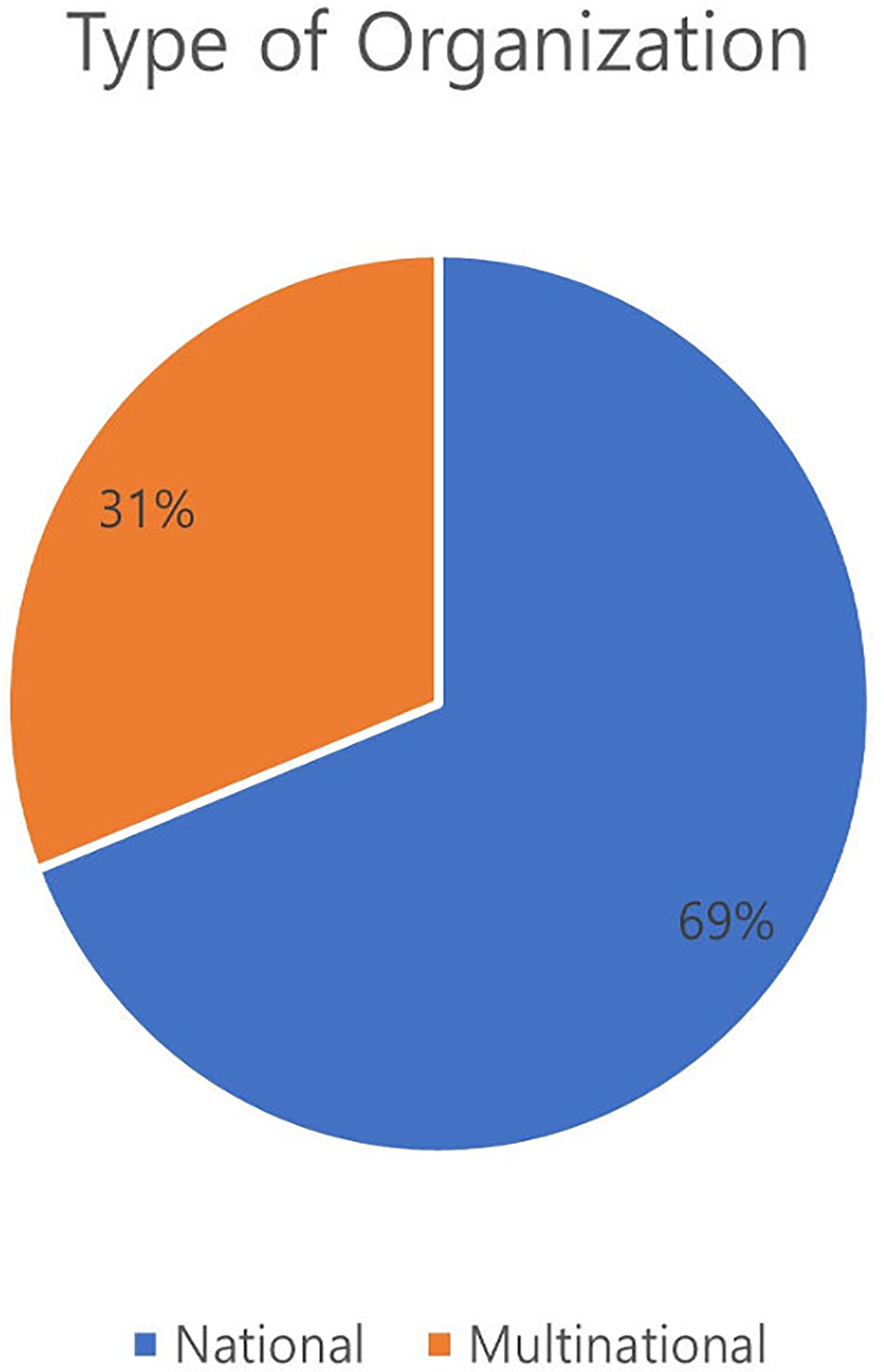
Types of organizations are shown in Fig. 10. Multinational organizations refer to UK-or USA-based software firms. National organizations refer to software firms that are located within the country.
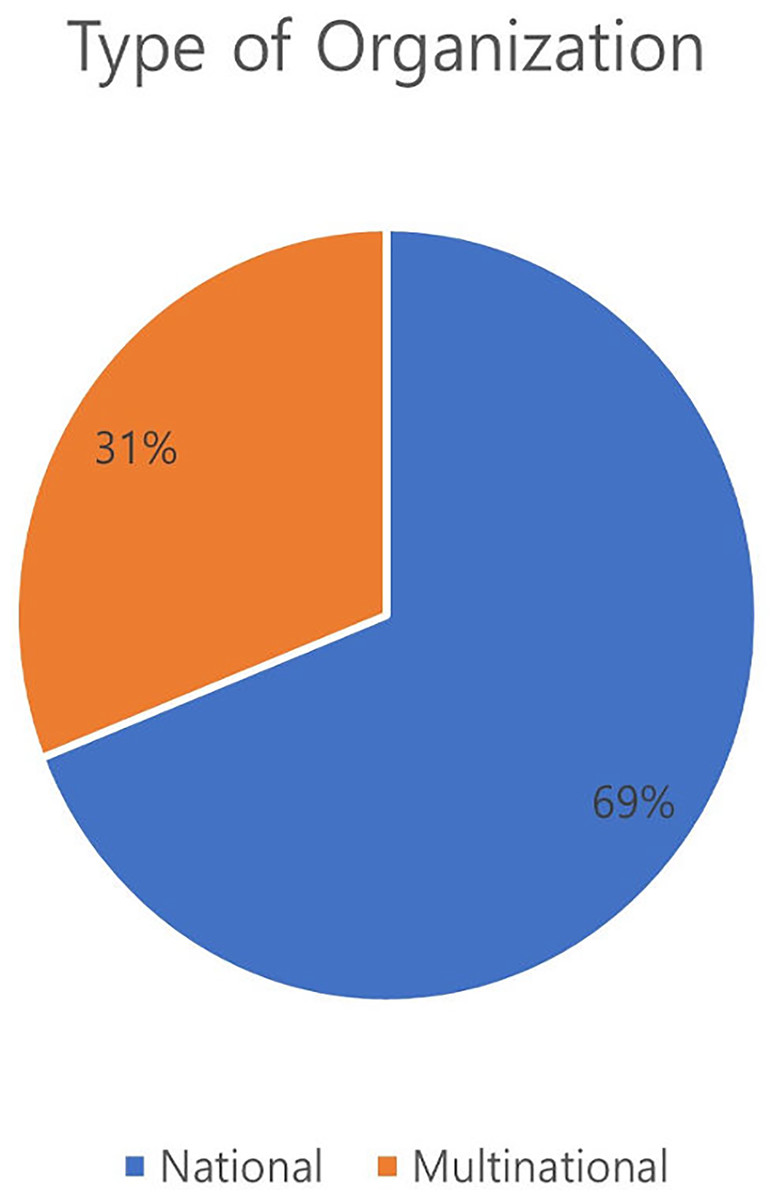
Figure 10: Organization type.
Phase III: application
Prioritizing and ranking of these challenges based on their impacts on quality in the context of software outsourcing from a vendor perspective was the main objective of the research work. The AHP was employed to evaluate and prioritize the challenges. AHP is a multi-criteria decision-making technique that: breaks down complex decisions into hierarchical structures, assigns weights to criteria and sub-criteria, enables pairwise comparisons and calculates priority scores.
Due to its organized and methodical approach to decision-making, the AHP offers a number of remarkable advantages in a variety of fields. In complicated decision-making situations where several criteria and options must be taken into account, the AHP’s main driving force is to address these situations. AHP offers a clear and transparent framework for making informed decisions by enabling decision-makers to methodically analyze and prioritize these components. It makes it easier to integrate quantitative and qualitative data while also taking into account a variety of decision situations. AHP also helps with subjectivity and trade-offs, which makes it particularly useful when dealing with multi-dimensional issues where the perspectives of several stakeholders need to be reconciled. By quantifying the relative importance of criteria and assessing options in a systematic way, AHP, in general, equips decision-makers to make more solid and defended conclusions.
AHP’s motivation in the area of software development stems from its capacity to simplify difficult decision-making procedures. Making complex decisions during the development of software is common. Examples include choosing development approaches, programming languages, or architectural frameworks. By dividing things into digestible parts, ranking criteria, and weighing trade-offs between multiple options, AHP helps software engineers make these judgments. Additionally, AHP encourages team members to work together and reach consensus, ensuring that many points of view are considered when making decisions. AHP is a useful method for completing software engineering projects successfully since it ultimately results in more effective resource allocation, improved model development, and greater alignment with project goals.
AHP technique for prioritizing quality challenges of software outsourcing
Choosing a course of action from a range of possibilities or reaching a conclusion among several scenarios is the main goal of this strategy. The AHP was developed by Saaty (1988), and today it is a popular approach used for multi-criteria decision-making (Shameem et al., 2020; Akbar & Khan, 2020; Helingo et al., 2017; Afzal & Sadim, 2018; Sehra, Brar & Kaur, 2016; Kamal et al., 2020). The steps involved for the challenges of vendor companies are given as follows:
Step 1
In the first step of AHP, hierarchical, i.e., tree structure, was developed by identifying levels (criteria’s) and sub-levels (sub-criteria’s or alternatives) that are associated with the goal defined by the decision-makers. The hierarchy structure (Ishizaka & Nemery, 2013) describes the scope of the objective.
Our identified goals, levels, and sub-levels are shown in Fig. 11 as well. According to Fig. 11, our main goal is to prioritize quality challenges. Furthermore, our identified challenges, as shown in Fig. 3, are categorized into three levels, i.e., aptitude, organization, and covenant. “QC1 Requirement Analysis Challenge, QC2 Linguistic Analysis Challenge, QC3 Code Quality Challenge, and QC4 Lack of Expert Challenge” were placed or positioned in Aptitude Level because they dealt with skills and proficiency.
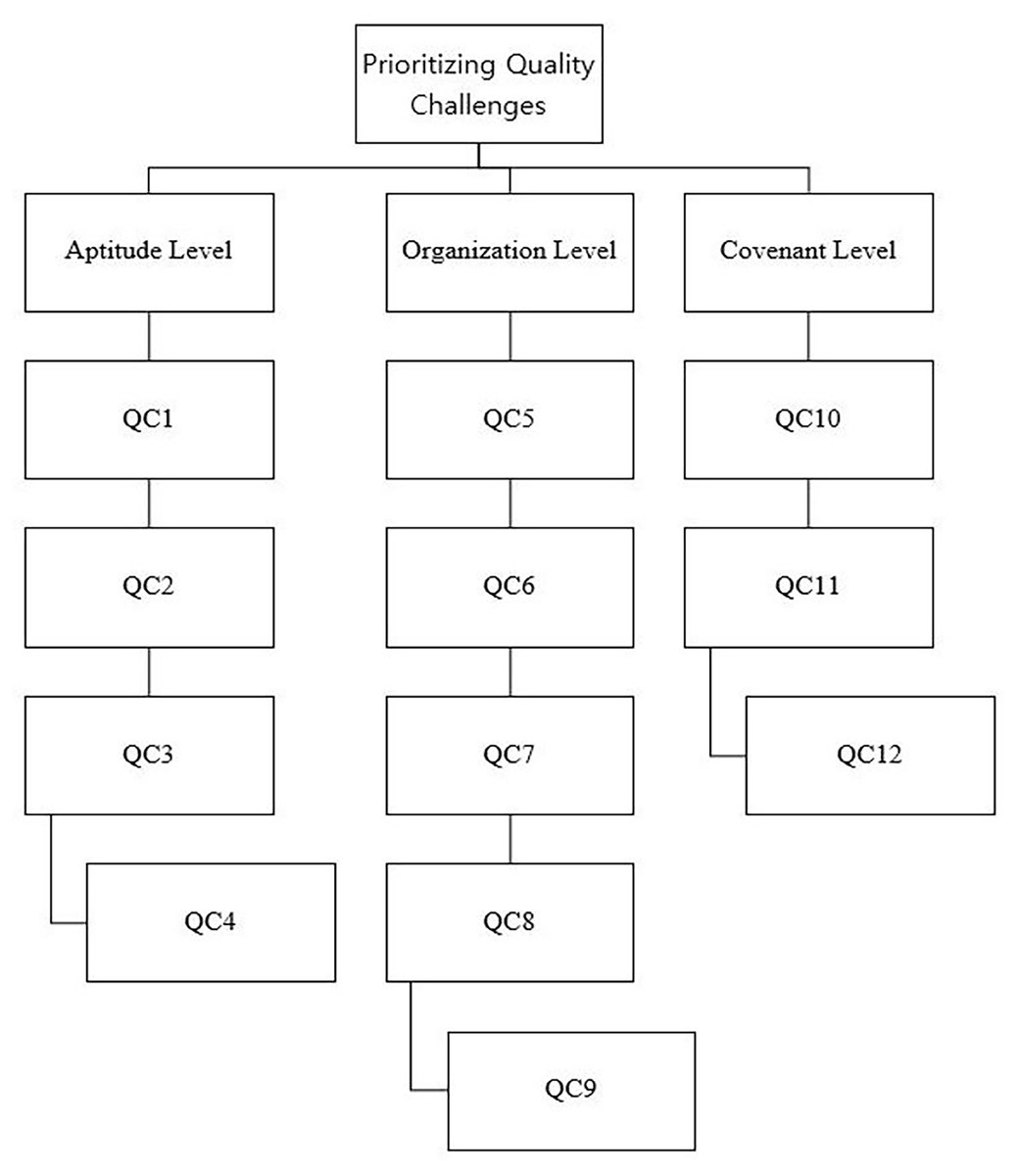
Figure 11: Identification of goal, level, and sub-level.
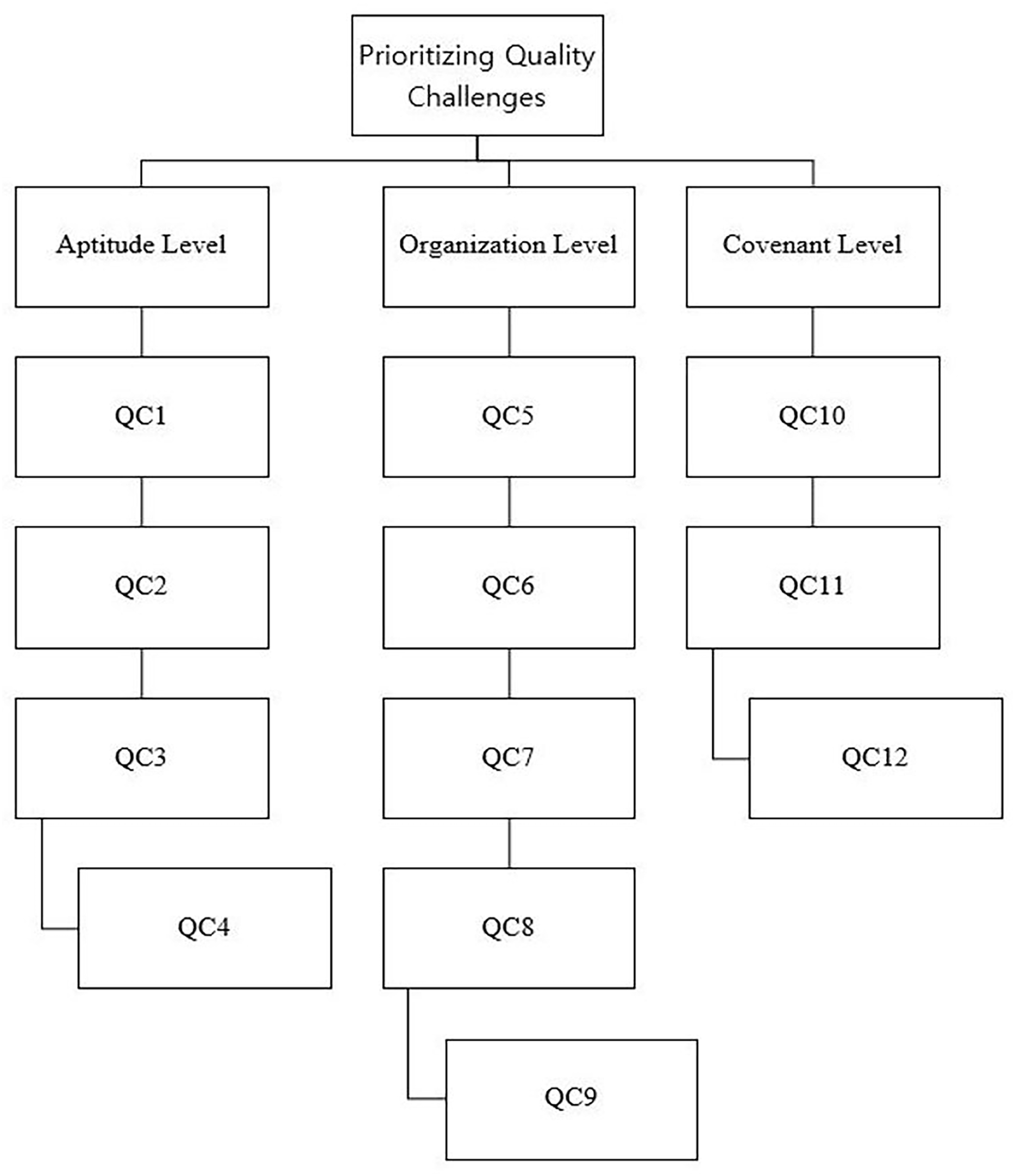
“QC5 Management Challenges, QC6 Culture Differences Challenge, QC7 Remoteness Challenge, QC8 Individualistic Approach Challenge, and QC9 Geo Strategic Economic Challenges” were placed or positioned at the organization level because all challenges deal with planning and administration. “QC10 Agreement Deed Challenge, QC11 5-C’s Challenge, and QC12 Employees Turn over Challenge” were placed in Covenant Level because they deal with the negotiation.
Step 2
In the 2nd step, after constructing the logical hierarchy, weights were assigned to the challenges (criteria’s) such that pairwise comparison of the matrix takes place. For this purpose, we used the predefined fundamental scale defined by Saaty (1987) as shown in Table 5.
| Scale | Detail |
|---|---|
| 1 | Equal importance |
| 3 | Moderate importance |
| 5 | Essential or strong importance |
| 7 | Very strong importance |
| 9 | Extreme importance |
| 2, 4, 6, 8 | Intermediate values |
Weights are assigned to sub-levels based on survey result as shown in Fig. 8 from predefined scale shown in Table 5. The Pairwise comparison of aptitude level is shown in Table 6. The Pairwise comparison of organization level is shown in Table 7.
| Challenge | QC1 | QC2 | QC3 | QC4 |
|---|---|---|---|---|
| QC1 | 1.00 | 6.00 | 7.00 | 4.00 |
| QC2 | 0.17 | 1.00 | 3.00 | 0.25 |
| QC3 | 0.14 | 0.33 | 1.00 | 0.14 |
| QC4 | 0.25 | 4.00 | 7.00 | 1.00 |
| Challenge | QC5 | QC6 | QC7 | QC8 | QC9 |
|---|---|---|---|---|---|
| QC5 | 1.00 | 0.25 | 4.00 | 7.00 | 8.00 |
| QC6 | 4.00 | 1.00 | 3.00 | 8.00 | 9.00 |
| QC7 | 0.25 | 0.33 | 1.00 | 5.00 | 6.00 |
| QC8 | 0.14 | 0.13 | 0.20 | 1.00 | 2.00 |
| QC9 | 0.13 | 0.11 | 0.17 | 0.50 | 1.00 |
Pairwise comparison of covenant level is shown in Table 8.
| Challenge | QC10 | QC11 | QC12 |
|---|---|---|---|
| QC10 | 1.00 | 0.25 | 5.00 |
| QC11 | 4.00 | 1.00 | 8.00 |
| QC12 | 0.20 | 0.13 | 1.00 |
Step 3
In 3rd step known as verification step that checked the consistency i.e., whether weights assigned to the particular level challenges (criteria) is correct or not during pair wise comparison? For measuring the inconsistency, we used the following equation:
(1)
Here, CI = consistency index, λmax = eigen value, and n = number of challenges in a pair-wise comparison matrix. After calculating the value of CI, the consistency ratio (CR) was calculated with the help of the following equation:
(2)
RI stands for Random Consistency Index, that is, a constant value for a particular size of a matrix, as shown in Table 9, and we follow the same procedure that was guided by Helingo et al. (2017).
| Size of matrix | Random consistency index (RI) |
|---|---|
| 1 | 0 |
| 2 | 0 |
| 3 | 0.58 |
| 4 | 0.90 |
| 5 | 1.12 |
| 6 | 1.24 |
| 7 | 1.32 |
| 8 | 1.41 |
| 9 | 1.45 |
| 10 | 1.49 |
If found the value of CR < 0.10 then it will be acceptable otherwise we will go back to step 2 to repeat the process of assigning new values until condition (CR < 0.10) will not be fulfilled. The synthesized matrix of aptitude level is shown in Table 10.
| Challenge | QC1 | QC2 | QC3 | QC4 | Priority weight |
|---|---|---|---|---|---|
| QC1 | 0.64 | 0.53 | 0.39 | 0.74 | 0.5753 |
| QC2 | 0.11 | 0.09 | 0.17 | 0.05 | 0.1020 |
| QC3 | 0.09 | 0.03 | 0.06 | 0.03 | 0.0507 |
| QC4 | 0.16 | 0.35 | 0.39 | 0.19 | 0.2718 |
| SUM | 1.0 | 1.0 | 1.0 | 1.0 | 1.0 |
Now, consistency is measured as follows by following Eq. (1):
as, n = 4 (size of Aptitude Level), so, entering the value of λmax and “n” in Eq. (1) obtains a result of CI = 0.00. Then we measured the CR from Eq. (2). With the value of n = 4, the size of the aptitude level matrix, and CI = 0.008. So, putting both of these values in Eq. (2), we get CR = 0.098, which is less than 0.10 (acceptable). The synthesized matrix of the organization level is shown in Table 11.
| Issues | QC5 | QC6 | QC7 | QC8 | QC9 | Priority weight |
|---|---|---|---|---|---|---|
| QC5 | 0.18 | 0.14 | 0.48 | 0.33 | 0.31 | 0.2859 |
| QC6 | 0.72 | 0.55 | 0.36 | 0.37 | 0.35 | 0.4702 |
| QC7 | 0.05 | 0.18 | 0.12 | 0.23 | 0.23 | 0.1622 |
| QC8 | 0.03 | 0.07 | 0.02 | 0.05 | 0.08 | 0.0483 |
| QC9 | 0.02 | 0.06 | 0.02 | 0.02 | 0.04 | 0.0330 |
| SUM | 1.0 | 1.0 | 1.0 | 1.0 | 1.0 | 1.00 |
Note:
= 5.428, n = 5, CI = 0.107, CR = 0.096 < 0.1 (acceptable).
Local and global ranking of quality challenges
The Synthesized Matrix of Covenant Level is shown in Table 12. After determining CR of sub-levels (quality challenges/criteria) of each level, then we performed the pair wise comparison among three levels (Aptitude, Organization and Covenant). Pair wise comparison of Quality challenges of all three levels is shown in Table 13. The Synthesized Matrix of three levels is shown in Table 14.
| Challenge | QC10 | QC11 | QC12 | Priority weight |
|---|---|---|---|---|
| QC10 | 0.19 | 0.18 | 0.36 | 0.2437 |
| QC11 | 0.77 | 0.73 | 0.57 | 0.6893 |
| QC12 | 0.04 | 0.09 | 0.07 | 0.0669 |
| SUM | 1.0 | 1.0 | 1.0 | 1.00 |
Note:
= 3.096, n = 3 CI = 0.107, CR = 0.082 < 0.1 (acceptable).
| Level | Aptitude | Organization | Covenant |
|---|---|---|---|
| Aptitude | 1.00 | 5.00 | 7.00 |
| Organization | 0.20 | 1.00 | 3.00 |
| Covenant | 0.14 | 0.33 | 1.00 |
| Levels | Aptitude | Organization | Covenant | Priority weight |
|---|---|---|---|---|
| Aptitude | 0.74 | 0.18 | 0.64 | 0.7235 |
| Organization | 0.15 | 0.73 | 0.27 | 0.1931 |
| Covenant | 0.11 | 0.09 | 0.09 | 0.0833 |
| SUM | 1.0 | 1.0 | 1.0 | 1.00 |
Note:
= 3.066, n = 3, CI = 0.033 CR = 0.057 < 0.1 (acceptable).
Our next step was to rank the quality challenges locally & globally. The term ‘Local’ refers to ranking/prioritizing the quality challenge within its own level. The term ‘Global’ refers to ranking/prioritizing the quality challenge among three levels. The detail of local and global challenge is shown in Table 15.
| S# | Name of level | Levels priority weight | Quality challenge | Name of quality challenge | Quality challenge priority weight | Local ranking | Global weight | Global ranking |
|---|---|---|---|---|---|---|---|---|
| 1 | Aptitude level | 0.724 | QC1 | Requirement analysis challenge | 0.575 | 1 | 0.4162 | 1 |
| 2 | QC2 | Linguistic analysis challenge | 0.102 | 3 | 0.0738 | 4 | ||
| 3 | QC3 | Code quality challenge | 0.051 | 4 | 0.0367 | 7 | ||
| 4 | QC4 | Lack of expert challenge | 0.272 | 2 | 0.1967 | 2 | ||
| 5 | Organization level | 0.193 | QC5 | Management challenges | 0.286 | 2 | 0.0553 | 6 |
| 6 | QC6 | Culture differences challenge | 0.470 | 1 | 0.0908 | 3 | ||
| 7 | QC7 | Remoteness challenge | 0.162 | 3 | 0.0313 | 8 | ||
| 8 | QC8 | Individualistic approach challenge | 0.048 | 4 | 0.0093 | 10 | ||
| 9 | QC9 | Geo strategic economic challenge | 0.033 | 5 | 0.0064 | 11 | ||
| 10 | Covenant level | 0.083 | QC10 | Agreement deed challenge | 0.244 | 2 | 0.0203 | 9 |
| 11 | QC11 | 5-C’s challenge | 0.689 | 1 | 0.0574 | 5 | ||
| 12 | QC12 | Employees turn over challenge | 0.067 | 3 | 0.0056 | 12 |
The global weight formed from local weight of the criteria, such that, multiply priority weight of the particular weight. Global weight = Level Priority Weight * Quality Challenge Priority Weight. e.g., QC1 = requirement analysis challenge global weight = 0.575 * 0.724 = 0.4162.
Table 12 shows that “Requirement Analysis Challenge” was found to be the most crucial quality challenge amongst all 12 quality challenges. The same outcomes have proved the finding from Saaty (1984) and Khan, Azam & Zafar (2011), which state that incorrect requirements gathering leads to wrong implementation of software functionality. It also provides evidences that requirement gathering is definitely a difficult task to accomplish (Ramzan et al., 2011; Lai & Ali, 2013). A lack of expert of challenge was found to be the 2nd most crucial quality challenge among 12 challenges. Khan et al. (2021b) also considered the “Lack of technical capability” critical challenge in software outsourcing. The culture differences challenge (Marinho, Luna & Beecham, 2018) was found to be the 3rd most crucial challenge, which also may degrade the quality of work. The culture differences challenge creates severe problems of misunderstanding (Marinho, Luna & Beecham, 2018; Khan et al., 2022b, 2022c, 2023). 5-C’s challenge was found in its level (covenant). 5-C’s challenge, especially the communication issue, creates challenges for developers which ultimately affect the final product (Shah, Raza & Ulhaq, 2012). Mostly problems in outsourcing occur due to the lack of effective communication (Ramzan et al., 2011).
Furthermore, software quality is being continuously monitored and improved, and vendors are using data analytics and feedback mechanisms to pinpoint areas that need work. Software suppliers can now deliver products more quickly and with greater quality thanks to the growing popularity of DevOps and continuous integration/continuous optimized continuous integration and continuous deployment (CI/CD) pipelines. Additionally, as cloud-based solutions and the Internet of Things (IoT) especially in wireless network become more widely used, the software outsourcing industry is changing, and suppliers will need to acquire new competencies and knowledge to efficiently manage quality in these domains (Hosseinzadeh et al., 2022; Khan et al., 2021a, 2022a; Farooqi et al., 2019; Lansky et al., 2022).
Limitations
While existing studies have identified and categorized challenges in the field, they fall short of providing solutions to address these challenges. Moreover, the broad scope of quality makes it possible that some challenges may have been overlooked. Our systematic literature review aimed to identify relevant research articles, but the search was limited to specific databases, which may have led to the omission of significant articles from other databases. Furthermore, the survey had a relatively small sample size (N = 47) due to time and resource constraints. Although the participants were employed by reputable software firms in the country, the lack of diversity in their background may have impacted the quality of the data, potentially affecting the overall research findings.
Conclusions
This study investigates the critical quality challenges encountered in software outsourcing from the vendor’s perspective, with the ultimate goal of identifying and prioritizing these challenges to ensure optimal product quality. Despite existing literature, there is a lack of comprehensive discussions on these challenges using specific techniques. This article bridges this gap by identifying and prioritizing quality challenges using AHP.
We conducted a literature study, identifying challenges like cultural differences, requirement analysis, remoteness, communication, collaboration, coordination, cooperation, connection, and linguistic skills. These challenges were validated through an empirical survey with software experts. Then, we applied AHP to prioritize them, categorizing 35 challenges into 12 groups and ranking them across three levels. Our findings provide a comprehensive list of quality challenges in software outsourcing from the vendor’s perspective. The results show that all experts agreed on the identified challenges and considered them crucial for quality software development. The AHP technique prioritized the challenges based on their weightage, placing them at appropriate levels. We believe our research will benefit the vendor community in outsourcing. Future research will focus on finding solutions to mitigate these challenges.
We identified the challenges through SLR and validated them through a questionnaire survey from industry experts. The defined groups were analyzed through the AHP technique. Vendors might use focused tactics in practical situations to address the quality issues that are emphasized in software outsourcing. For example, suppliers might provide explicit routes for proactive issue escalation, frequent progress reports, and stakeholder involvement to reduce communication failures. Vendors may use agile approaches, iterative development, and continuous integration/testing to guarantee on-time delivery. Additionally, putting money into staff training and skill development may help close the knowledge gap, and putting in place strong quality gates and peer reviews helps guarantee code free from errors. To reduce human error, suppliers can also use automated technologies for testing, deployment, and monitoring. Vendors may maintain a competitive edge in the outsourcing industry, improve customer happiness, and cultivate a quality-centric culture by using these strategies.
Recommendation
To ensure customer satisfaction, maintain a positive reputation, and build long-lasting business relationships, vendors must effectively address quality issues in software outsourcing development. To achieve this, vendors should focus on the following key recommendations:
-
-
Invest in continuous training and development for their developers to enhance their skills and knowledge. This enables vendors to better understand client needs, industry best practices, and evolving technologies, ultimately aligning their work with customer expectations and staying up-to-date with software development trends.
-
-
Establish robust frameworks and procedures for quality assurance, incorporating rigorous testing processes, such as unit testing, integration testing, system testing, and user acceptance testing. Automated testing tools can significantly contribute to ensuring software meets quality standards. Additionally, implementing coding standards and code review procedures can help identify and resolve potential quality issues early on.
-
-
Prioritize quality throughout the entire project lifecycle, emphasizing continuous assessment and improvement. Vendors should communicate effectively with clients to understand their needs and expectations, fostering a collaborative relationship through active engagement, regular progress updates, and feedback sessions. This enables vendors to set expectations, clarify doubts, and adapt to changing requirements.
By following these guidelines, vendors can enhance their ability to consistently deliver high-quality software, overcome quality issues associated with software development outsourcing, and build strong, long-lasting relationships with clients.