Bayesian meta-analysis of studies with rare events: Do the choice of prior distributions and the exclusion of studies without events in both arms matter?
- Published
- Accepted
- Subject Areas
- Clinical Trials, Epidemiology, Public Health, Statistics
- Keywords
- rare events, fixed effect, Bayesian approach, random effects
- Copyright
- © 2019 Aghlmandi et al.
- Licence
- This is an open access article distributed under the terms of the Creative Commons Attribution License, which permits unrestricted use, distribution, reproduction and adaptation in any medium and for any purpose provided that it is properly attributed. For attribution, the original author(s), title, publication source (PeerJ Preprints) and either DOI or URL of the article must be cited.
- Cite this article
- 2019. Bayesian meta-analysis of studies with rare events: Do the choice of prior distributions and the exclusion of studies without events in both arms matter? PeerJ Preprints 7:e27732v1 https://doi.org/10.7287/peerj.preprints.27732v1
Abstract
Randomized controlled trials (RCTs) analyzing serious adverse events often observe low incidence and might even observe zero events in either or both of the treatment and control arms. In the meta-analysis of RCTs of adverse events, it is unclear whether trials with zero events in both arms provide any information for the summary risk ratio (RR) or odds ratio (OR). Studies with zero events in both arms are usually excluded in both frequentist and Bayesian meta-analysis. We used a fully probabilistic approach—a Bayesian framework—for the meta-analysis of studies with rare events, and systematically assessed whether exclusion of studies with no events in both arms produced different results compared to keeping all studies in the meta-analysis. We did this by conducting a simulation study in which we assessed the bias in the point estimate of the log(OR) and the coverage of the 95% posterior interval for the log(OR) for different analytical decisions and choices in fixed effect and random effects meta-analysis. We used simulated data generated from a known fixed effect or random effects data scenario (each scenario with a 1000 meta-analysis data-set). We found that the uniform and Jeffrey’s prior on the baseline risk in the control group leads to biased results and a reduced coverage, and that setting the prior distribution on the log(odds) scale worked better. We also found nearly identical results regardless of whether studies with no events in both arms were excluded or not.
Author Comment
This work is focusing on the open issue of how to meta-analyse studies (RCTs) with rare outcomes. We have done a simulation study and used fully probabilistic approach and compared it with already existing frequentist approches.
Supplemental Information
Figure 1
Coverage probability of 95% CIs and bias for log(OR) = 0 and log(OR)=0.69 estimate for FE method when trials with no events in both arms were included (bold icons in the graph are scenarios with more than 30% in both arms)
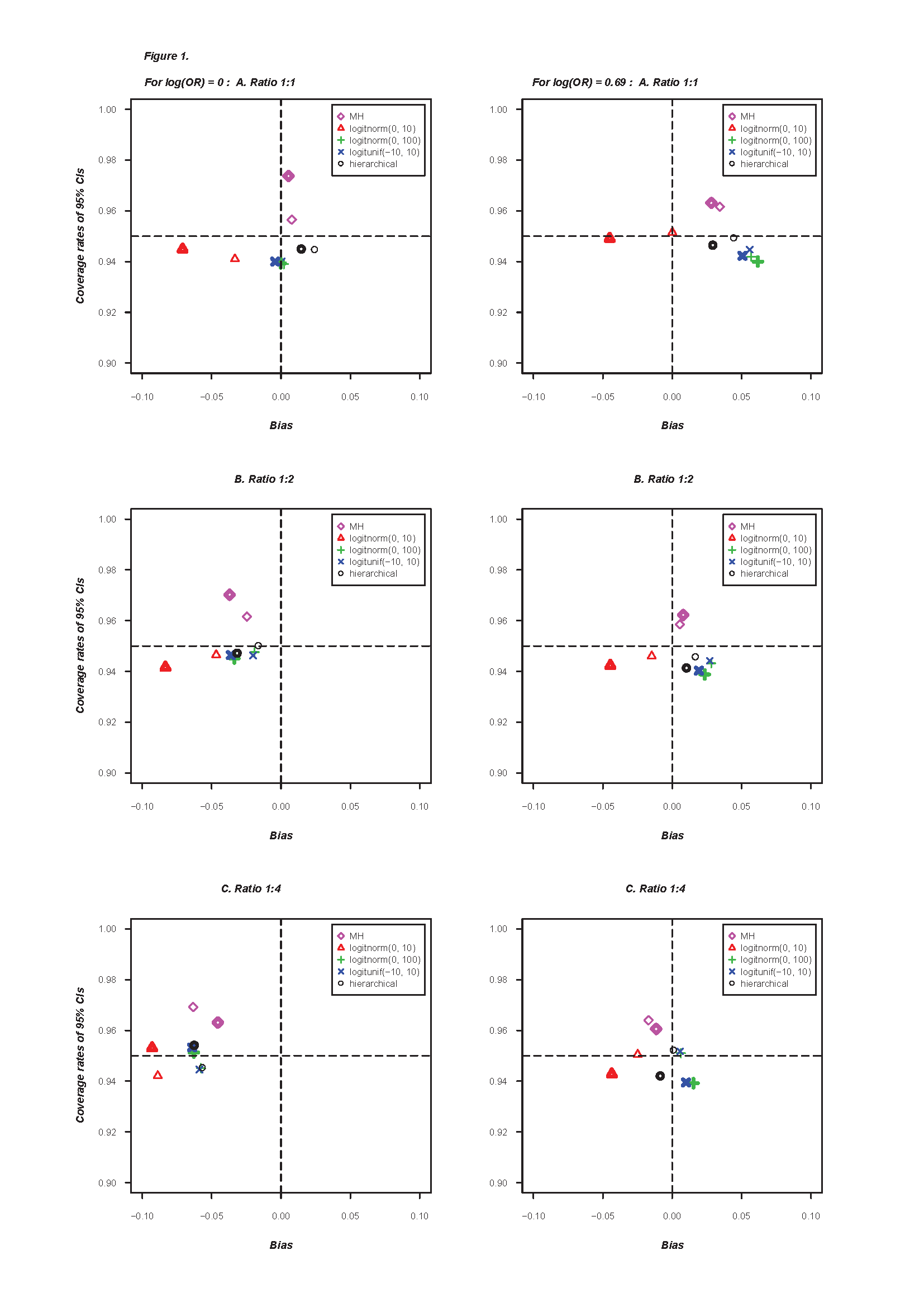
Figure 2
Coverage probability of 95% CIs and bias for log(OR) estimate for RE method with half-normal(mean= 0.5) prior for statistical heterogeneity and different scenarios of log(OR)

Figure 3
Coverage probability of 95% CIs and bias for log(OR) estimate for RE method with half-normal(mean= 0.5) prior for statistical heterogeneity for different scenarios of log(OR)
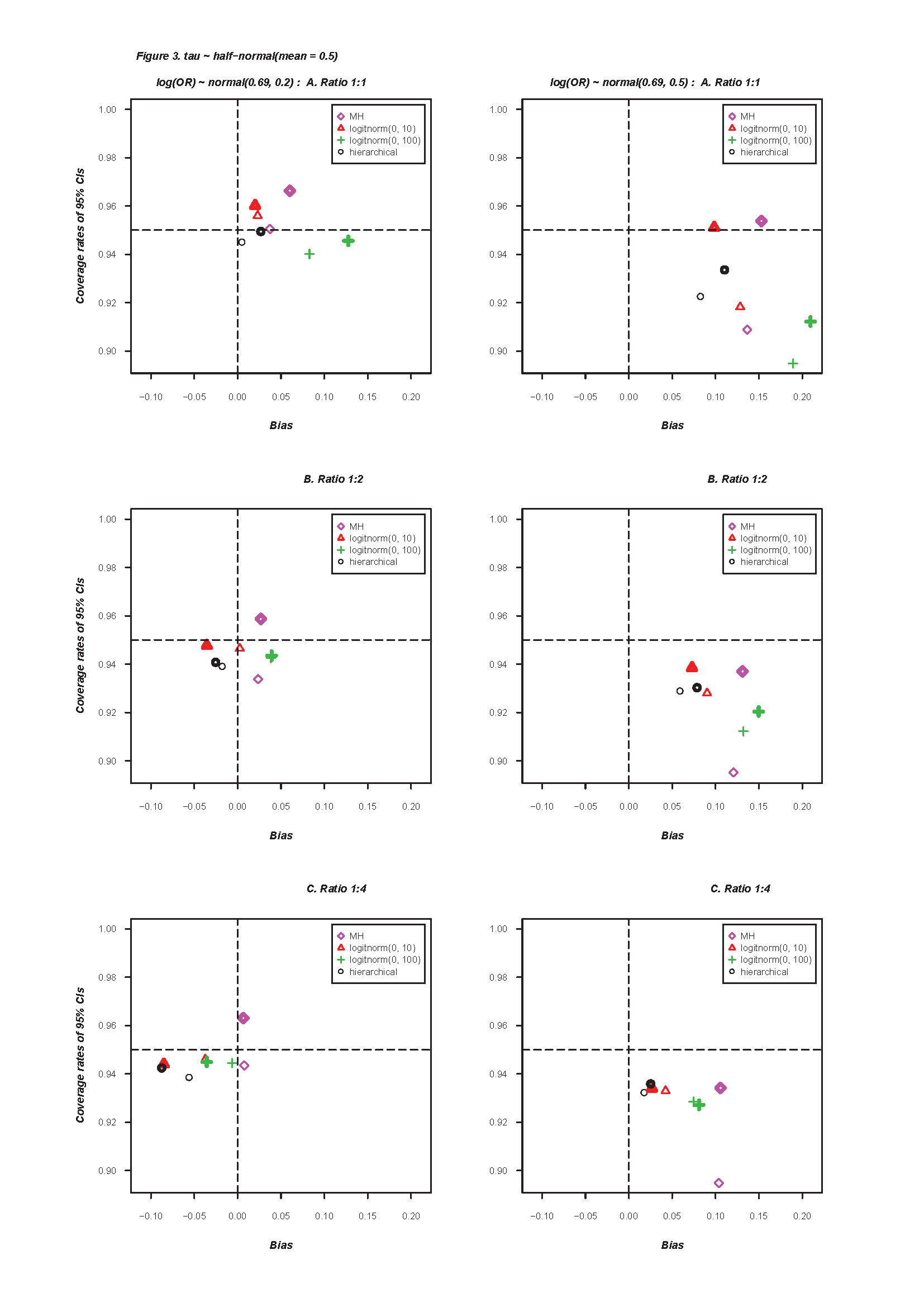
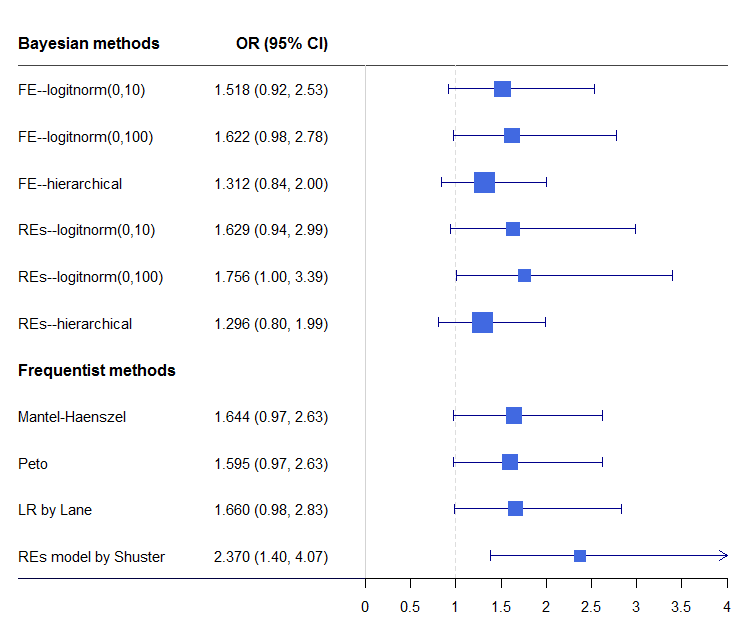
Figure 4
Forest plot of an MA of Rosiglitazone for MI
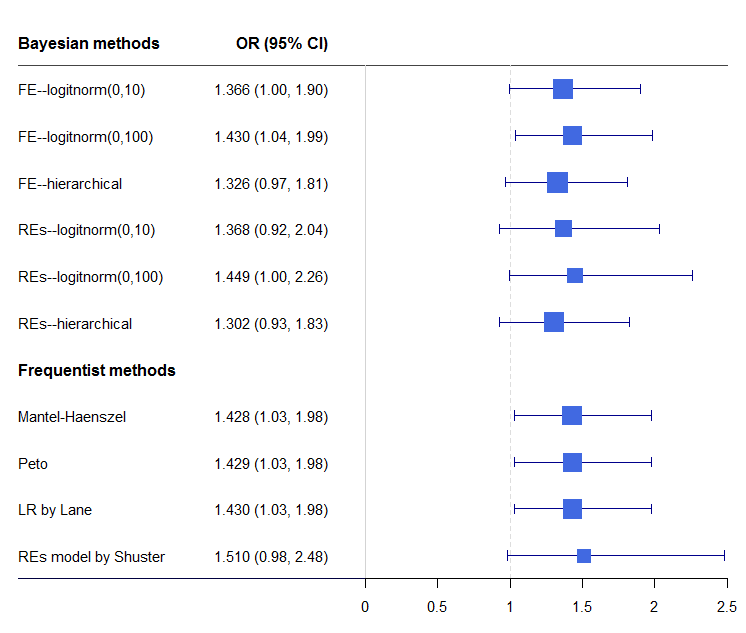
Figure 5
Forrest plot of an MA of Rosiglitazone for CV death
Supplemental I
Tables and figures for as a supplemental
Figure S1
Coverage probability of 95% CIs and bias
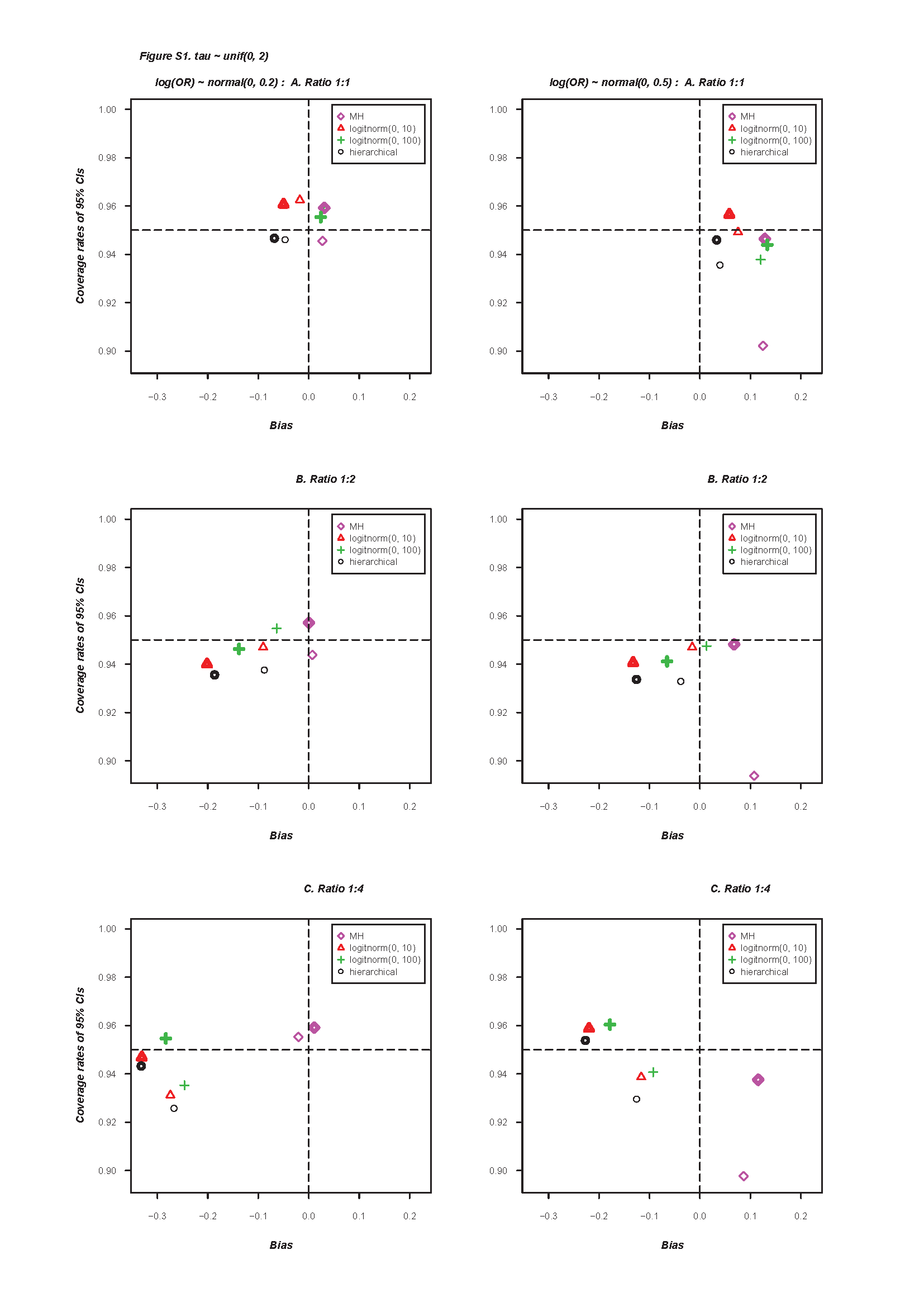
Figure S2
Coverage probability of 95% CIs and bias
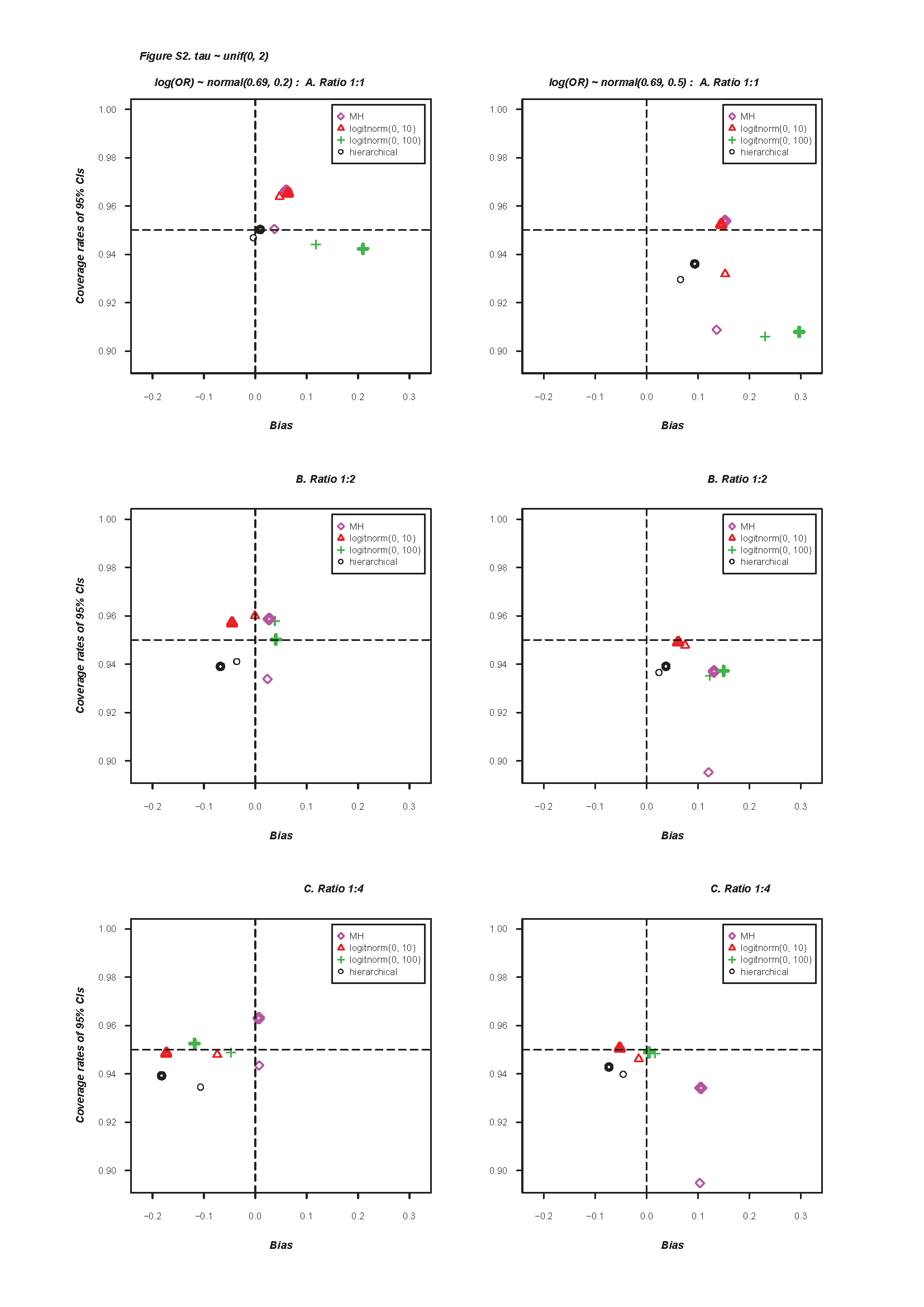
Figure S3
Coverage probability of 95% CIs and bias
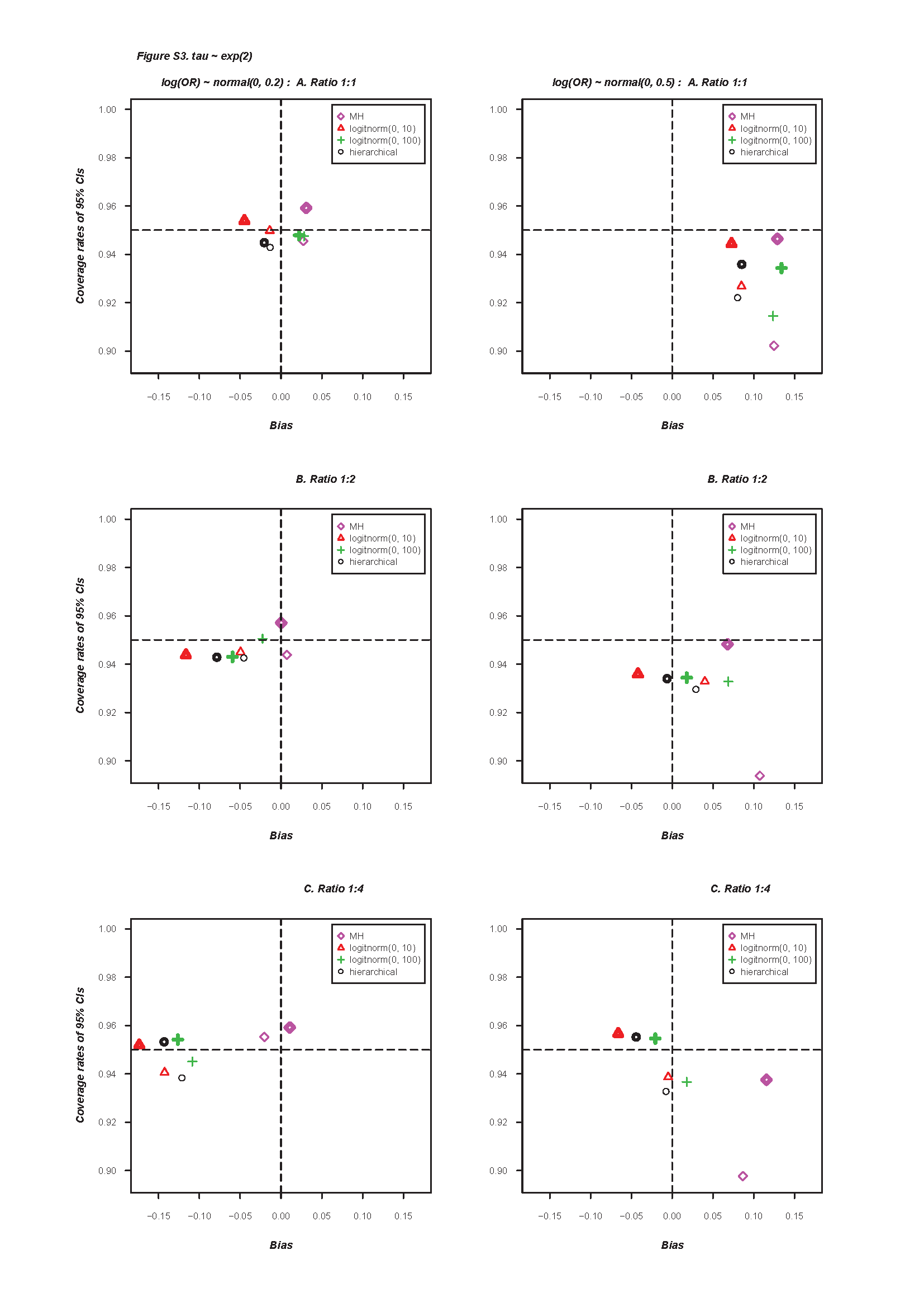
Figure S4
Coverage probability of 95% CIs and bias
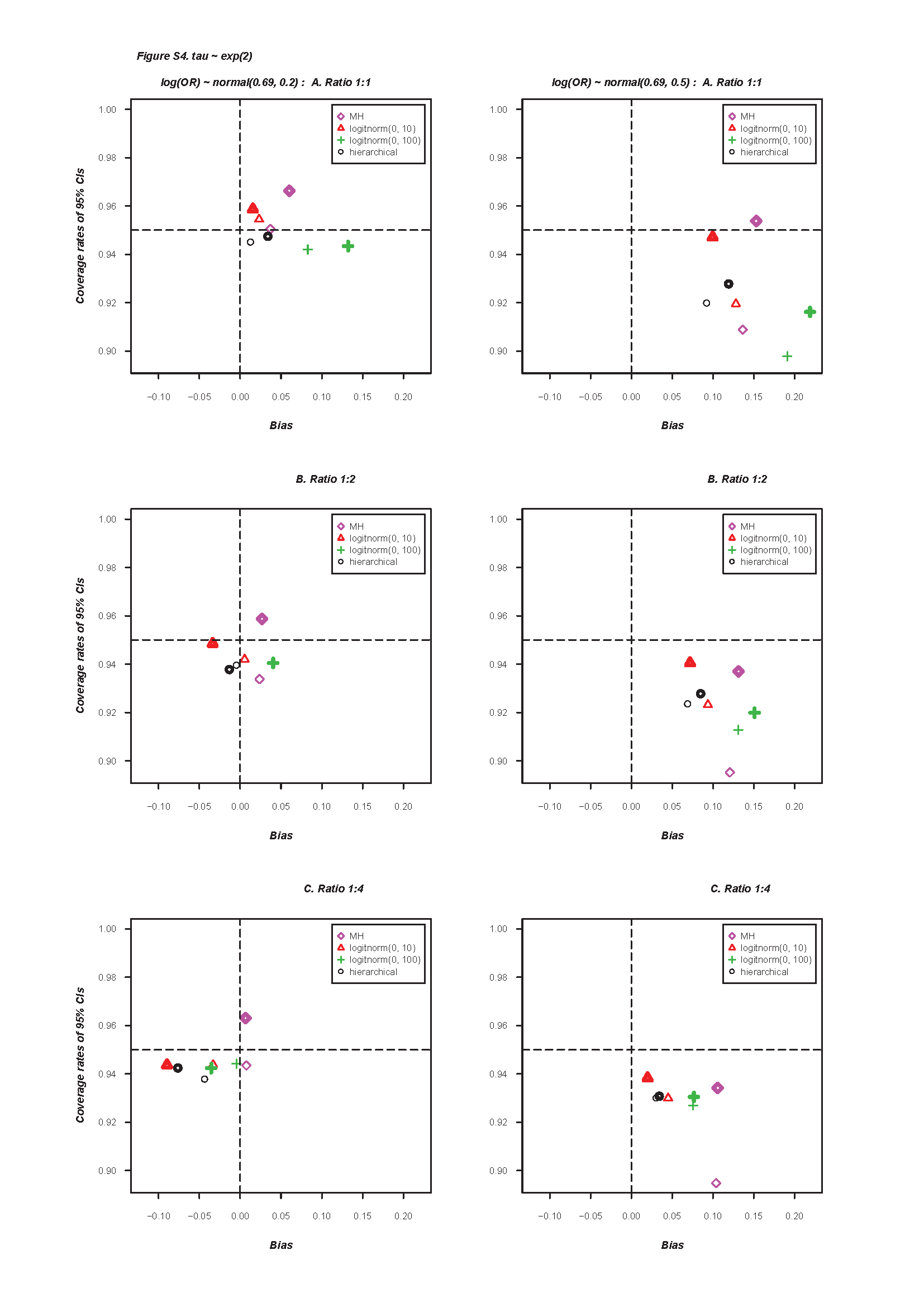
Figure S5
Coverage probability of 95% CIs and bias
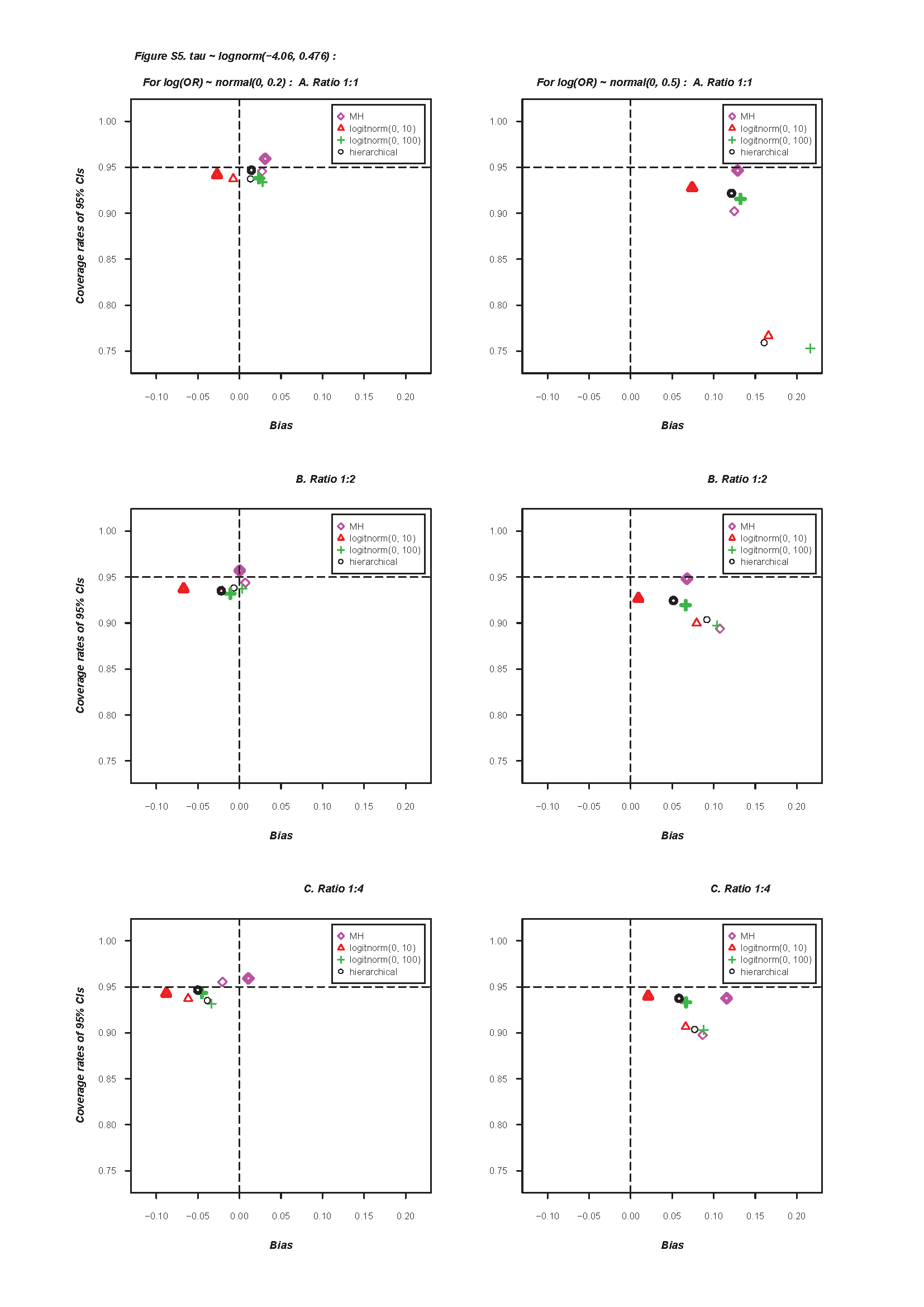
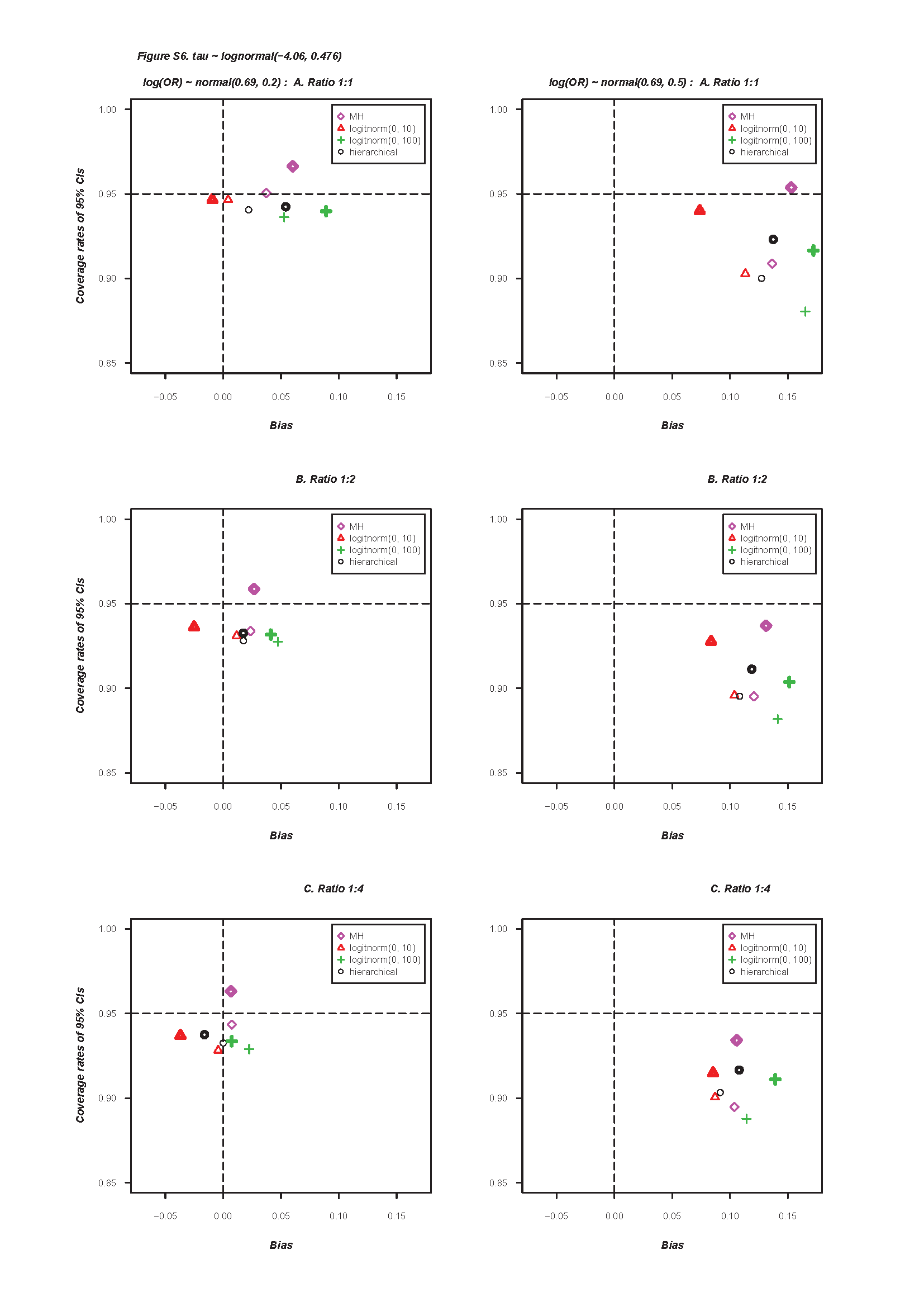
Figure S6
Coverage probability of 95% CIs and bias